Rare clotting factor deficiencies
Rare Clotting Factor Deficiencies and their Treatment
Rare Clotting Factor Deficiencies are rare inherited bleeding disorders that are caused by an absence or malfunctioning of certain proteins in the blood responsible for clotting. These conditions are different from hemophilias A and B which is more common. They involve clotting factor VIII and IX.
Understanding the condition
Clotting is an important physiological process which prevents excessive bleeding after a blood vessel injury. Clotting involves a complex sequence of steps where clotting proteins (proteins found in plasma) interact with each other to form a stable blood clot. This sequence can be disrupted by a lack of or reduced levels of specific clotting protein in rare cases of clotting factor deficiency.
These deficiencies may involve:
-
Factor I (fibrinogen).
-
Factor II (prothrombin).
-
Factor V
-
Combination Factors V and VIII
-
Factor VII
-
Factor X
-
Factor XI
-
Factor XIII
-
Vitamin K-dependent clotting factors (II, VII, IX, X)
The severity of bleeding will depend on the deficiency and which factor it is. Deficits in factors VII, X and XIII tend to be more severe than other deficiencies.
Causes and inheritance
The majority of rare clotting factors deficiencies are inherited using an autosomal-recessive pattern. Both parents must have the defective gene in order for the child’s condition to be affected. Some deficiencies, such as factor XI or certain forms of deficiency in factor I can also be inherited dominantly.
Some of these disorders can be acquired in later life, due to medication side effects or nutritional deficiencies.
How common are these disorders?
This condition is extremely rare.
-
About 1 in 500,000 people and 1 in 100,000 have a factor VII or XI deficiency.
-
Factor XIII deficiencies are rare, with less than 1 out of 3 million people affected.
-
Afibrinogenemia, combined factor V and 8, and factor II deficiencies are also extremely rare.
Diagnoses can be delayed due to their rarity. This is especially true for milder forms.
Symptoms of rare Clotting Factor Deficiencies
The signs and symptoms of a deficiency vary depending on the severity and type, but include:
-
Nosebleeds are frequent
-
Easy bruising
-
Heavy menstrual bleeding
-
Bleeding after surgery or trauma
-
Bleeding joints or muscles
-
Delay in wound healing
-
Spontaneous internal bleeding is a serious condition.
Women’s symptoms can be more severe due to their menstruation or childbirth. This can lead to complications like:
-
Menorrhagia is a term used to describe a prolonged or heavy menstrual period.
-
Postpartum hemorrhage
-
Risk of miscarriage and placental disorders during pregnancy
Diagnosis
A detailed history of bleeding in the family and by individuals, a physical examination and laboratory tests, including:
-
Clotting Time Assessments (e.g. PT, aPTT).
-
Specific factor assays are available to measure the levels of each clotting factors
-
Select cases may be eligible for genetic testing
Referral to a hematologist for diagnosis and treatment is important because many symptoms are similar.
Treatment Options
1. Specific Factor Replacement Therapy
-
Replacement of the missing clotting factors is the most effective treatment.
-
There are concentrated forms available for Factors I, VII and VIII.
-
These products are produced using recombinant technologies or human plasma.
-
Plasma-derived products undergo screening and treatment to reduce the risk of viral infection.
2. Fresh Frozen Plasma (FFP)
-
When specific concentrates are unavailable, FFP is the best alternative. It contains all the clotting factors.
-
This is commonly used to treat Factor V deficiency.
-
Risks include fluid overload and allergic reactions.
3. Prothrombin Complex Concentrate (PCC)
-
PCC is a multi-factor supplement that includes Factors II, X and vitamin K dependent factors.
-
High doses can increase the risk of thrombosis (blood clots).
4. Supportive Medications
-
Antifibrinolytic Agents such as tranexamic or aminocaproic acids help to prevent blood clot breakdown.
-
They are especially useful for dental and mucosal procedures.
Menstrual Bleeding and Pregnancy: How to Manage the Risks
Women with rare clotting factors deficiencies require special care during their reproductive years. Menstrual bleeding can be controlled with hormonal treatments. During pregnancy:
-
It is important to monitor your child closely.
-
Treatment with plasma or factor concentrates may be required as a preventative measure.
-
To avoid postpartum bleeding, delivery plans should be tailored and factor levels tested before labor.
Living with Rare Clotting Disorder
Despite the fact that these conditions are not curable, they can be managed with medical care. To manage these conditions, regular follow-ups, prompt treatment of bleeds, and prevention during surgery or childbirth is key.
About the Doctor
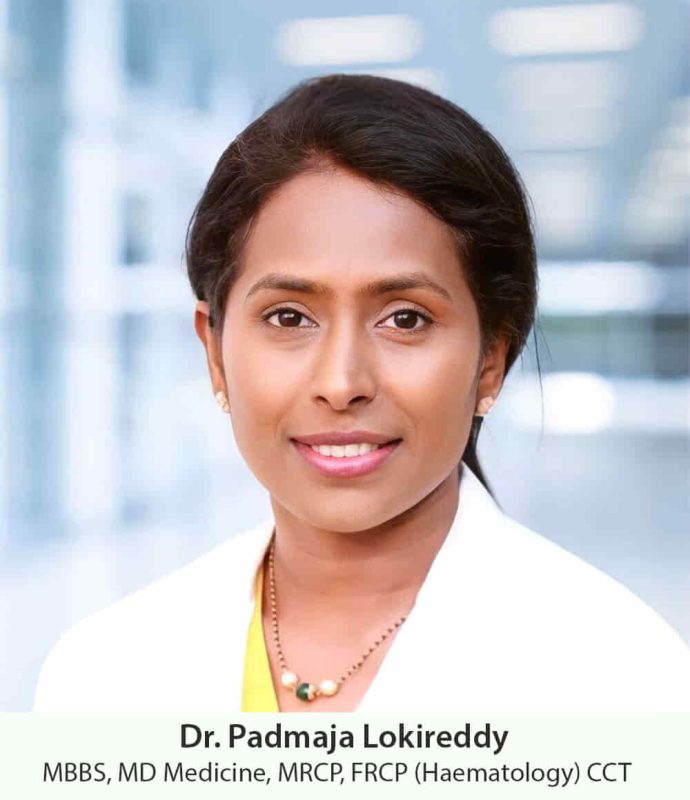
Dr. Padmaja Lokireddy is a highly respected Hemato Oncologist, Bone Marrow & Stem Cell Transplant Surgeon with years of experience in the field. She earned her postgraduate degree in internal medicine from the prestigious Manipal Academy of Higher Education and continued her studies and worked in the UK for about 13 years.

0
Years of experience

0
Patients Treated

0%
Success rate
AWARDS
India Brand Icon Award – 2020
India Brand Icon Award for Healthcare Excellence (Hemato-Oncology & Bone Marrow Transplant) By Time Cyber Media.
Meritorious Award
Meritorious Award in the field of Hematology and Transplant by International Biographic centre, Cambridge 2016.
International Biographic Dictionary, Cambridge
Included in International Biographic Dictionary, Cambridge and recognised in the top 100 physicians for 2016.
India Brand Icon Award – 2020
India Brand Icon Award for Healthcare Excellence (Hemato-Oncology & Bone Marrow Transplant) By Time Cyber Media.
Meritorious Award
Meritorious Award in the field of Hematology and Transplant by International Biographic centre, Cambridge 2016.
International Biographic Dictionary, Cambridge
Included in International Biographic Dictionary, Cambridge and recognised in the top 100 physicians for 2016.