Myelodysplastic Syndrome
Overview
Myelodysplastic disorders are a class of conditions caused by poorly created blood cells or those which aren’t functioning properly. Myelodysplastic disorders are caused by something wrong with the spongy substance in your bones in which blood cells are produced (bone the marrow).
Treatment for myelodysplastic diseases typically concentrates on reducing or preventing complications from the disease and the treatments for it. In certain cases treatments may include chemotherapy or the transplantation of bone marrow.
Symptoms
Myelodysplastic disorders rarely manifest as symptoms or signs in beginning stages.
At some point, myelodysplastic disorders can be the cause of:
- Fatigue
- Breathing shortness
- Unusual lightness (pallor) that occurs because of the low number of red blood cells (anemia)
- Acute or unusual bruising, or bleeding that is because of the low level of the number of platelets in blood (thrombocytopenia)
- The red spots are the size of pinpoints and appear under the skin due to bleeding (petechiae)
- Frequent infections that occur because of an insufficient number of white blood cells (leukopenia)
When do you need to visit an doctor
Set up appointments with your physician If you notice any symptoms or signs that concern you.
Causes
In a healthy individual bone marrow creates the blood cells that are still immature which mature with time. Myelodysplastic syndromes happen when something interferes with this process and the blood cells do not mature.
Instead of forming normally, blood cells die within the bone marrow, or shortly after they enter the bloodstream. As time passes, there are more damaged, immature blood cells than normal ones which can lead to issues such as fatigue triggered due to anemia and infections triggered by leukopenia and bleeding that is caused by thrombocytopenia.
Certain myelodysplastic disorders are not known to cause. Other are caused by being exposed to treatments for cancer like radiation and chemotherapy or exposure to harmful chemicals such as pesticides, tobacco and benzene or heavy metals, like lead.
Different types of myelodysplastic disorders
The World Health Organization divides myelodysplastic syndromes into subtypes, based on the blood type – platelets, and white cellsthat are that are involved.
Myelodysplastic syndrome subtypes comprise:
- Myelodysplastic syndrome that has monolineage dysplasia. One type of blood cell — white blood cells red blood cells or platelets — appears to be small in number and appear abnormal under a microscope.
- Myelodysplastic syndrome characterized by multiple lineage dysplasia. In this disorder it is known that at least three blood cells types are abnormal.
- Myelodysplastic syndrome that has the ring sideroblasts. This kind of syndrome, which includes two subtypes, is characterized by an infrequent number of blood cells of one or more kinds. One of the most distinctive features is that the red blood cells within the bone marrow have an iron ring known as sideroblasts. These are ring-shaped.
- Myelodysplastic syndrome is a condition that results from an isolated del chromosome anomaly. Patients with this condition have a low number of red blood cells and they have an inherited mutation that is specific to their DNA.
- Myelodysplastic disorder with excessive blasts – Types 1 and 2.. In both cases there is a chance that any of the three blood types – white blood cells, or platelets could be insufficient and look abnormal under an microscope. Blood cells that are very immature (blasts) can be found in blood and bone marrow.
- Myelodysplastic condition, which is not classified as. In this rare disorder there is a reduction of any one of three kinds of blood cell maturation and the platelets or white blood cells appear odd under an microscope.
Risk factors
Factors that increase your risk of developing myelodysplastic syndromes are:
- Older age. The majority of people suffering from myelodysplastic syndromes are over 60 years old.
- Treatment using treatment with chemotherapy and radiation. Chemotherapy or radiation therapy both of which are widely employed to treat cancer could increase the chances of developing myelodysplastic syndromes.
- Exposure to a variety of chemicals. Chemicals associated with myelodysplastic disorders include pesticides, tobacco smoke and industrial chemicals including benzene.
- exposure to heavy metals. Metals that are linked to myelodysplastic syndromes are mercury and lead.
Complications
Myelodysplastic syndromes can cause complications, which include:
- Anemia. The lower number of blood red cells may cause anemia and make you feel tired.
- The recurrence of infections. A deficiency of white blood cells can increase your chance of contracting serious infections.
- Bleeding that doesn’t stop. The absence of platelets in blood that stop bleeding could result in excessive bleeding.
- Higher risk of developing cancer. People with myelodysplastic disorders may develop blood cancer (leukemia).
About the Doctor
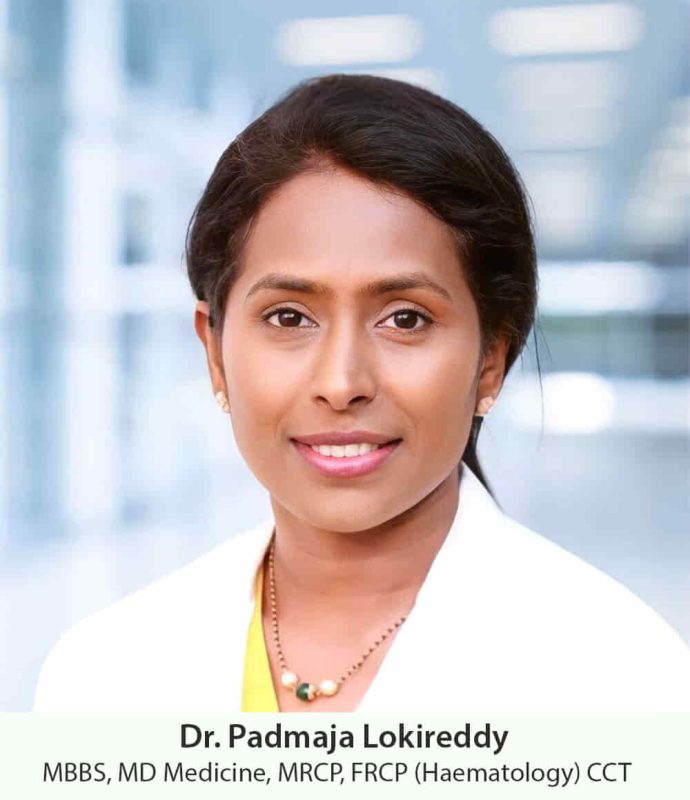
Dr. Padmaja Lokireddy is a highly respected Hemato Oncologist, Bone Marrow & Stem Cell Transplant Surgeon with years of experience in the field. She earned her postgraduate degree in internal medicine from the prestigious Manipal Academy of Higher Education and continued her studies and worked in the UK for about 13 years.

0
Years of experience

0
Patients Treated

0%
Success rate
AWARDS
India Brand Icon Award – 2020
India Brand Icon Award for Healthcare Excellence (Hemato-Oncology & Bone Marrow Transplant) By Time Cyber Media.
Meritorious Award
Meritorious Award in the field of Hematology and Transplant by International Biographic centre, Cambridge 2016.
International Biographic Dictionary, Cambridge
Included in International Biographic Dictionary, Cambridge and recognised in the top 100 physicians for 2016.
India Brand Icon Award – 2020
India Brand Icon Award for Healthcare Excellence (Hemato-Oncology & Bone Marrow Transplant) By Time Cyber Media.
Meritorious Award
Meritorious Award in the field of Hematology and Transplant by International Biographic centre, Cambridge 2016.
International Biographic Dictionary, Cambridge
Included in International Biographic Dictionary, Cambridge and recognised in the top 100 physicians for 2016.