
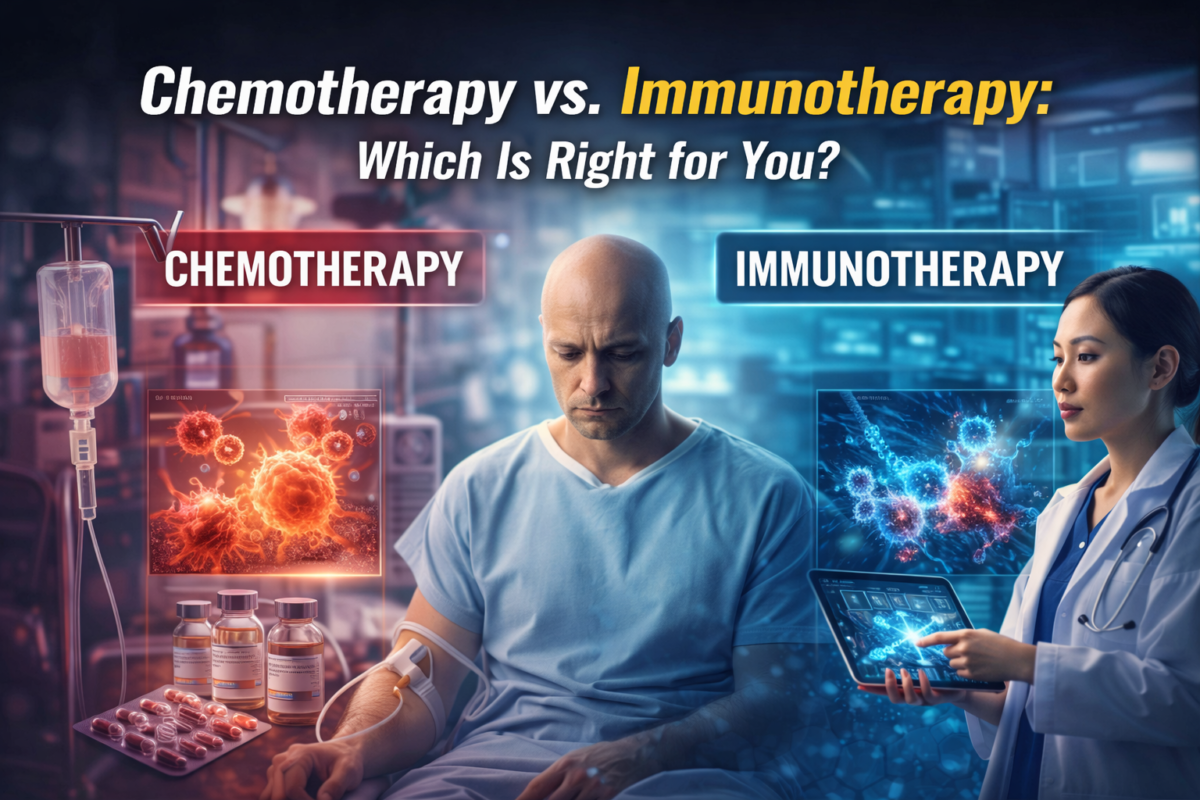
When you’re diagnosed with cancer picking the appropriate treatment can be a difficult choice. One of the most effective options is immunotherapy and chemotherapy. They are two popular, yet fundamentally different strategies to fight cancer.
Both aim to eliminate cancer cells, they function differently and have distinct benefits and negative side consequences.
This blog will discuss chemotherapy as opposed to. immunotherapy and how they function, the times they’re used and the best way to determine which one is best for you.
What is Chemotherapy?
Chemotherapy is a common treatment for cancer that utilizes powerful drugs to kill rapidly growing cells. It is administered through bloodstreams These drugs are distributed through the body to kill and kill cancerous cells wherever they are found.
Since chemotherapy is unable discern between cancerous and healthy rapidly-growing cells, it can affect other cells, such as hair follicles, bone marrow and the digestive tract.
How Chemotherapy works?
Chemotherapy drugs disrupt the process of cell division. Some affect DNA directly, whereas others block the proteins cancer cells require to live and reproduce.
Most Common Chemotherapy Negative Side Effects
- Hair loss
- Fatigue
- Nausea and vomiting
- A weak immune system
- Mouth sores
- The risk of contracting infections
These adverse effects may vary based on the kind of drug employed and also the person’s general health.
What is Immunotherapy?

Immunotherapy, which is a relatively new type of treatment for cancer that relies on the body’s immune system for fighting against cancer. Instead of attacking cancer in the first place, it allows immune cells to detect and eliminate cancerous cells.
There are many types of immunotherapy, such as:
- Checkpoints that block the entry point
- Monoclonal antibodies
- Therapy with CAR T cells
- Cancer vaccines
What is Immunotherapy Does It Work?
Cancer cells are often able to evade the immune system through suppressing its natural reactions. Immunotherapy is a method of stimulating and retraining your immune system, which allows it to detect the source, eliminate, and target the cancerous cells that hide in plain sight. Certain drugs eliminate all “brakes” of immune cells and allow them to be more aggressive towards cancer.
The most common Immunotherapy Affects
- Fatigue
- Skin eruption
- Chest and fever
- Organs are inflamed (pneumonitis colitis and hepatitis)
- Rarely, autoimmune reactions can cause a reaction.
Although side effects are usually less serious than chemotherapy, some may last for a long time and require constant control.
Chemotherapy in comparison to Immunotherapy
| Feature | Chemotherapy | Immunotherapy |
| Mechanism | Directly kills rapidly growing cells | Increases the immune system’s ability to combat cancer |
| Target | Healthy fast-growing cells and cancerous ones | Certain immune-related pathways or cells |
| Affects Side | More intense and extensive | Milder but may affect the balance of your immune system |
| Duration | Sometimes, cycles last for several weeks | It can be continuous or last-long |
| Cost | Generally, the cost is lower | It is more expensive because of the complexity |
Which is Most Effective?
There is no universally-effective solution. The efficacy of chemotherapy. immunotherapy is determined by a variety of aspects, including:
- Kind of cancer
- Cancer stage
- Genetic mutations
- Health of the patient’s general health and immunity status
For instance chemotherapy remains the most effective treatment for cancers such as colon and breast cancer. But, immunotherapy has demonstrated impressive results in cancers like cancers like melanoma, non-small-cell lung cancer, and some lymphomas.
Can immunotherapy and chemotherapy be used in conjunction?
Yes. In a lot of cases oncologists and Hemato-oncologists utilize a combination of immunotherapy and chemotherapy to increase the response of treatment. This is referred to as chemotherapy-immunotherapy. Chemotherapy may reduce the burden of tumors quickly, and immunotherapy stimulates the immune system to help with long-term treatment.
Combination therapy can be particularly beneficial when the cancer is serious or spreads to different areas in the body.
Pros and Cons Chemotherapy
Pros:
- It is effective for cancers that grow rapidly.
- Accessible in a variety of ways
- Instant reduction in tumor size
- It is possible to combine radiation or surgery.
Cons:
- Damages healthy cells
- Severe side effects
- Long-term risk of complications, such as infertility
Pros and Pros and Immunotherapy
Pros:
- A more targeted approach
- Fewer severe side effects
- Develops the immune system to provide long-term protection
- Less intrusive
Cons:
- This doesn’t work for all types of cancer
- Could cause immune-related side effects
- Slower initial response
- The cost is high and is not always protected by insurance
The Right treatment for you
The choice between chemotherapy or immunotherapy isn’t an easy one. You’ll have to work closely in conjunction with your physician to decide:
- The stage and type of cancer
- Your medical information
- Biomarkers for tumors (e.g., levels of PD-1 for immunotherapy)
- Your tolerance to adverse effects
- Treatment goals (cure vs. control)
Some patients might begin with chemotherapy before moving to immunotherapy. Others may receive both at the beginning.
Future of Cancer Treatment
Thanks to the development of personalized medical treatment, doctors are better equipped to tailor treatment using the genetics of their patients and also on immune profiling. This allows for more precise treatment, better outcomes, and less negative effects as compared to traditional treatments.
Immunotherapy continues to develop by introducing new vaccines for cancer as well as oncolytic viruses and adaptive cell therapies that are leading the direction. In addition, chemotherapy regimens are becoming precise to avoid the harm of healthy tissue.
The Final Words
Knowing the distinction between immunotherapy and chemotherapy is vital for anyone embarking on an illness. While chemotherapy is a method of directly attacking cancerous cells, immunotherapy utilizes the body’s own defence mechanisms.
Each method has its advantages and drawbacks, and in the majority of instances, a combination of both can provide the greatest chances of recovery or control. Discuss the options you have with your healthcare team, evaluate the benefits and risks, and then make an informed choice based on your specific requirements.
If you have any doubts about chemotherapy or immunotherapy, don’t hesitate to consult Dr. Padmaja Lokireddy for expert guidance and personalized cancer care.
