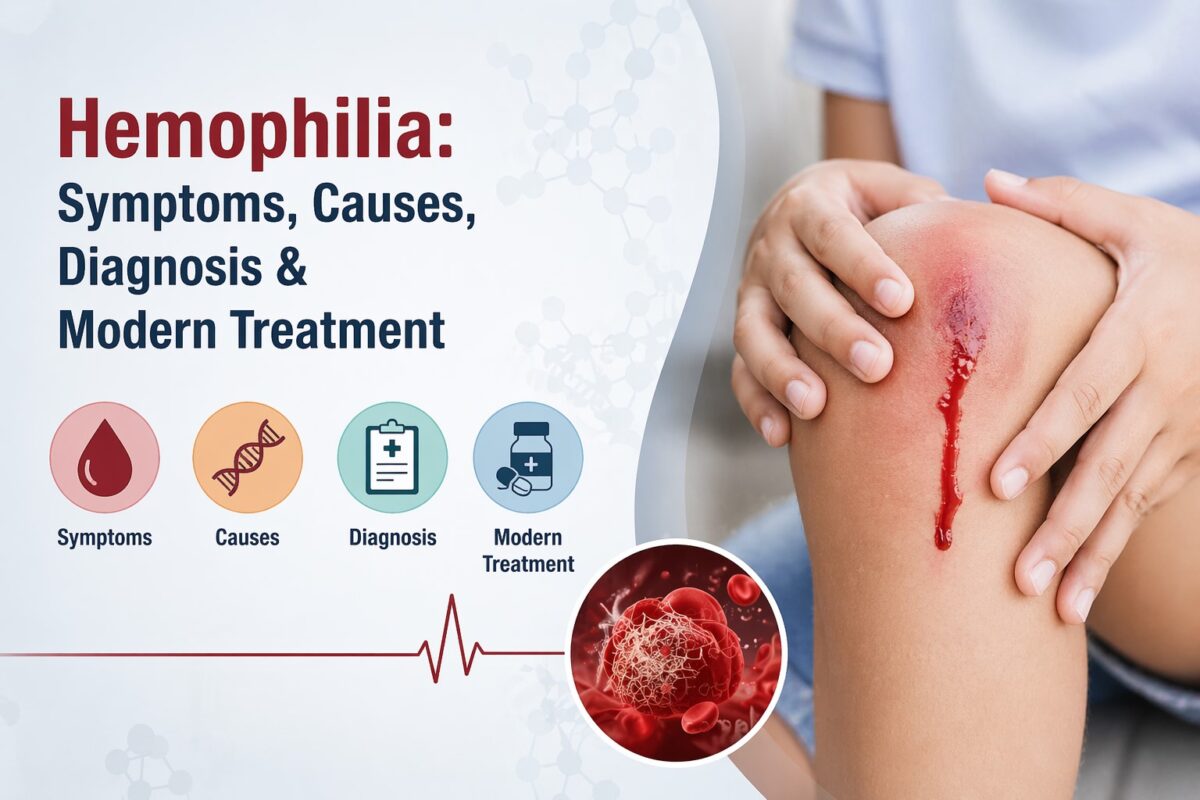
Hemophilia is a rare genetic bleeding disorder that affects the body’s ability to form blood clots. This condition leads to prolonged bleeding after injury and, in severe cases, spontaneous bleeding inside joints and muscles. Although it is uncommon, awareness about hemophilia is essential because early diagnosis and proper treatment can significantly improve quality of life.
This comprehensive blog explains everything you need to know about hemophilia, including its types, symptoms, causes, diagnosis, and the latest treatment options.
What is Hemophilia?
Hemophilia is a hereditary disorder where the blood lacks specific clotting factors required to stop bleeding. Normally, when a person gets injured, clotting factors work together to form a clot and stop bleeding. However, in hemophilia patients, one of these factors is either missing or present in low levels.
As a result, even minor injuries can lead to excessive bleeding, while severe cases may experience internal bleeding without any apparent cause.
Types of Hemophilia
Hemophilia is mainly classified into two common types:
1. Hemophilia A
This is the most common type and occurs due to the deficiency of clotting factor VIII.
2. Hemophilia B
Also known as Christmas disease, this type occurs due to the deficiency of clotting factor IX.
3. Hemophilia C (Rare)
This rare type is caused by a deficiency of factor XI and is usually milder compared to A and B.
Causes of Hemophilia
Hemophilia is primarily a genetic condition caused by mutations in genes responsible for producing clotting factors. It is usually inherited and passed from parents to children.
- The defective gene is located on the X chromosome.
- Males are more commonly affected than females.
- Females are typically carriers but may show mild symptoms in some cases.
In rare situations, hemophilia can develop later in life due to autoimmune conditions, known as acquired hemophilia.
Symptoms of Hemophilia
The symptoms of hemophilia vary depending on the severity of the condition. Common signs include:
- Prolonged bleeding after cuts or injuries
- Frequent nosebleeds
- Easy bruising
- Bleeding in joints causing pain and swelling
- Blood in urine or stool
- Excessive bleeding after dental procedures or surgeries
Severe hemophilia can lead to spontaneous bleeding episodes, especially in joints like knees, elbows, and ankles, which may cause long-term damage if untreated.
Severity Levels of Hemophilia
Hemophilia is categorized based on the level of clotting factor present in the blood:
- Mild: Bleeding occurs mainly after surgery or injury
- Moderate: Occasional spontaneous bleeding
- Severe: Frequent spontaneous bleeding episodes
Understanding the severity helps doctors plan the appropriate treatment strategy.
Diagnosis of Hemophilia
Early diagnosis is crucial for managing hemophilia effectively. The following tests are commonly used:
- Clotting factor tests: Measure levels of factor VIII or IX
- Activated Partial Thromboplastin Time (aPTT): Checks clotting ability
- Genetic testing: Identifies specific mutations
In families with a history of hemophilia, prenatal testing may also be recommended.
Complications Associated with Hemophilia
If not properly managed, hemophilia can lead to serious complications such as:
- Joint damage due to repeated bleeding
- Chronic pain and mobility issues
- Internal bleeding in vital organs
- Development of inhibitors (antibodies against clotting factors)
Regular monitoring and treatment can help prevent these complications.
Treatment Options for Hemophilia
There is no permanent cure for hemophilia, but modern treatments allow patients to live normal and active lives.
1. Clotting Factor Replacement Therapy
This is the primary treatment where missing clotting factors are injected into the bloodstream.
- On-demand therapy: Given during bleeding episodes
- Prophylactic therapy: Regular injections to prevent bleeding
2. Desmopressin (DDAVP)
Used in mild hemophilia A to stimulate the release of stored clotting factors.
3. Antifibrinolytic Medications
These help prevent clots from breaking down too quickly.
4. Gene Therapy (Advanced Treatment)
Gene therapy is an emerging option that aims to correct the defective gene responsible for hemophilia. It shows promising long-term results.
Lifestyle Management for Hemophilia Patients
Managing hemophilia involves more than just medical treatment. Lifestyle modifications play a key role:
- Avoid high-risk physical activities
- Maintain a healthy weight to reduce joint stress
- Practice good dental hygiene to prevent bleeding
- Use protective gear during physical activities
- Follow regular medical check-ups
Physiotherapy can also help strengthen joints and improve mobility.
Prevention and Genetic Counseling
Since hemophilia is a genetic disorder, it cannot be prevented completely. However, genetic counseling can help families understand the risk of passing the condition to future generations.
Carrier testing is recommended for women with a family history of hemophilia.
Living with Hemophilia
With advancements in medical care, individuals with hemophilia can lead productive lives. Early diagnosis, proper treatment, and awareness are key to managing the condition effectively.
Support groups and patient education programs also play an important role in improving mental and emotional well-being.
