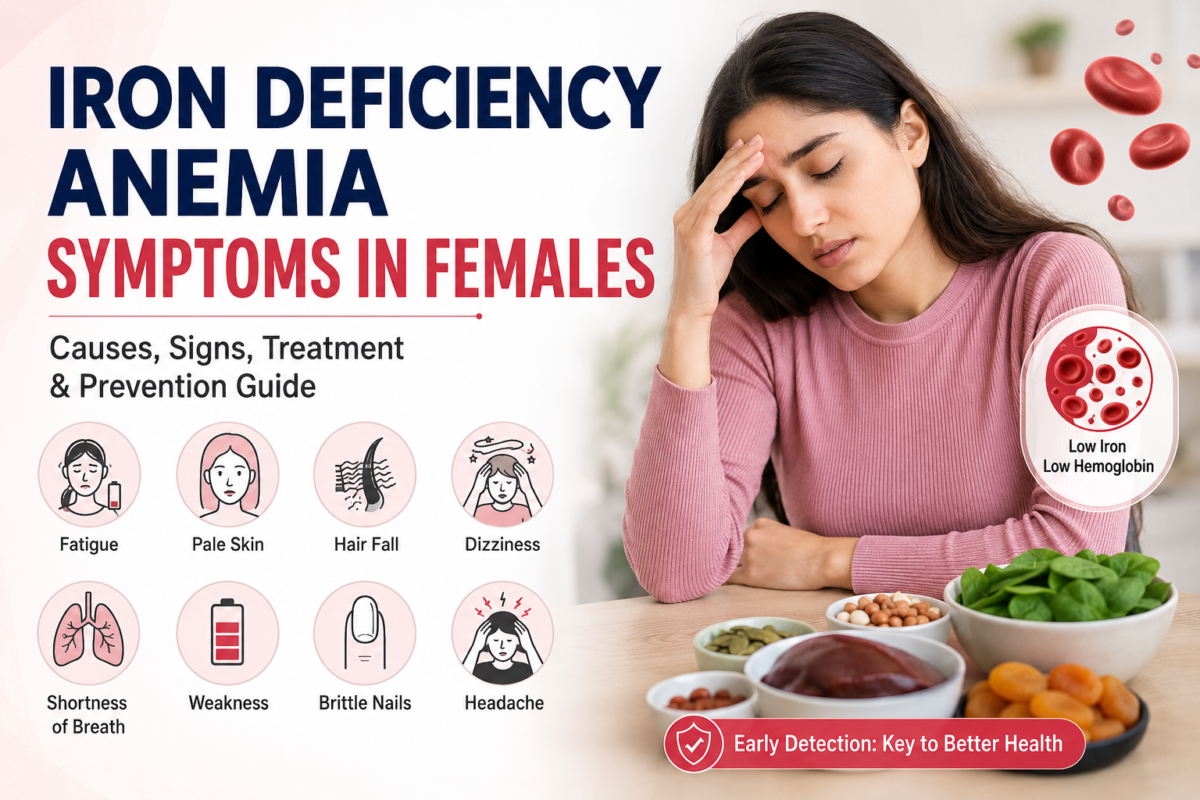
Iron deficiency is one of the leading nutritional disorders affecting women worldwide. It occurs when the body does not have enough iron to produce hemoglobin, a protein found in red blood cells that carries oxygen throughout the body. Iron deficiency is more common in women due to hormonal changes, menstruation, pregnancy, and increased nutritional requirements.
Women often ignore early signs of anemia because they assume that symptoms like fatigue or weakness can be attributed to lifestyle or stress. Untreated iron deficiency can have a negative impact on your physical health, your mental well-being and immunity. It can also affect how you function every day. Early diagnosis and treatment can prevent complications and improve the quality of life.
What is iron deficiency anemia?
Anemia due to iron deficiency occurs when there is not enough iron in the body to produce healthy blood cells. As hemoglobin drops, oxygen is not delivered to organs and tissues, leading to various cognitive and physical symptoms.
Untreated iron deficiency symptoms can appear in females gradually, and they may worsen with time. To restore normal iron levels, and to maintain good health, it is important to get a proper diagnosis early and receive the right treatment.
Common iron deficiency anemia symptoms in females
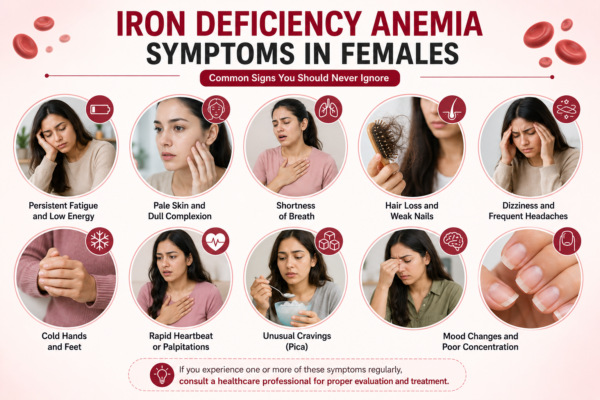
Low energy and persistent fatigue
Iron deficiency is a common cause of fatigue in women. Even after resting, women may still feel tired because their tissues do not receive enough oxygen.
Physical exertion can be caused by daily activities like walking, climbing the stairs or doing routine work.
Pale skin and dull complexion
A decrease in hemoglobin can lead to a paler skin tone, lips, gums and inner eyelids. Poor oxygen circulation can also cause a dull complexion in many women.
Shortness of breath
Women with low iron levels can experience breathlessness when doing mild exercise. The body has to work harder when there is not enough oxygen.
Hair loss and Weak nails
Iron is essential for maintaining healthy nails and hair. Iron deficiency symptoms are common in females, including excessive hair loss, brittle hair and nails, as well as slow nail growth.
Some nails can become spoon-shaped due to severe iron deficiencies.
Dizziness with Frequent Headaches
Dizziness, headaches, and lightheadedness can be caused by low oxygen levels in the brain. Women with anemia often experience mental fatigue and difficulty concentrating.
Cold Hands and Feet
Even in mild weather, cold extremities can be caused by poor circulation due to reduced hemoglobin levels.
Rapid Heartbeat or Palpitations
This is the heart compensating for low oxygen levels. Some women may experience an irregular heartbeat or chest discomfort.
Unusual Cravings
Some women who suffer from severe anemia can develop a craving for substances other than food, such as starch, chalk, clay or ice. Pica is the medical term for this condition.
Low concentration and mood changes
A lack of iron can cause neurological dysfunction, resulting in irritability and mood swings. It may also lead to reduced productivity, decreased focus, and decreased productivity.
The causes of iron deficiency anemia in females
Iron deficiency is a common problem among women.
Heavy Menstrual Bleeding
Iron deficiency symptoms are often caused by excessive blood loss during the menstrual cycle. Women who have heavy or prolonged periods are more at risk.
Pregnancy, Breastfeeding and the Effects of Breastfeeding
During pregnancy, iron is needed to support the fetal development and increase blood production. Anemia can be caused by inadequate iron intake during pregnancy.
Nutritional Deficiency
Iron stores can be significantly reduced by a poor diet. If not balanced, vegetarian or restrictive diets can increase the risk.
Digestive Disorders
Iron deficiency can be caused by conditions that affect iron absorption. These include celiac, inflammatory bowel, and gastric ulcers.
Chronic Blood Loss
Iron levels can be reduced over time by internal bleeding, surgery, and certain medical conditions.
Iron Deficiency and Risk Factors
Anemia is more common in certain groups of women, including:
- Adolescent girls
- Pregnant women
- Women with heavy menstrual periods
- Vegetarians who have low iron intake
- Women with Chronic Illness
- Poor nutrition habits are a sign of unhealthy eating habits
Women with high risk factors should undergo regular health screenings.
Iron Deficiency Anaemia: Diagnosis
Iron deficiency is diagnosed by healthcare professionals through laboratory tests and physical examination.
Diagnostic tests that are commonly used include:
- Complete Blood Count (CBC)
- Hemoglobin test
- Serum Ferritin Test
- Serum Iron Studies
- Blood Smear on the Peripheral Skin
These tests can help identify anemia, and the cause.
Treatment of Iron Deficiency Anemia for Females
Treatment is dependent on the severity and underlying condition of the anemia.
Iron Supplementation
Iron supplements, either orally or in pill form, are often prescribed to increase hemoglobin levels and replenish iron stores. To avoid side effects or an overdose, supplements should only be taken with medical supervision.
Dietary Modifications
Iron-rich foods are essential to recovery and prevention.
Iron-rich foods to eat include:
- Spinach and other green leafy vegetables
- Lentils, legumes
- Red meat and liver
- Eggs
- Fish and poultry
- Dates and raisins
- Pumpkin seeds
- Nuts and Dry Fruit
Iron absorption is enhanced by combining iron-rich foods such as tomatoes, citrus fruits and amla with Vitamin C.
Manage Underlying Conditions
Treatment of chronic diseases, such as gastrointestinal disorders or heavy menstrual blood, is essential for long-term improvements.
Intravenous iron therapy
Intravenous iron therapy is recommended in moderate-severe cases when oral iron supplements do not work.
Blood Transfusion
In emergency situations, severe iron deficiency with low hemoglobin levels can require blood transfusion.
Iron Deficiency Anemia: Prevention
Healthy lifestyle choices can help women reduce their risk of iron deficiency.
Maintain a Nutrient-Rich Diet
Iron-rich foods are essential for healthy hemoglobin formation.
Avoid Skipping Meals
Unhealthy eating habits can lead to low energy and nutritional deficiencies.
Monitor Menstrual Health
Women experiencing excessive bleeding during menstruation should consult a doctor as soon as possible.
Regular Health Checkups
Anemia can be detected early by routine blood tests.
Prenatal Care During Pregnancy
Women who are pregnant should adhere to medical advice about iron supplements and nutrition.
When to Consult with a Doctor
If symptoms like fatigue, dizziness or hair loss, as well as breathlessness and pale skin, persist over a long period of time, it is best to consult a doctor.
Early treatment can help prevent complications that affect cardiovascular health, immunity and daily functioning.
Conclusion
