
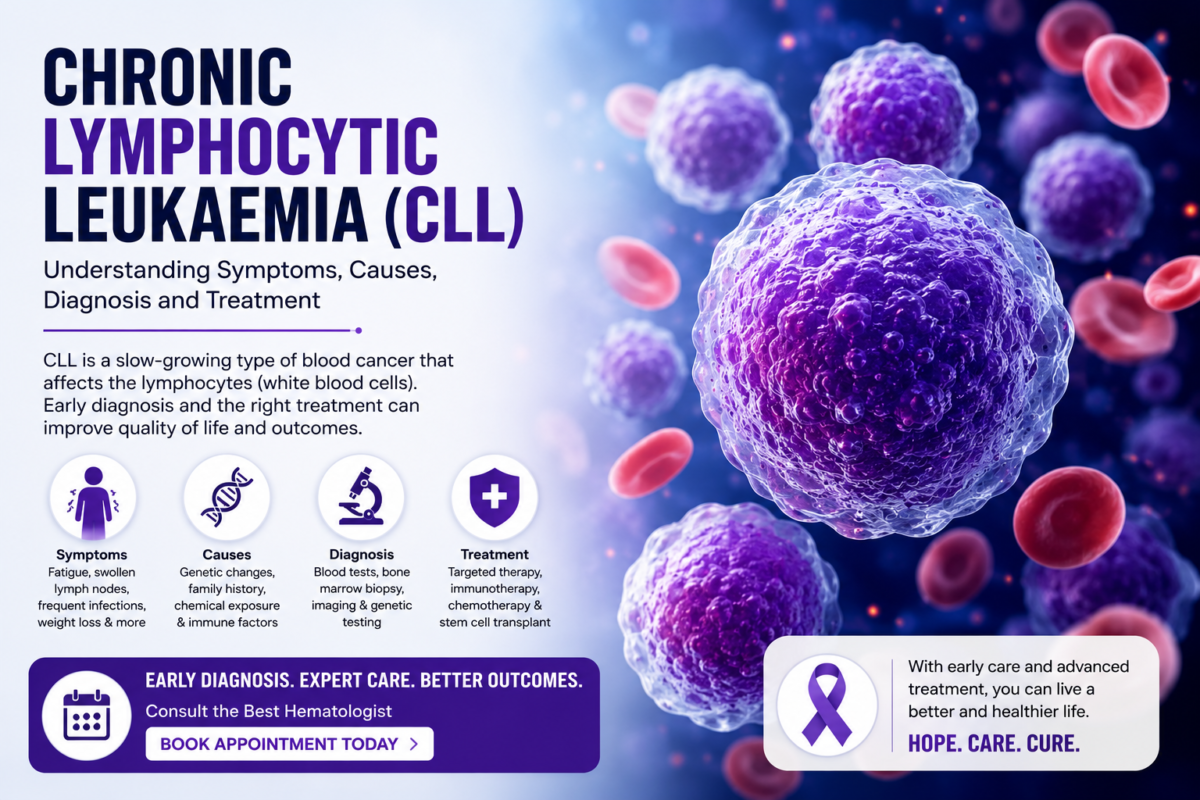
Chronic Lymphocytic Leukaemia (CLL) is a slow-growing type of blood cancer that affects the lymphocytes, which are a type of white blood cell responsible for protecting the body from infections. In Chronic Lymphocytic Leukaemia, the bone marrow produces abnormal lymphocytes that do not function properly. These unhealthy cells multiply over time and accumulate in the blood, bone marrow, lymph nodes, liver, and spleen.
Unlike acute leukemia, Chronic Lymphocytic Leukaemia usually progresses slowly and may remain unnoticed for years. Many people are diagnosed during routine blood tests before symptoms appear. However, as the disease advances, it can affect the immune system and interfere with the production of healthy blood cells.
Chronic Lymphocytic Leukaemia mainly affects older adults and is considered one of the most common forms of adult leukemia. Early diagnosis, regular monitoring, and appropriate treatment help manage the disease effectively and improve quality of life.
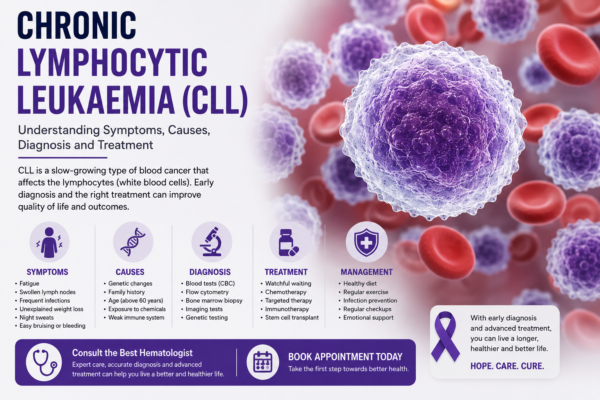
What is Chronic Lymphocytic Leukaemia?
Chronic Lymphocytic Leukaemia is a cancer of the blood and bone marrow that starts in the B lymphocytes, a type of white blood cell. Normally, lymphocytes help the body fight infections. In CLL, these cells become abnormal and survive longer than healthy cells.
As the number of abnormal lymphocytes increases, they crowd out healthy blood cells in the bone marrow. This may lead to anemia, infections, and bleeding problems. The disease develops gradually, and some patients may not require treatment immediately after diagnosis.
CLL can vary from person to person. Some individuals experience very slow disease progression, while others may develop aggressive symptoms that require early treatment.
Causes of Chronic Lymphocytic Leukaemia
The exact cause of Chronic Lymphocytic Leukaemia is still not fully understood. However, researchers believe that genetic mutations in blood-forming cells play an important role in the development of the disease.
These genetic changes cause abnormal lymphocytes to grow uncontrollably and survive longer than normal cells. Over time, these cancerous cells build up in the body and affect normal blood cell production.
Although the precise trigger remains unclear, several risk factors may increase the likelihood of developing Chronic Lymphocytic Leukaemia.
Risk Factors for Chronic Lymphocytic Leukaemia
Increasing Age
Chronic Lymphocytic Leukaemia is more common in older adults, especially individuals above 60 years of age.
Family History
People with a family history of leukemia or other blood cancers may have an increased risk of developing CLL.
Genetic Abnormalities
Certain chromosomal changes and inherited genetic factors are associated with the disease.
Exposure to Chemicals
Long-term exposure to pesticides, herbicides, and industrial chemicals may increase the risk.
Weak Immune System
Individuals with weakened immunity may be more vulnerable to developing blood-related cancers.
Gender
CLL is slightly more common in men compared to women.
Symptoms of Chronic Lymphocytic Leukaemia
Many individuals with Chronic Lymphocytic Leukaemia may not experience symptoms during the early stages. Symptoms often appear gradually as abnormal lymphocytes accumulate in the body.
Persistent Fatigue
Constant tiredness and weakness are among the most common symptoms of CLL.
Swollen Lymph Nodes
Enlarged lymph nodes in the neck, underarms, or groin may occur due to the buildup of abnormal lymphocytes.
Frequent Infections
Since CLL affects immune function, patients may develop repeated infections.
Fever and Night Sweats
Unexplained fever and excessive sweating during sleep may occur.
Unexplained Weight Loss
Sudden weight loss without changes in diet or exercise can be a warning sign.
Shortness of Breath
Reduced red blood cells may cause breathing difficulties and weakness.
Easy Bruising and Bleeding
Low platelet levels may lead to bleeding gums, nosebleeds, and bruising.
Enlarged Spleen
Some patients may experience abdominal discomfort or fullness due to spleen enlargement.
Diagnosis of Chronic Lymphocytic Leukaemia
Early diagnosis of Chronic Lymphocytic Leukaemia helps doctors monitor disease progression and decide the best treatment plan.
Complete Blood Count (CBC)
A CBC test measures white blood cells, red blood cells, and platelets. Elevated lymphocyte counts may indicate CLL.
Peripheral Blood Smear
This test examines blood cells under a microscope to identify abnormal lymphocytes.
Flow Cytometry
Flow cytometry helps confirm the diagnosis by identifying specific markers on abnormal lymphocytes.
Bone Marrow Aspiration and Biopsy
Bone marrow tests help evaluate the extent of leukemia involvement.
Imaging Tests
CT scans, PET scans, or ultrasound scans may be used to detect enlarged lymph nodes and spleen involvement.
Genetic and Molecular Testing
Genetic testing helps identify chromosomal abnormalities and predict disease behavior.
Stages of Chronic Lymphocytic Leukaemia
Doctors classify Chronic Lymphocytic Leukaemia into stages based on the extent of the disease and blood cell involvement.
Early Stage CLL
The disease is present in the blood with increased lymphocyte counts but minimal symptoms.
Intermediate Stage CLL
Lymph node enlargement, liver enlargement, or spleen involvement may occur.
Advanced Stage CLL
Advanced disease may lead to severe anemia, low platelet counts, infections, and significant complications.
Staging helps doctors determine the severity of the disease and choose the appropriate treatment approach.
Treatment Options for Chronic Lymphocytic Leukaemia
Treatment for Chronic Lymphocytic Leukaemia depends on factors such as age, symptoms, disease stage, and overall health.
Watchful Waiting
Some patients with slow-growing disease and no symptoms may not need immediate treatment. Doctors may monitor the condition through regular blood tests and checkups.
Chemotherapy
Chemotherapy drugs help destroy cancerous lymphocytes and slow disease progression.
Targeted Therapy
Targeted therapy uses medications that specifically attack cancer cells while causing less damage to healthy cells.
Immunotherapy
Immunotherapy strengthens the body’s immune system to recognize and destroy leukemia cells.
Monoclonal Antibody Therapy
These laboratory-made antibodies target specific proteins on cancer cells and improve treatment outcomes.
Radiation Therapy
Radiation may help reduce enlarged lymph nodes or spleen-related discomfort in selected cases.
Stem Cell or Bone Marrow Transplant
In aggressive or recurrent CLL cases, stem cell transplantation may be recommended for suitable patients.
Complications of Chronic Lymphocytic Leukaemia
Without proper treatment and monitoring, Chronic Lymphocytic Leukaemia can lead to several complications.
Severe Infections
Reduced immune function increases the risk of recurrent infections.
Anemia
Low red blood cell production can result in weakness and fatigue.
Bleeding Problems
Low platelet counts may increase bleeding risk.
Autoimmune Disorders
Some patients may develop autoimmune conditions that destroy healthy blood cells.
Richter’s Transformation
In rare cases, CLL may transform into a more aggressive form of lymphoma.
Secondary Cancers
Patients with CLL may have a slightly increased risk of developing other cancers.
Living with Chronic Lymphocytic Leukaemia
Many individuals with Chronic Lymphocytic Leukaemia continue to live active lives with proper medical care and lifestyle management.
Healthy Diet
Eating nutritious foods helps maintain strength and immunity.
Regular Exercise
Moderate physical activity improves energy levels and overall well-being.
Infection Prevention
Maintaining hygiene and avoiding infections are essential for CLL patients.
Regular Follow-Up
Routine blood tests and medical appointments help monitor disease progression.
Emotional Support
Counseling and support groups can help patients and families cope emotionally.
Prevention of Chronic Lymphocytic Leukaemia
There is no guaranteed way to prevent Chronic Lymphocytic Leukaemia. However, certain healthy habits may help reduce overall cancer risk.
- Avoid smoking and tobacco use
- Limit exposure to harmful chemicals
- Follow a balanced diet
- Exercise regularly
- Attend regular health checkups
- Maintain a healthy immune system
Prognosis of Chronic Lymphocytic Leukaemia
The prognosis of Chronic Lymphocytic Leukaemia varies depending on the stage, genetic factors, and response to treatment. Many patients with slow-growing CLL live for several years with proper monitoring and treatment.
Advances in targeted therapy, immunotherapy, and supportive care have significantly improved survival rates and quality of life for individuals with Chronic Lymphocytic Leukaemia.
Conclusion
Chronic Lymphocytic Leukaemia is a slow-growing blood cancer that requires timely diagnosis, regular monitoring, and expert medical care. Recognizing symptoms such as fatigue, swollen lymph nodes, frequent infections, and unexplained weight loss can help patients seek early treatment and avoid complications. Advances in chemotherapy, targeted therapy, immunotherapy, and stem cell transplantation have significantly improved treatment outcomes and quality of life for many patients.
Consulting the best hematologist is important for accurate diagnosis, personalized treatment planning, and long-term disease management. If you or your loved one experience symptoms related to Chronic Lymphocytic Leukaemia, do not delay medical attention. Early care and the right treatment approach can make a significant difference in recovery and overall health.
Book Appointment with an experienced hematology specialist today for expert evaluation and advanced treatment care.
