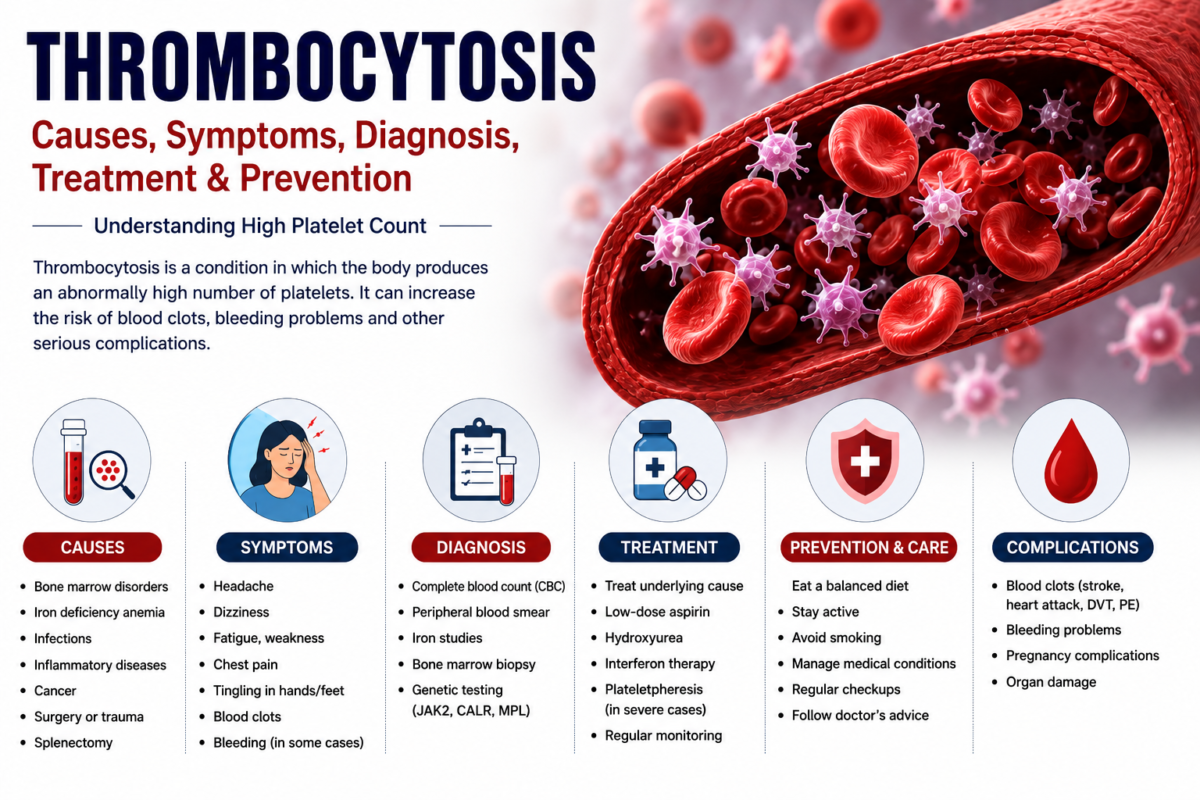
Thrombocytosis is a blood disorder in which the body produces an abnormally high number of platelets. Platelets are essential blood cells that help stop bleeding by forming clots. However, when platelet levels become too high, they may increase the risk of blood clots, stroke, heart attack, and other complications.
Thrombocytosis may occur as a temporary response to another health condition or due to a bone marrow disorder. Some individuals may not experience noticeable symptoms, while others may develop serious health problems. Early diagnosis and proper treatment are important for preventing complications and maintaining overall blood health.
What is Thrombocytosis?
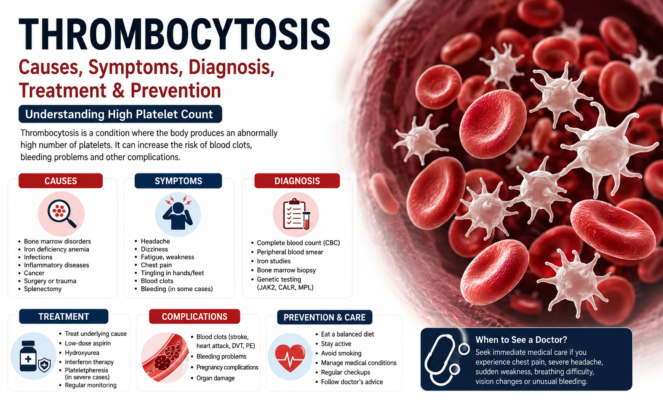
Thrombocytosis refers to an elevated platelet count in the bloodstream. A normal platelet count usually ranges between 150,000 and 450,000 platelets per microliter of blood. When platelet levels rise above this range, the condition is known as thrombocytosis.
Role of Platelets in the Body
Platelets perform several important functions, including:
- Helping blood clot after injury
- Preventing excessive bleeding
- Supporting wound healing
- Maintaining healthy blood vessels
Although platelets are necessary for survival, excessive platelet production may lead to abnormal clot formation.
Types of Thrombocytosis
Thrombocytosis is mainly classified into two types.
Primary Thrombocytosis
Primary thrombocytosis, also called essential thrombocythemia, develops because of abnormal bone marrow activity. In this condition, the bone marrow produces too many platelets without an external trigger.
Characteristics of Primary Thrombocytosis
- Caused by bone marrow disorders
- Platelet counts may become extremely high
- Increased risk of blood clots and bleeding
- Often requires long-term treatment
Secondary Thrombocytosis
Secondary thrombocytosis, also known as reactive thrombocytosis, occurs as a reaction to another medical condition or health problem.
Common Causes of Secondary Thrombocytosis
- Iron deficiency anemia
- Infections
- Inflammatory diseases
- Surgery
- Blood loss
- Cancer
- Removal of the spleen
This type is more common and usually improves after treating the underlying condition.
Causes of Thrombocytosis
Several medical conditions and lifestyle factors may contribute to thrombocytosis.
Bone Marrow Disorders
Certain diseases affecting the bone marrow can increase platelet production.
Associated Bone Marrow Conditions
- Essential thrombocythemia
- Polycythemia vera
- Myelofibrosis
These disorders interfere with normal blood cell production.
Iron Deficiency Anemia
Iron deficiency may stimulate excessive platelet production in some individuals.
Infections
Bacterial, viral, and fungal infections can temporarily increase platelet counts as part of the immune response.
Chronic Inflammatory Conditions
Inflammation in the body may lead to elevated platelet levels.
Examples Include
- Rheumatoid arthritis
- Tuberculosis
- Inflammatory bowel disease
Surgery and Trauma
Platelet production may increase during recovery after surgery or injury.
Cancer
Certain cancers can trigger high platelet production.
Commonly Associated Cancers
- Lung cancer
- Ovarian cancer
- Gastrointestinal cancers
- Lymphoma
Splenectomy
The spleen helps remove excess platelets. After spleen removal, platelet levels may rise significantly.
Symptoms of Thrombocytosis
Many people with thrombocytosis may not experience symptoms initially. Symptoms usually appear when platelet levels become very high or complications occur.
Common Symptoms
- Headache
- Dizziness
- Fatigue
- Weakness
- Chest discomfort
- Tingling sensation in hands and feet
- Vision disturbances
Symptoms Caused by Blood Clots
Excess platelets may lead to clot formation inside blood vessels.
Possible Clotting Complications
- Stroke
- Heart attack
- Deep vein thrombosis
- Pulmonary embolism
Bleeding Symptoms
Very high platelet counts may sometimes interfere with normal clotting function.
Common Bleeding Signs
- Nosebleeds
- Gum bleeding
- Easy bruising
- Blood in stool
- Heavy menstrual bleeding
Risk Factors for Thrombocytosis
Certain individuals may have a higher risk of developing thrombocytosis.
Major Risk Factors
- Older age
- Bone marrow disorders
- Chronic inflammatory diseases
- Iron deficiency
- Recent surgery
- Chronic infections
- Cancer
Women are slightly more likely to develop essential thrombocythemia than men.
Diagnosis of Thrombocytosis
Proper diagnosis helps determine the underlying cause and guide treatment.
Complete Blood Count (CBC)
A CBC test measures platelet levels and other blood components.
Peripheral Blood Smear
This test examines blood cells under a microscope to identify abnormalities.
Iron Studies
Iron tests help detect iron deficiency anemia.
Bone Marrow Biopsy
Bone marrow examination may be necessary if a bone marrow disorder is suspected.
Genetic Testing
Genetic mutations are commonly associated with primary thrombocytosis.
Common Genetic Mutations
- JAK2 mutation
- CALR mutation
- MPL mutation
These tests help confirm essential thrombocythemia and related disorders.
Treatment for Thrombocytosis
Treatment depends on the type, severity, symptoms, and underlying cause.
Treatment for Secondary Thrombocytosis
Reactive thrombocytosis usually improves after treating the underlying condition.
Common Treatment Approaches
- Treating infections
- Correcting iron deficiency
- Managing inflammatory diseases
- Treating underlying cancer
Treatment for Primary Thrombocytosis
Primary thrombocytosis may require medications to reduce platelet levels and lower clotting risk.
Common Medications
- Low-dose aspirin
- Hydroxyurea
- Interferon therapy
Plateletpheresis
Plateletpheresis is an emergency procedure used to rapidly reduce very high platelet levels.
Complications of Thrombocytosis
Untreated thrombocytosis may lead to serious health complications.
Blood Clots
Excessive clot formation may block blood flow to important organs.
Serious Complications Include
- Stroke
- Heart attack
- Pulmonary embolism
- Organ damage
Bleeding Complications
Abnormal platelet function may increase bleeding risk despite high platelet counts.
Pregnancy Complications
Pregnant women with essential thrombocythemia may experience complications.
Possible Pregnancy Risks
- Miscarriage
- Placental complications
- High blood pressure during pregnancy
Prevention of Thrombocytosis
Although primary thrombocytosis cannot always be prevented, healthy habits may help reduce complications and support blood health.
Healthy Lifestyle Habits
- Maintain a balanced diet
- Stay physically active
- Avoid smoking
- Limit alcohol intake
- Maintain healthy iron levels
Regular Medical Checkups
Routine blood tests can help detect abnormal platelet levels early.
Follow Prescribed Treatment
Patients diagnosed with bone marrow disorders should continue regular monitoring and treatment.
Diet and Lifestyle Tips for Thrombocytosis
Healthy lifestyle practices support circulation and overall wellness.
Recommended Lifestyle Changes
- Drink enough water
- Exercise regularly
- Control blood pressure
- Reduce stress
- Maintain healthy body weight
Foods That Support Blood Health
Recommended Foods
- Fresh fruits
- Green leafy vegetables
- Whole grains
- Nuts and seeds
- Omega-3-rich fish
Balanced nutrition supports healthy blood circulation and cardiovascular health.
When to Consult a Doctor
Medical attention is necessary if symptoms suggest clotting or bleeding complications.
Seek Immediate Medical Care If You Experience
- Severe headache
- Chest pain
- Difficulty breathing
- Sudden weakness
- Vision changes
- Unusual bleeding
Early diagnosis and treatment can help prevent serious complications.
Conclusion
Thrombocytosis is a condition characterized by elevated platelet counts that may increase the risk of blood clots and bleeding problems. While some cases occur due to temporary health conditions, others may result from bone marrow disorders requiring long-term care.
Proper diagnosis, regular monitoring, and timely treatment are essential for preventing complications and improving quality of life. Maintaining a healthy lifestyle, managing underlying conditions, and attending regular medical checkups can help support overall blood health.
Consulting the best hematologist can help ensure accurate diagnosis and personalized treatment for thrombocytosis. If you experience symptoms related to abnormal platelet counts or clotting problems, book appointment with a qualified specialist for detailed evaluation and expert care.
