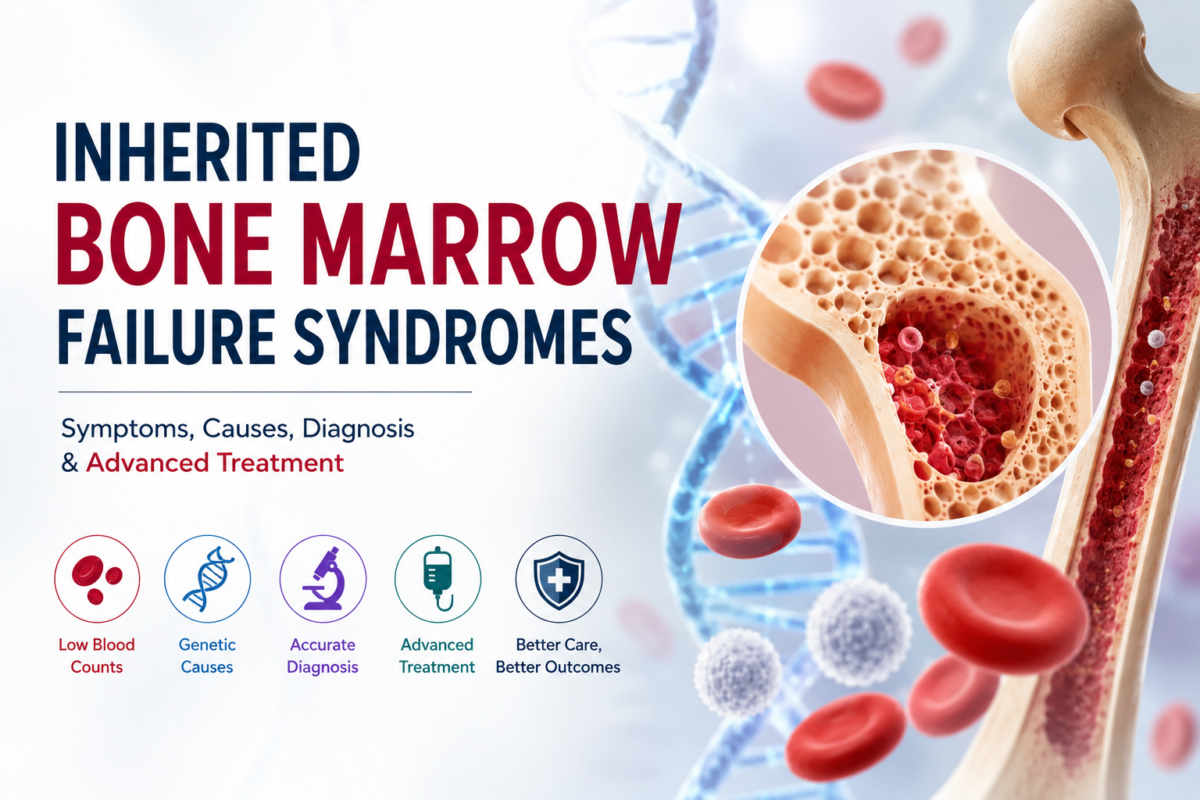
Inherited Bone Marrow Failure Syndromes (IBMFS) are a group of rare genetic disorders that affect the bone marrow’s ability to produce healthy blood cells. Bone marrow is the soft tissue present inside bones that produces red blood cells, white blood cells, and platelets. When the marrow fails to function properly, the body cannot maintain normal blood cell production, leading to anemia, infections, and bleeding complications.
These conditions are usually inherited through abnormal genes passed from parents to children. In some patients, symptoms appear during infancy or childhood, while others may develop signs later in life. Early diagnosis and advanced treatment play a major role in improving survival and quality of life.
What Are Inherited Bone Marrow Failure Syndromes?
Inherited Bone Marrow Failure Syndromes are genetic disorders in which the bone marrow gradually loses its ability to produce healthy blood cells. The condition may affect one blood cell type or all blood cell lines simultaneously.
Patients with these syndromes often experience:
- Low red blood cell counts
- Low white blood cell counts
- Low platelet levels
- Weak immune function
- Increased risk of leukemia and other cancers
Many patients also have physical abnormalities, developmental delays, or organ-related complications along with blood disorders.
Unlike acquired bone marrow failure, inherited forms are caused by genetic mutations that are present from birth.
How Bone Marrow Functions in the Body
Bone marrow acts as the body’s blood cell factory. It continuously produces:
Red Blood Cells
Red blood cells carry oxygen from the lungs to different tissues in the body.
White Blood Cells
White blood cells help protect the body from infections and harmful organisms.
Platelets
Platelets help blood clot properly and prevent excessive bleeding.
When bone marrow fails, the production of these cells decreases, causing multiple health problems.
Types of Inherited Bone Marrow Failure Syndromes
Several disorders fall under the category of Inherited Bone Marrow Failure Syndromes. Each condition has unique genetic causes and clinical features.
Fanconi Anemia
Fanconi Anemia is one of the most common inherited bone marrow failure disorders. It affects DNA repair mechanisms inside cells. Patients may develop:
- Bone marrow failure
- Growth retardation
- Skin pigmentation changes
- Thumb abnormalities
- Increased cancer risk
Bone marrow failure usually develops during childhood.
Dyskeratosis Congenita
Dyskeratosis Congenita affects telomeres, which protect chromosomes during cell division. Patients may experience:
- Abnormal skin pigmentation
- Nail changes
- White patches inside the mouth
- Lung and liver complications
- Progressive bone marrow failure
Shwachman-Diamond Syndrome
This condition affects the pancreas, bone marrow, and skeletal system. Common features include:
- Poor growth
- Digestive problems
- Frequent infections
- Low white blood cell counts
- Skeletal abnormalities
Diamond-Blackfan Anemia
Diamond-Blackfan Anemia mainly affects red blood cell production and usually appears during infancy.
Symptoms may include:
- Severe anemia
- Pale skin
- Weakness
- Congenital abnormalities
- Heart defects
Severe Congenital Neutropenia
This disorder causes extremely low neutrophil counts, making patients highly vulnerable to severe bacterial infections.
Some patients may later develop leukemia.
Causes of Inherited Bone Marrow Failure Syndromes
Inherited Bone Marrow Failure Syndromes occur because of mutations in genes responsible for:
- DNA repair
- Cell growth
- Stem cell function
- Blood cell production
- Telomere maintenance
These genetic mutations interfere with normal bone marrow activity and reduce healthy blood cell formation.
Inheritance Patterns
These disorders may follow different inheritance patterns:
Autosomal Dominant
Only one abnormal gene from either parent is enough to cause the disorder.
Autosomal Recessive
The child inherits abnormal genes from both parents.
X-Linked Inheritance
The defective gene is present on the X chromosome and mainly affects males.
Sometimes, new genetic mutations occur even without family history.
Symptoms of Inherited Bone Marrow Failure Syndromes
Symptoms depend on the severity of bone marrow failure and the specific syndrome involved.
Symptoms Related to Low Red Blood Cells
Low red blood cell counts cause anemia-related symptoms such as:
- Fatigue
- Weakness
- Pale skin
- Shortness of breath
- Dizziness
- Rapid heartbeat
Symptoms Related to Low White Blood Cells
Reduced white blood cell counts increase infection risk.
Patients may experience:
- Frequent fever
- Recurrent infections
- Mouth ulcers
- Delayed wound healing
- Severe bacterial infections
Symptoms Related to Low Platelets
Low platelet levels can cause bleeding complications such as:
- Easy bruising
- Bleeding gums
- Nosebleeds
- Tiny red spots on the skin
- Excessive bleeding after injury
Physical and Developmental Abnormalities
Many patients also develop:
- Short stature
- Skeletal deformities
- Skin pigmentation changes
- Delayed growth
- Learning difficulties
- Organ abnormalities
These physical signs often help doctors suspect inherited bone marrow disorders.
Diagnosis of Inherited Bone Marrow Failure Syndromes
Accurate diagnosis is important because treatment and long-term outcomes differ between syndromes.
Complete Blood Count (CBC)
A CBC helps identify low levels of red blood cells, white blood cells, and platelets.
Bone Marrow Examination
Bone marrow aspiration and biopsy help evaluate marrow cellularity and blood cell production.
Genetic Testing
Genetic testing confirms inherited mutations responsible for specific syndromes.
Modern molecular testing has significantly improved early diagnosis.
Chromosome Breakage Tests
Special laboratory tests are performed for Fanconi Anemia to identify abnormal DNA repair.
Imaging Studies
Imaging scans may be used to detect skeletal abnormalities or organ involvement.
Complications of Inherited Bone Marrow Failure Syndromes
Without proper treatment, these disorders can lead to severe complications.
Severe Infections
Low white blood cell counts increase susceptibility to dangerous bacterial and fungal infections.
Chronic Anemia
Persistent anemia affects oxygen delivery and overall physical development.
Bleeding Disorders
Low platelet counts can result in severe bleeding episodes.
Leukemia and Cancer Risk
Patients with Inherited Bone Marrow Failure Syndromes have a higher risk of:
- Acute Myeloid Leukemia (AML)
- Myelodysplastic Syndrome (MDS)
- Head and neck cancers
- Gastrointestinal cancers
Organ Damage
Some syndromes affect organs such as:
- Liver
- Lungs
- Kidneys
- Pancreas
- Heart
Advanced Treatment for Inherited Bone Marrow Failure Syndromes
Treatment depends on the patient’s age, symptoms, blood counts, and underlying syndrome.
Blood Transfusions
Patients with severe anemia or thrombocytopenia may require regular blood transfusions.
Antibiotics and Infection Prevention
Prompt treatment of infections is essential. Preventive antibiotics may be prescribed for some patients.
Growth Factor Therapy
Growth factors stimulate the bone marrow to produce blood cells and improve blood counts.
Immunosuppressive Therapy
Certain medications suppress immune-related marrow damage and improve bone marrow function.
Bone Marrow Transplantation
Hematopoietic stem cell transplantation is considered the most effective curative treatment for many inherited bone marrow failure disorders.
Healthy donor stem cells replace defective bone marrow and restore blood cell production.
Early transplantation often provides better long-term outcomes.
Gene Therapy
Gene therapy is an emerging treatment option. Researchers are working on correcting defective genes to restore normal marrow function.
This advanced treatment may offer future hope for patients with inherited disorders.
Long-Term Care and Monitoring
Patients with Inherited Bone Marrow Failure Syndromes require lifelong medical monitoring.
Regular follow-up helps detect:
- Worsening marrow failure
- Infections
- Organ complications
- Cancer development
Doctors may recommend periodic blood tests, imaging studies, and cancer screening.
Lifestyle and Supportive Care
Supportive care plays an important role in improving quality of life.
Healthy Nutrition
A balanced diet supports overall health and immunity.
Infection Prevention
Good hygiene and avoiding exposure to infections are essential.
Emotional Support
Living with a chronic genetic disorder can affect mental health. Psychological counseling and family support are beneficial.
Genetic Counseling
Families benefit from genetic counseling to understand inheritance patterns and future pregnancy risks.
Importance of Early Diagnosis
Early diagnosis of Inherited Bone Marrow Failure Syndromes helps prevent serious complications and improves treatment success.
Children with unexplained anemia, frequent infections, abnormal bleeding, or growth problems should undergo detailed hematology evaluation.
Advances in genetic testing now allow earlier and more accurate diagnosis than ever before.
Conclusion
Inherited Bone Marrow Failure Syndromes are rare genetic disorders that can seriously affect blood cell production and overall health. Early diagnosis, proper monitoring, and advanced treatment options such as bone marrow transplantation can help improve patient outcomes and quality of life. Understanding the symptoms and seeking timely medical care are essential to prevent complications and manage the condition effectively. Consulting the best hematologist for accurate diagnosis and personalized treatment can make a significant difference in long-term recovery and care. If you notice symptoms related to bone marrow disorders, do not delay to book appointment with an experienced hematology specialist for expert evaluation and treatment.
