A bone marrow or stem cell transplant can be an important treatment for several blood disorders and blood cancers. After an allogeneic bone marrow transplant, where stem cells come from a donor, patients are closely monitored for possible complications. One of these complications is graft-versus-host disease (GVHD).
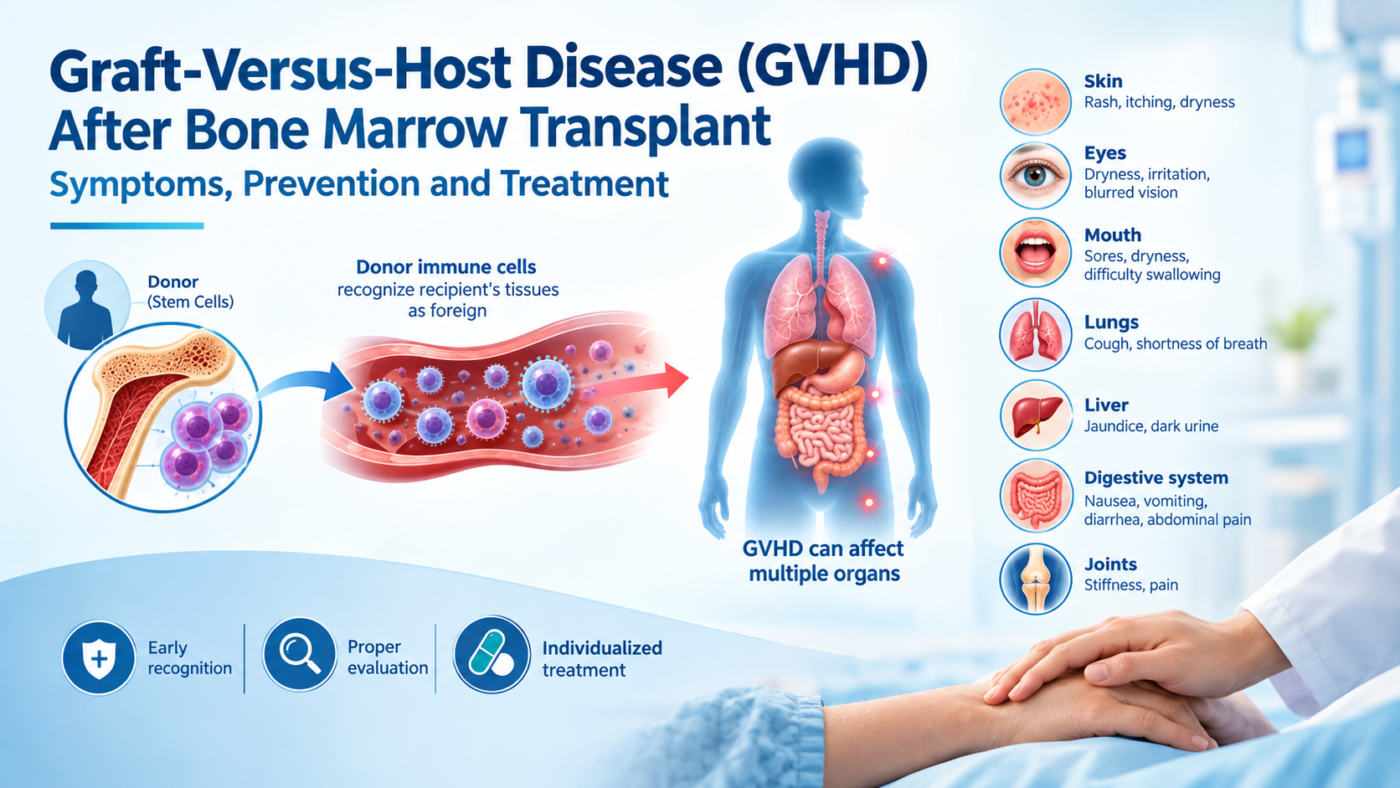
GVHD occurs when immune cells from the donated stem cells recognize the recipient’s tissues as foreign and begin attacking them. It can affect different parts of the body, including the skin, digestive system, liver, eyes, mouth, lungs and joints. Not every transplant patient develops GVHD, and symptoms can vary significantly from one person to another.
Understanding the early signs of GVHD after bone marrow transplant can help patients seek medical attention promptly and receive appropriate treatment.
What Is GVHD After a Bone Marrow Transplant?
Graft-versus-host disease is an immune-related complication that can occur after an allogeneic bone marrow or blood stem cell transplant.
The donated cells, known as the graft, contain immune cells that help establish a new immune system in the recipient. In some situations, these donor immune cells recognize the recipient’s body as different and attack healthy tissues. This immune response is known as GVHD.
GVHD does not occur in every transplant patient. Its likelihood and severity can depend on several factors, including the donor-recipient match, transplant characteristics and the patient’s individual circumstances.
Acute vs Chronic GVHD
GVHD is generally described as acute GVHD or chronic GVHD. These forms can have different patterns and symptoms.
| Acute GVHD | Chronic GVHD |
|---|---|
| Often develops during the early weeks or months after transplant | Can develop months after transplant and sometimes later |
| Commonly affects the skin, digestive system and liver | Can affect the skin, eyes, mouth, lungs, joints and other organs |
| May cause rash, diarrhea, nausea or liver-related symptoms | May cause dry eyes, mouth problems, skin changes, joint stiffness or breathing problems |
Modern medical classification does not rely only on a fixed “100-day” rule. Some patients can develop acute-type or chronic-type features at different times after transplant.
Symptoms of GVHD After Bone Marrow Transplant
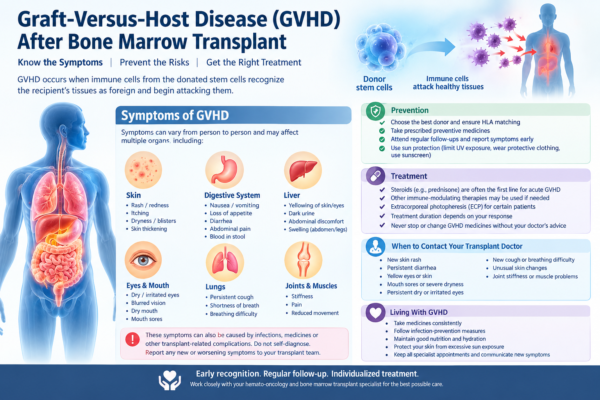
Recognizing possible GVHD symptoms after bone marrow transplant is important. However, many of these symptoms can also occur because of infections, medicines or other transplant-related complications. Therefore, patients should not attempt to diagnose GVHD themselves.
Skin Symptoms
GVHD affecting the skin may cause:
- Red or sunburn-like rash
- Itching
- Skin dryness
- Blisters
- Changes in skin texture or color
- Skin thickening or tightening in chronic GVHD
Skin symptoms may develop gradually and can change over time.
Digestive Symptoms
Possible digestive symptoms include:
- Persistent nausea
- Vomiting
- Loss of appetite
- Diarrhea
- Abdominal pain or cramping
- Bloating
- Blood in the stool
Persistent diarrhea after a transplant should always be discussed with the transplant team because it may have several possible causes.
Liver Symptoms
GVHD involving the liver may cause:
- Yellowing of the skin or eyes
- Dark-colored urine
- Abdominal discomfort
- Swelling in the abdomen or legs
Laboratory tests may also help doctors identify liver involvement.
Eye and Mouth Symptoms
Chronic GVHD may affect the eyes and mouth, causing:
- Dry or irritated eyes
- Blurred vision
- Excessive tearing
- Dry mouth
- Mouth sores
- Mouth irritation
- Difficulty opening the mouth
These symptoms can interfere with everyday activities, eating and overall comfort.
Lung Symptoms
Patients should report symptoms such as:
- Persistent cough
- Shortness of breath
- Difficulty breathing
Lung symptoms after transplant require medical evaluation because infections and other complications can produce similar symptoms.
How Is GVHD Diagnosed?
There is no single test that confirms every case of GVHD. Doctors consider the patient’s transplant history, symptoms and physical examination along with appropriate investigations.
Depending on the symptoms, evaluation may include blood tests, liver function tests, imaging or a biopsy of an affected area. The transplant team may also need to rule out infections and other conditions that can cause similar symptoms.
Early recognition is important because prompt evaluation and treatment can help reduce the risk of complications.
Can GVHD Be Prevented?
Doctors take several steps to reduce the risk of GVHD before and after an allogeneic transplant.
Donor Matching
Finding an appropriate donor and assessing HLA matching are important parts of transplant planning. The degree of compatibility between donor and recipient can influence GVHD risk.
Preventive Medicines
Patients may receive medicines that suppress or regulate the donor immune response. These medicines must be taken exactly as prescribed. Stopping or missing medication without medical advice can increase risks.
Regular Monitoring
Patients should attend scheduled transplant follow-ups and report new symptoms early. Early detection allows the transplant team to investigate symptoms and begin appropriate treatment when necessary.
Sun Protection
UV exposure may increase the risk of developing or worsening chronic GVHD. Patients may be advised to limit excessive sun exposure, use protective clothing and apply appropriate sunscreen as recommended by their healthcare team.
How Is GVHD Treated?
GVHD treatment depends on the type, severity and organs affected. Treatment is individualized rather than being the same for every patient.
Steroids such as prednisone are commonly used as an initial treatment for many cases of acute GVHD. Other immune-modulating treatments may be considered when GVHD does not respond adequately or when additional treatment is needed.
For selected patients, treatments such as extracorporeal photopheresis (ECP) may be considered, particularly when GVHD has not responded sufficiently to steroid treatment. During ECP, blood is collected, certain cells are treated with a light-based process and the blood is returned to the patient.
Treatment may continue for weeks, months or longer depending on the patient’s response. Patients should never reduce, stop or change GVHD medicines without consulting their transplant specialist.
When Should You Contact Your Transplant Doctor?
After a bone marrow transplant, do not ignore new or worsening symptoms such as:
- A new skin rash
- Persistent diarrhea
- Yellow eyes or skin
- Mouth sores or severe dryness
- Persistent dry or irritated eyes
- New cough or breathing difficulty
- Unusual skin changes
- New joint stiffness or muscle problems
These symptoms do not automatically mean that you have GVHD. However, they should be evaluated promptly because early diagnosis and treatment can be important.
Living With GVHD After Bone Marrow Transplant
Living with GVHD may require regular medical follow-up and long-term monitoring. Patients should take prescribed medicines consistently, follow infection-prevention recommendations, maintain good nutrition and hydration, protect their skin from excessive sun exposure and attend recommended specialist appointments.
Depending on the organs affected, patients may need coordinated care involving transplant specialists and other healthcare professionals, such as dermatologists, eye specialists, dentists or pulmonary specialists.
Most importantly, patients should communicate any new symptoms to their transplant team instead of waiting for them to become severe.
Conclusion
Graft-Versus-Host Disease (GVHD) is a significant complication that can occur after an allogeneic bone marrow or stem cell transplant. Although GVHD can affect different organs and its symptoms may vary from patient to patient, early recognition, careful monitoring and timely specialist treatment can help in effective management.
Patients who develop a new rash, persistent diarrhea, jaundice, mouth or eye problems, breathing difficulties, or other unusual symptoms after transplantation should seek medical advice without delay. Regular follow-up with a transplant specialist is also important for monitoring recovery and managing any complications that may arise.
Choosing the right specialist can make an important difference in the journey after a bone marrow transplant. If you are looking for an experienced Best Hematologist in India for expert evaluation and personalized care for GVHD, bone marrow transplantation, stem cell transplantation and other blood disorders, professional medical guidance can help you understand the available treatment options.
Book an Appointment
Take the next step toward expert hematology and transplant care. Book an appointment today for personalized consultation, comprehensive evaluation and appropriate treatment guidance.
