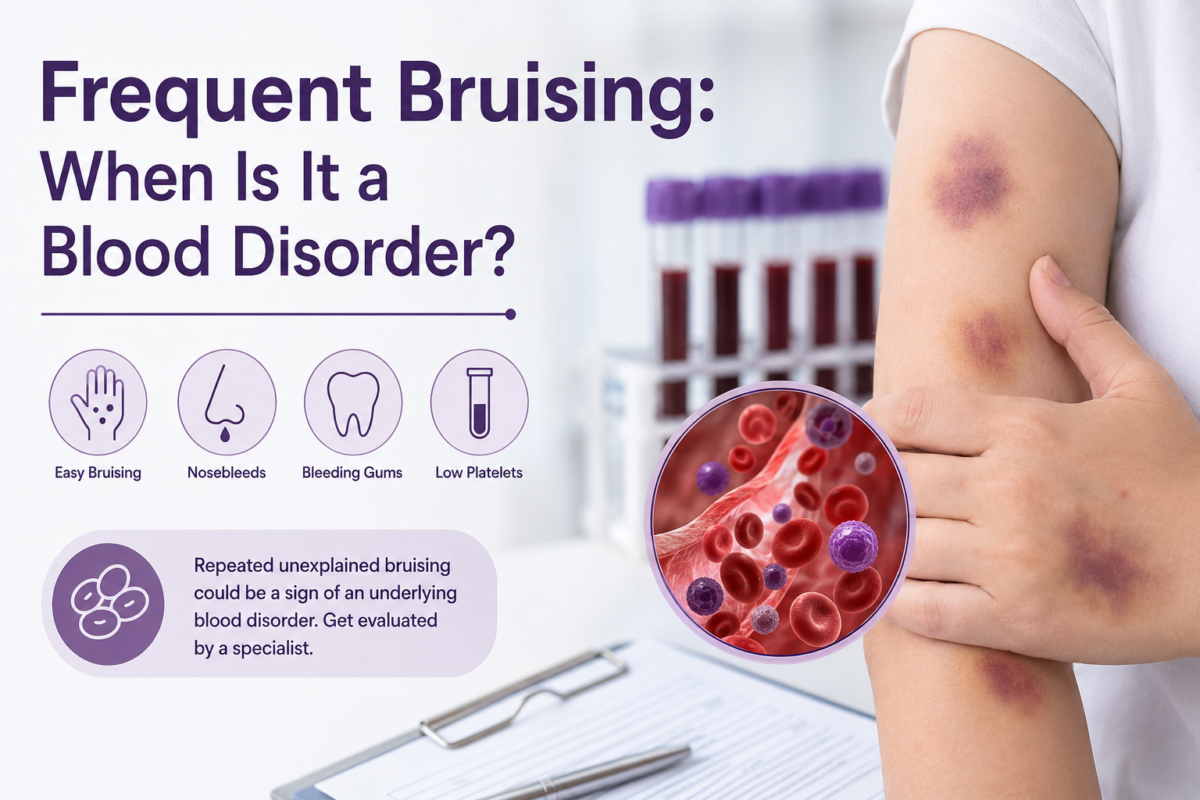
Noticing a bruise after bumping into something is usually not a reason for concern. Bruises commonly develop when small blood vessels under the skin are damaged, allowing blood to leak into the surrounding tissues. The area may initially appear red or purple and gradually change color as the body reabsorbs the blood.
However, frequent bruising without an obvious injury can sometimes indicate an underlying health problem. If bruises appear repeatedly, become unusually large, or occur along with other symptoms such as nosebleeds, bleeding gums, heavy menstrual bleeding, or prolonged bleeding from minor cuts, it may be important to investigate the cause.
Blood disorders are one possible reason for unexplained bruising, but they are not the only cause. Understanding why frequent bruising happens and when medical evaluation is necessary can help identify potential problems early.
What Causes Bruising?
Bruising occurs when small blood vessels, known as capillaries, become damaged. Blood then escapes from these vessels and collects beneath the skin, producing the familiar discoloration.
Minor injuries are the most common cause of bruises. However, some people may bruise more easily because of their age, medications, nutritional status, or an underlying medical condition.
As a bruise heals, its color may change from red or purple to blue, green, yellow, and eventually back to the normal skin color. This is part of the body’s natural healing process.
Occasional bruising is generally normal. The concern arises when bruising becomes frequent, unexplained, unusually extensive, or is accompanied by other bleeding symptoms.
When Is Frequent Bruising Concerning?
Frequent bruising deserves medical attention when there is no clear explanation for why the bruises are appearing.
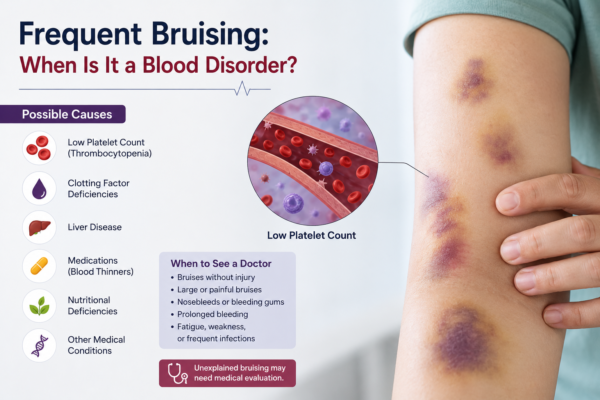
You may want to consult a doctor if you notice:
- Bruises appearing frequently without injury
- Large or unusually painful bruises
- Bruises appearing in multiple areas of the body
- Repeated nosebleeds
- Bleeding gums
- Prolonged bleeding after minor cuts
- Heavy menstrual bleeding
- Blood in urine or stool
- Small red or purple spots on the skin
- Persistent fatigue or weakness
- Frequent infections
- Unexplained weight loss or fever
These symptoms do not necessarily mean that you have a blood disorder. However, when several of them occur together, medical evaluation can help determine the underlying cause.
Can Frequent Bruising Be a Sign of a Blood Disorder?
Yes, in some cases.
Blood clotting depends on a complex interaction between blood vessels, platelets, and clotting proteins. If any part of this process is affected, a person may develop unusual or excessive bleeding and bruising.
Low platelet count, also known as thrombocytopenia, is one possible cause. Platelets help form the initial plug that stops bleeding when a blood vessel is damaged. When platelet levels are significantly reduced or platelets do not function properly, bruising and bleeding may become more noticeable.
Certain blood disorders can also affect the production or function of blood cells and clotting components. In some situations, frequent bruising may therefore be one of several symptoms that leads a doctor to investigate the blood and bone marrow.
What Other Conditions Can Cause Easy Bruising?
Blood disorders are only one possible explanation for frequent bruising.
Certain medications can increase the tendency to bruise. Blood-thinning medicines and some other medications may affect clotting or platelet function. Anyone taking such medicines should not stop them without discussing it with their doctor.
Nutritional deficiencies may also contribute to abnormal bleeding or bruising in some individuals. Certain vitamins are important for maintaining healthy blood vessels and normal clotting.
Liver disease can affect the production of proteins involved in blood clotting. As a result, some people with significant liver problems may experience easier bruising or bleeding.
Age can also play a role. As people get older, the skin can become thinner and the protective fatty tissue beneath the skin may decrease. This can make blood vessels more vulnerable to injury.
Certain connective tissue conditions, hormonal factors, and other medical conditions may also contribute to easy bruising.
Because there are many possible causes, persistent unexplained bruising should be evaluated rather than assuming that it is caused by a particular condition.
The Connection Between Platelets and Bruising
Platelets are small blood components that play a critical role in stopping bleeding.
When a blood vessel is injured, platelets gather at the site and help form a clot. If the platelet count becomes too low, the body may have more difficulty controlling bleeding from damaged blood vessels.
People with low platelet levels may develop easy bruising, tiny red or purple spots on the skin called petechiae, nosebleeds, bleeding gums, or prolonged bleeding.
However, the severity of symptoms does not always depend on the platelet count alone. The cause of the low platelet count and how well the platelets function are also important.
A hematologist can evaluate the complete clinical picture and determine whether further testing is necessary.
What Tests May Be Recommended for Frequent Bruising?
If you consult a doctor about unexplained bruising, the evaluation usually begins with a detailed medical history and physical examination.
Your doctor may ask when the bruising started, how often it occurs, whether there is a family history of bleeding problems, what medications or supplements you take, and whether you experience other bleeding symptoms.
A complete blood count (CBC) is often an important initial investigation. It provides information about red blood cells, white blood cells, and platelets.
Depending on the findings, additional blood tests may be recommended to evaluate blood clotting and other possible causes.
In some situations, further investigations may be required to assess platelet function, clotting factors, liver function, nutritional status, or the bone marrow.
The exact tests depend on the patient’s symptoms, medical history, examination findings, and initial laboratory results.
Does Frequent Bruising Mean Blood Cancer?
Frequent bruising does not automatically mean blood cancer.
Many common and treatable conditions can cause easy bruising. Medications, nutritional deficiencies, low platelet counts, liver problems, and other conditions can all contribute.
However, unexplained bruising may sometimes occur alongside other symptoms in people with certain blood disorders, including some blood cancers. This is why persistent or unexplained bruising should be evaluated when it is accompanied by other concerning symptoms or abnormal blood test results.
A medical evaluation can help distinguish between common causes and conditions that require further investigation.
When Should You See a Hematologist?
A hematologist specializes in diagnosing and treating disorders involving blood, blood-forming tissues, and the bone marrow.
Consider seeking evaluation from a hematologist if you have persistent unexplained bruising, particularly if it is accompanied by abnormal blood counts, recurrent bleeding, low platelet levels, unexplained anemia, frequent infections, persistent fever, or other concerning symptoms.
A hematologist can review your previous blood reports, perform an appropriate examination, and recommend further investigations when necessary.
Early evaluation does not mean that a serious disease is present. Instead, it helps identify the cause and ensures that any condition requiring treatment is addressed appropriately.
How Can You Reduce the Risk of Unexplained Bruising?
If you bruise easily, taking simple precautions can help reduce accidental injuries. Protecting the skin during activities, maintaining a balanced diet, and discussing medications with your doctor may be helpful.
If you take medicines that affect blood clotting, do not change the dose or stop treatment on your own. Your doctor can determine whether the medication could be contributing to your symptoms and whether any adjustment is appropriate.
Most importantly, do not ignore repeated unexplained bruising, especially when it is accompanied by bleeding or other changes in your health.
Final Thoughts
Occasional bruising after a minor injury is usually a normal part of everyday life. However, frequent bruising without an obvious cause can sometimes be a sign that your blood, platelets, clotting system, or another part of your health needs evaluation.
While frequent bruising does not necessarily indicate a blood disorder or blood cancer, persistent or unexplained symptoms should not be overlooked. A detailed medical assessment and appropriate blood tests can help identify the underlying cause.
If you are experiencing unexplained bruising, abnormal bleeding, or changes in your blood counts, consulting a Top Hematologist in India can help you receive appropriate evaluation and medical guidance.
Book Appointment today for expert evaluation and personalized care.
