
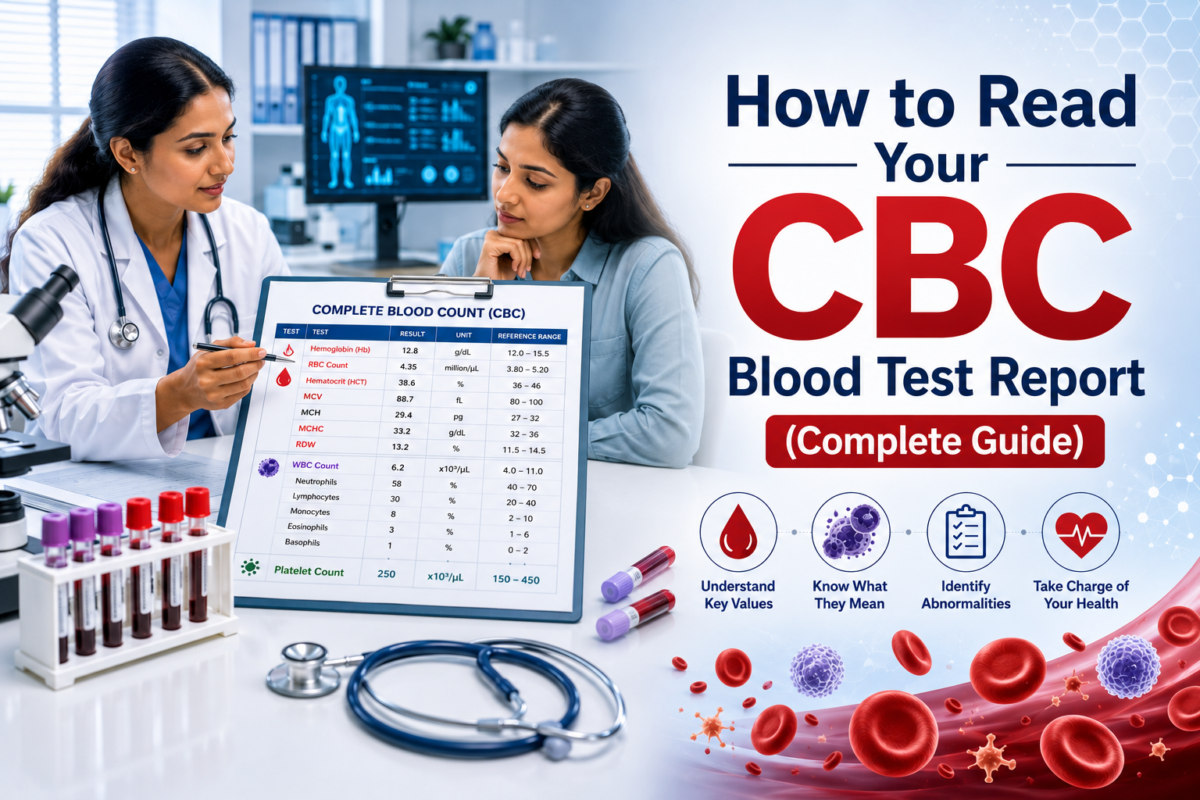
Have you recently received a Complete Blood Count (CBC) report and found yourself staring at terms like RBC, WBC, Hemoglobin, Platelets, MCV, MCH, and Hematocrit, wondering what they actually mean? You’re not alone. A CBC report is one of the most commonly performed blood tests, yet it often leaves patients confused because of its medical terminology and numerical values.
The good news is that understanding the basics of your CBC report doesn’t require a medical degree. Knowing what each parameter measures can help you have a more informed conversation with your doctor and better understand your overall health. However, it’s equally important to remember that a CBC report should never be interpreted in isolation. Your symptoms, medical history, and other investigations all play an important role in arriving at an accurate diagnosis.
In this complete guide, we’ll explain every major component of a CBC blood test in simple language, discuss what abnormal results may indicate, and help you understand when it’s time to consult a hematologist.
What is a CBC Blood Test?
A Complete Blood Count (CBC) is a routine laboratory test that evaluates the different types of cells circulating in your blood. It provides valuable information about your body’s overall health and is often one of the first tests doctors order during routine health checkups or when investigating symptoms such as fatigue, fever, infections, unexplained bruising, dizziness, or weight loss.
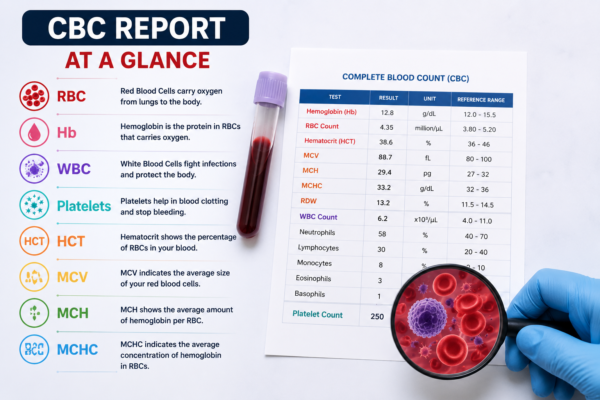
Your blood contains three major types of cells:
- Red Blood Cells (RBCs): Carry oxygen from the lungs to the body’s tissues.
- White Blood Cells (WBCs): Help fight infections and support your immune system.
- Platelets: Assist in blood clotting and prevent excessive bleeding.
A CBC measures these cells along with several related values, helping doctors detect a wide range of medical conditions, from nutritional deficiencies to blood disorders and certain cancers.
Why is a CBC Test Important?
Although a CBC is considered a routine blood test, it provides a wealth of information about your health. Doctors use it to:
- Detect different types of anemia.
- Identify bacterial or viral infections.
- Evaluate inflammation in the body.
- Monitor chemotherapy or other cancer treatments.
- Diagnose blood disorders.
- Assess bone marrow function.
- Detect bleeding or clotting disorders.
- Identify signs of blood cancers such as leukemia and lymphoma.
- Monitor chronic illnesses and ongoing treatment.
Because a CBC can reveal early changes in blood cell counts, it often helps detect health problems before symptoms become severe.
Understanding Each Component of Your CBC Report
Hemoglobin (Hb)
Hemoglobin is a protein found inside red blood cells. Its primary function is to carry oxygen from your lungs to every part of your body.
When hemoglobin levels are low, your organs receive less oxygen, often resulting in symptoms such as fatigue, weakness, dizziness, headaches, and shortness of breath.
Low hemoglobin may occur due to iron deficiency, vitamin B12 deficiency, chronic kidney disease, blood loss, or bone marrow disorders.
High hemoglobin levels may be seen in smokers, people living at high altitudes, individuals with chronic lung disease, or those with dehydration.
Red Blood Cell (RBC) Count
Red blood cells transport oxygen and nutrients throughout the body.
A low RBC count commonly indicates anemia, nutritional deficiencies, chronic diseases, or bone marrow problems.
A high RBC count may occur because of dehydration, smoking, high-altitude living, or a condition called Polycythemia Vera.
Doctors interpret the RBC count together with hemoglobin and hematocrit values to determine the underlying cause.
White Blood Cell (WBC) Count
White blood cells are an essential part of your immune system. They help protect your body from bacteria, viruses, fungi, and other harmful organisms.
A high white blood cell count may suggest:
- Bacterial infections
- Inflammation
- Physical or emotional stress
- Steroid medication use
- Certain blood cancers
A low white blood cell count may result from:
- Viral infections
- Autoimmune diseases
- Bone marrow disorders
- Chemotherapy
- Certain medications
Abnormal WBC counts should always be evaluated along with symptoms and other laboratory findings.
Platelet Count
Platelets are tiny blood cells responsible for forming blood clots whenever you sustain an injury.
A low platelet count may cause easy bruising, frequent nosebleeds, bleeding gums, prolonged bleeding from cuts, or heavy menstrual bleeding.
Low platelets can occur due to viral infections, immune thrombocytopenia (ITP), dengue fever, certain medications, chemotherapy, or bone marrow diseases.
High platelet counts are often associated with inflammation, iron deficiency, infections, or certain bone marrow disorders.
Hematocrit (HCT)
Hematocrit measures the percentage of your blood made up of red blood cells.
Low hematocrit usually indicates anemia, while elevated values may result from dehydration or increased red blood cell production.
Doctors often compare hematocrit with hemoglobin and RBC values to assess oxygen-carrying capacity.
Understanding RBC Indices
Besides counting blood cells, a CBC also evaluates the size and quality of red blood cells using several indices.
Mean Corpuscular Volume (MCV)
MCV measures the average size of your red blood cells.
Low MCV is commonly associated with iron deficiency anemia and thalassemia.
High MCV may indicate vitamin B12 deficiency, folate deficiency, liver disease, or alcohol-related conditions.
Mean Corpuscular Hemoglobin (MCH)
MCH measures the average amount of hemoglobin present inside each red blood cell.
Low values usually suggest iron deficiency anemia.
Mean Corpuscular Hemoglobin Concentration (MCHC)
MCHC indicates how concentrated hemoglobin is inside your red blood cells.
Abnormal MCHC values help doctors diagnose different forms of anemia.
Red Cell Distribution Width (RDW)
RDW measures the variation in the size of red blood cells.
High RDW often suggests nutritional deficiencies such as iron, vitamin B12, or folate deficiency.
White Blood Cell Differential Count
A CBC also provides a breakdown of different types of white blood cells.
Neutrophils
Help fight bacterial infections. Elevated levels usually indicate bacterial infections or inflammation.
Lymphocytes
Fight viral infections and play an important role in immunity.
Monocytes
Remove dead cells and support immune function during recovery from infections.
Eosinophils
Often increase in allergies, asthma, or parasitic infections.
Basophils
Usually associated with allergic reactions and chronic inflammatory conditions.
Can a CBC Detect Blood Cancer?
A CBC alone cannot diagnose blood cancer, but it can identify abnormalities that may require further investigation.
Extremely high or low white blood cell counts, abnormal platelet levels, or unexplained anemia may prompt doctors to order additional tests such as:
- Peripheral Blood Smear
- Bone Marrow Biopsy
- Flow Cytometry
- Genetic Testing
- Imaging Studies
Early diagnosis significantly improves treatment outcomes for many blood disorders and cancers.
Common Symptoms That Should Not Be Ignored
If you’re experiencing any of the following symptoms along with abnormal CBC results, consult a hematologist:
- Persistent fatigue
- Frequent infections
- Fever without a clear cause
- Easy bruising
- Bleeding gums
- Nosebleeds
- Swollen lymph nodes
- Pale skin
- Unexplained weight loss
- Night sweats
- Persistent weakness
These symptoms may indicate underlying blood disorders that require prompt medical evaluation.
Tips Before Getting a CBC Test
Although a CBC generally doesn’t require fasting, you can improve the accuracy of your test by following these simple recommendations:
- Stay well hydrated before the blood draw.
- Inform your doctor about all medications and supplements you’re taking.
- Avoid strenuous exercise immediately before testing.
- Follow any fasting instructions if additional blood tests are being performed.
- Let your doctor know if you’re pregnant or have any chronic medical conditions.
When Should You Consult a Hematologist?
If your CBC report repeatedly shows abnormal values, or if you experience symptoms such as persistent fatigue, frequent infections, unusual bruising, prolonged bleeding, or unexplained weight loss, it is advisable to consult a hematologist. An experienced specialist can interpret your blood test results in the context of your overall health and recommend further evaluation or treatment if necessary.
Conclusion
Understanding your Complete Blood Count (CBC) report is the first step toward taking control of your health. While a CBC test can provide important insights into conditions such as anemia, infections, immune disorders, and blood-related diseases, it should always be interpreted by a qualified hematology specialist. Abnormal blood test results do not always indicate a serious illness, but they should never be ignored, especially if they persist or are accompanied by symptoms like fatigue, unexplained bruising, frequent infections, or abnormal bleeding.
If you’re looking for the best hematologist in India, timely consultation with an experienced specialist can help ensure an accurate diagnosis and the right treatment plan for your condition. Early evaluation plays a crucial role in managing blood disorders and improving long-term health outcomes.

Pingback: Bone Marrow Biopsy Procedure, Pain, Preparation and Recovery
Pingback: Frequent Bruising: Causes, Blood Disorders & When to See a Doctor