When patients are diagnosed with blood cancers or serious blood disorders, they often come across the terms Bone Marrow Transplant (BMT) and Stem Cell Transplant (SCT). Many people assume these are two completely different treatments. In reality, they are closely related, and the terms are often used interchangeably. However, there are important differences in how stem cells are collected, how the transplant is performed, and which treatment is most suitable for a particular patient.
Understanding these differences can help patients and their families make informed decisions about treatment. Whether you have leukemia, lymphoma, multiple myeloma, aplastic anemia, or another blood disorder, knowing how these procedures work can reduce anxiety and improve communication with your healthcare team.
This article explains the differences between Bone Marrow Transplant and Stem Cell Transplant, their benefits, risks, recovery process, and how doctors determine the best treatment option for each patient.
What Is a Bone Marrow Transplant?
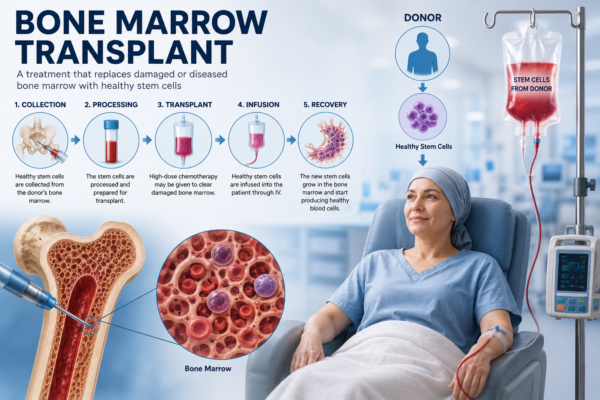
A Bone Marrow Transplant (BMT) is a medical procedure that replaces damaged or diseased bone marrow with healthy blood-forming stem cells. Bone marrow is the soft, spongy tissue found inside bones where blood cells are produced, including red blood cells, white blood cells, and platelets.
When bone marrow becomes damaged due to blood cancer, certain blood disorders, chemotherapy, radiation therapy, or inherited diseases, it may no longer produce healthy blood cells. A bone marrow transplant helps restore normal blood cell production by replacing unhealthy marrow with healthy stem cells.
Traditionally, stem cells were collected directly from the donor’s bone marrow through a surgical procedure performed under anesthesia. This is why the procedure became known as a Bone Marrow Transplant.
What Is a Stem Cell Transplant?
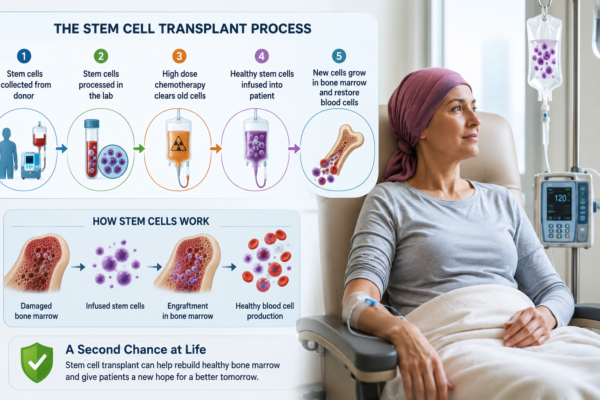
A Stem Cell Transplant (SCT) is a broader term used for transplant procedures that replace damaged blood-forming stem cells with healthy ones.
Today, most stem cells are collected from the donor’s bloodstream rather than directly from the bone marrow. The donor receives medications that encourage stem cells to move from the bone marrow into the bloodstream. These cells are then collected using a process called apheresis, which is similar to donating blood.
The collected stem cells are infused into the patient’s bloodstream through an intravenous (IV) line. Once inside the body, these healthy stem cells travel naturally to the bone marrow, where they begin producing new blood cells.
Because stem cells can be collected from different sources, Stem Cell Transplant has become the preferred medical term in many hospitals.
Are Bone Marrow Transplant and Stem Cell Transplant the Same?
This is one of the most common questions patients ask.
The answer is not exactly.
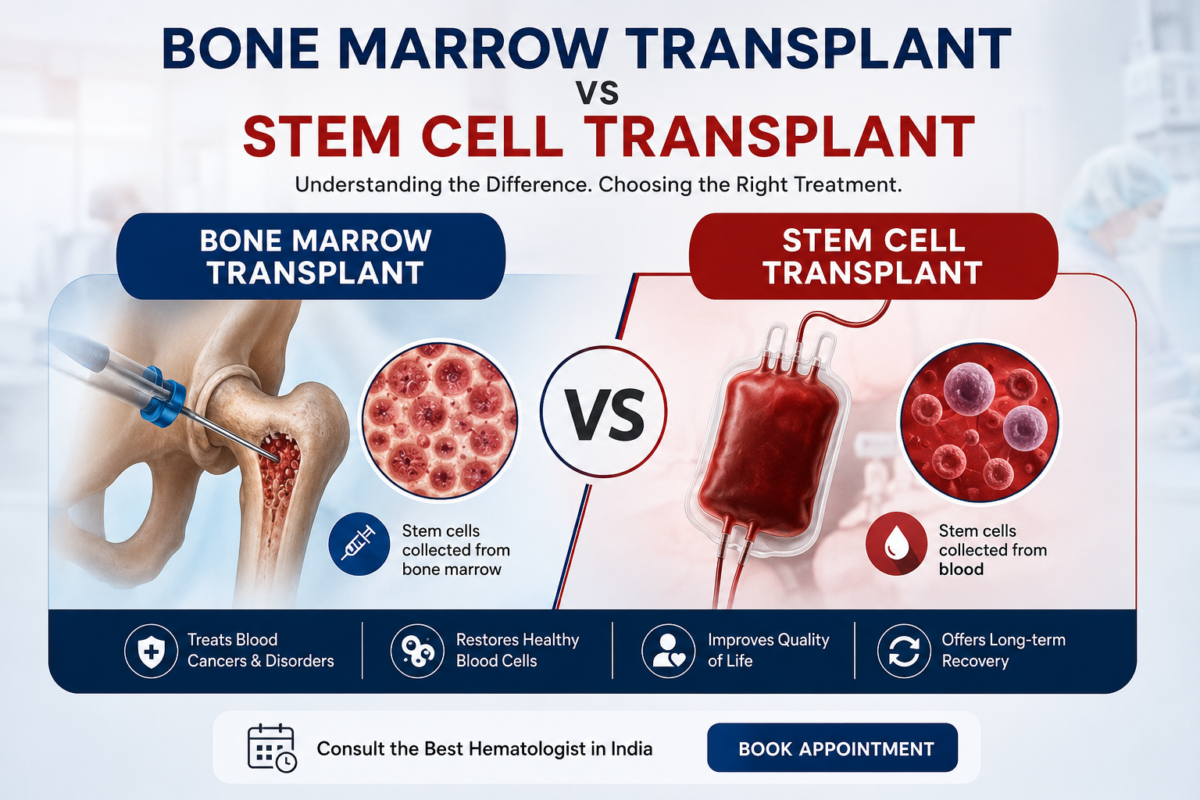
A Bone Marrow Transplant is actually one type of Stem Cell Transplant. The major difference lies in the source of the stem cells.
In a Bone Marrow Transplant, stem cells are collected directly from the donor’s bone marrow.
In a Stem Cell Transplant, stem cells are usually collected from the donor’s bloodstream. In some cases, stem cells may also be collected from umbilical cord blood.
Although the collection methods differ, the goal of both procedures is the same—to restore healthy bone marrow and normal blood cell production.
Bone Marrow Transplant vs Stem Cell Transplant
| Feature | Bone Marrow Transplant | Stem Cell Transplant |
|---|---|---|
| Stem Cell Source | Bone marrow | Bloodstream or bone marrow |
| Collection Method | Surgical procedure under anesthesia | Blood collection using apheresis |
| Hospital Stay | Usually longer | Often shorter |
| Recovery | Slightly slower | Often faster |
| Most Common Today | Less common | More commonly performed |
| Purpose | Replace damaged bone marrow | Restore healthy blood-forming stem cells |
Both procedures have excellent success rates when performed in appropriate patients by experienced transplant specialists.
Types of Stem Cell Transplants
There are several different types of stem cell transplants.
Autologous Stem Cell Transplant
In an autologous transplant, the patient’s own healthy stem cells are collected before receiving high-dose chemotherapy. These cells are then returned to the patient’s body after treatment.
This approach is commonly used for:
- Multiple myeloma
- Certain lymphomas
Allogeneic Stem Cell Transplant
In an allogeneic transplant, stem cells are donated by another person whose tissue type closely matches the patient.
The donor may be:
- A brother or sister
- Another family member
- An unrelated matched donor
- A cord blood donor
Allogeneic transplants are commonly used for leukemia, aplastic anemia, myelodysplastic syndrome, and several inherited blood disorders.
Who Needs a Bone Marrow or Stem Cell Transplant?
Doctors may recommend a transplant for patients with:
- Acute Leukemia
- Chronic Leukemia
- Hodgkin Lymphoma
- Non-Hodgkin Lymphoma
- Multiple Myeloma
- Aplastic Anemia
- Myelodysplastic Syndrome (MDS)
- Thalassemia
- Sickle Cell Disease
- Certain inherited immune disorders
The decision depends on the patient’s diagnosis, disease stage, age, overall health, and response to previous treatments.
Benefits of Bone Marrow and Stem Cell Transplants
These transplant procedures have transformed the treatment of many blood cancers and serious blood disorders.
Some important benefits include:
- Restores healthy blood cell production
- Replaces diseased bone marrow
- Improves immune system function
- Offers the possibility of long-term remission
- Can cure certain blood disorders
- Reduces dependence on repeated blood transfusions
- Improves overall quality of life
For many patients, a transplant offers the best opportunity for long-term disease control or even cure.
Risks and Possible Complications
Like any major medical procedure, bone marrow and stem cell transplants involve certain risks.
Possible complications include:
- Infection
- Bleeding
- Low blood cell counts
- Fatigue
- Organ complications
- Graft-versus-host disease (GVHD) in allogeneic transplants
- Delayed immune recovery
Fortunately, advances in transplant medicine, infection prevention, supportive care, and donor matching have significantly improved transplant safety over the past decade.
Patients are closely monitored throughout the recovery period to detect and manage complications early.
Recovery After Transplant
Recovery varies from one patient to another.
Most patients remain in the hospital for several weeks following the transplant while doctors monitor blood counts and watch for infections.
After discharge, patients require regular follow-up visits, blood tests, medications, and lifestyle precautions.
Recovery depends on several factors, including:
- Type of transplant
- Patient’s age
- Overall health
- Presence of complications
- Immune system recovery
Some patients return to normal activities within a few months, while others may require longer-term follow-up care.
How Doctors Decide the Right Transplant
Choosing the appropriate transplant involves a comprehensive evaluation.
Doctors consider:
- Type of blood cancer or blood disorder
- Stage of disease
- Bone marrow function
- Patient’s age
- General health
- Availability of a matched donor
- Previous treatments
- Genetic and molecular test results
A multidisciplinary transplant team works together to determine the safest and most effective treatment plan for each individual.
Recent Advances in Stem Cell Transplantation
Stem cell transplantation continues to evolve rapidly.
Today, transplant specialists use advanced donor matching techniques, improved infection control measures, reduced-intensity conditioning regimens, and precision medicine approaches to improve outcomes.
Researchers are also exploring newer therapies that combine stem cell transplantation with targeted therapy, immunotherapy, and cellular therapies to enhance survival while reducing complications.
These innovations are helping more patients become eligible for transplantation and improving long-term success rates.
Why Early Referral Matters
Many patients delay consulting a transplant specialist because they believe transplantation should only be considered after all treatments have failed.
In reality, early evaluation allows doctors to determine the best timing for transplantation, identify suitable donors, and develop an individualized treatment strategy. Early referral may improve treatment outcomes for several blood cancers and bone marrow disorders.
Discussing transplant options with a hemato-oncologist as soon as they are recommended can help patients understand the benefits, risks, and expected recovery process before making a decision.
Conclusion
Although the terms Bone Marrow Transplant and Stem Cell Transplant are often used interchangeably, they are not exactly the same. A Bone Marrow Transplant is one type of Stem Cell Transplant, with the main difference being the source from which the stem cells are collected. Both procedures are highly effective treatments for many blood cancers and bone marrow disorders and have helped thousands of patients achieve long-term remission and, in some cases, a cure.
Choosing the right transplant depends on several factors, including the type of disease, the patient’s overall health, donor availability, and the recommendations of an experienced transplant specialist. Receiving expert guidance at the right time can make a significant difference in treatment success.
If you or a loved one has been diagnosed with leukemia, lymphoma, multiple myeloma, aplastic anemia, or another blood disorder, consult the best hematologist in India to discuss the most suitable transplant options. Book Appointment with an experienced hemato-oncology specialist today to receive personalized care, advanced treatment, and a comprehensive transplant evaluation tailored to your medical needs.
