
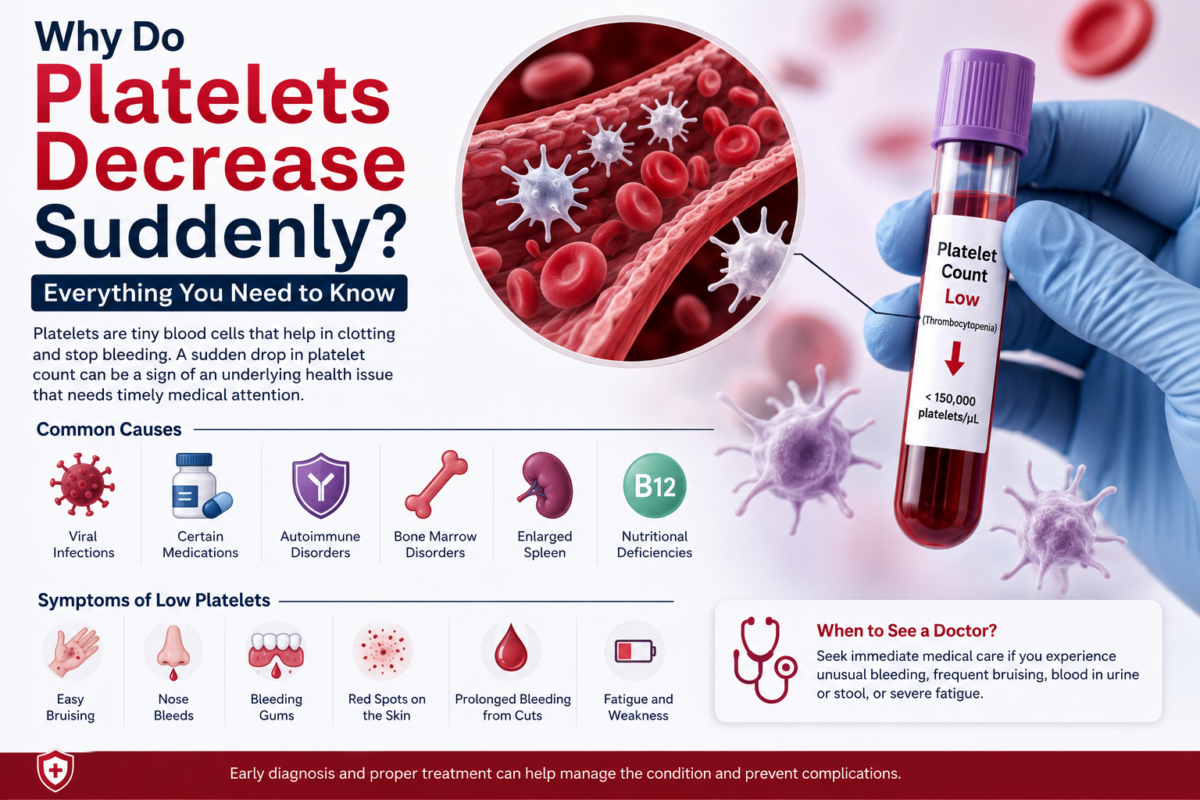
Platelets play a crucial role in maintaining healthy blood clotting and preventing excessive bleeding. A sudden decrease in platelet count can be alarming and may indicate an underlying health condition that requires medical attention. While temporary platelet drops can occur due to infections or medications, significantly low platelet levels may increase the risk of bleeding and other complications.
Understanding why platelets decrease suddenly, recognizing the symptoms, and knowing when to seek medical care can help ensure timely diagnosis and treatment.
What Are Platelets?
Platelets, also known as thrombocytes, are tiny blood cells produced in the bone marrow. Their primary function is to help stop bleeding by forming blood clots when a blood vessel is injured.
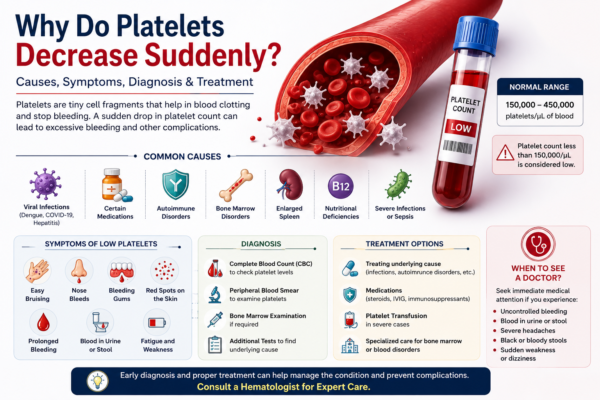
A normal platelet count typically ranges from 150,000 to 450,000 platelets per microliter of blood. When platelet levels fall below normal, the condition is known as thrombocytopenia.
Low platelet counts can range from mild to severe. In severe cases, even minor injuries can result in excessive bleeding.
Why Are Platelets Important?
Platelets are essential for:
- Blood clot formation
- Preventing excessive bleeding
- Healing damaged blood vessels
- Supporting wound recovery
Without enough platelets, the body may struggle to control bleeding effectively.
Why Do Platelets Decrease Suddenly?
A sudden drop in platelet count can occur for several reasons. In most cases, the problem is related to decreased platelet production, increased destruction, or abnormal platelet storage within the body.
1. Viral Infections
One of the most common causes of sudden platelet reduction is viral infection.
Examples include:
- Dengue fever
- COVID-19
- Hepatitis
- Epstein-Barr Virus (EBV)
- Influenza
These infections can temporarily suppress bone marrow function or increase platelet destruction, leading to a rapid decline in platelet levels.
2. Dengue Fever
Dengue is one of the leading causes of low platelet counts, especially in tropical countries.
During dengue infection:
- Bone marrow production decreases
- Platelet destruction increases
- Blood vessel permeability changes
This combination often causes platelet counts to fall significantly during the illness.
3. Autoimmune Disorders
In autoimmune conditions, the body’s immune system mistakenly attacks and destroys healthy platelets.
Examples include:
- Immune Thrombocytopenic Purpura (ITP)
- Lupus
- Rheumatoid Arthritis
Patients may experience a sudden and unexplained drop in platelet levels.
4. Certain Medications
Some medications can affect platelet production or increase platelet destruction.
Common examples include:
- Antibiotics
- Chemotherapy drugs
- Anti-seizure medications
- Blood thinners
- Certain pain medications
Your doctor may review your medication history if thrombocytopenia develops unexpectedly.
5. Bone Marrow Disorders
Since platelets are produced in the bone marrow, conditions affecting the marrow can significantly reduce platelet production.
These include:
- Leukemia
- Lymphoma
- Multiple Myeloma
- Aplastic Anemia
- Myelodysplastic Syndromes (MDS)
Bone marrow disorders often require evaluation by a hematologist.
6. Nutritional Deficiencies
Deficiencies in essential nutrients can affect blood cell production.
Common deficiencies include:
- Vitamin B12 deficiency
- Folate deficiency
- Severe iron deficiency
Correcting nutritional deficiencies can often improve platelet counts.
7. Enlarged Spleen
The spleen normally stores a portion of the body’s platelets.
When the spleen becomes enlarged due to liver disease or blood disorders, it may trap excessive numbers of platelets, reducing the number circulating in the bloodstream.
8. Severe Infections and Sepsis
Serious bacterial infections can trigger widespread inflammation and increased platelet consumption.
In severe cases, platelet levels may drop rapidly and require emergency treatment.
Symptoms of Low Platelet Count
Many individuals with mildly low platelet counts may not notice any symptoms.
However, as platelet levels continue to decline, symptoms may include:
- Easy bruising
- Frequent nosebleeds
- Bleeding gums
- Tiny red or purple spots on the skin (petechiae)
- Excessive bleeding from cuts
- Heavy menstrual bleeding
- Blood in urine
- Blood in stool
- Unusual fatigue
Severe thrombocytopenia may result in life-threatening internal bleeding if left untreated.
When Should You Worry About Low Platelets?
Medical attention should be sought immediately if you experience:
- Uncontrolled bleeding
- Severe headaches
- Vision changes
- Blood in vomit
- Black or bloody stools
- Sudden weakness or dizziness
These symptoms may indicate serious bleeding complications requiring urgent care.
How Is Low Platelet Count Diagnosed?
A hematologist may recommend several tests to determine the underlying cause.
Complete Blood Count (CBC)
This blood test measures platelet levels and other blood cell counts.
Peripheral Blood Smear
A microscope examination helps assess platelet appearance and identify abnormalities.
Bone Marrow Examination
If a bone marrow disorder is suspected, a bone marrow biopsy may be required.
Additional Tests
Depending on symptoms, doctors may also recommend:
- Viral infection testing
- Autoimmune screening
- Liver function tests
- Vitamin deficiency assessments
Treatment for Low Platelet Count
Treatment depends on the underlying cause and severity of thrombocytopenia.
Observation
Mild cases may only require regular monitoring.
Treating Infections
Managing viral or bacterial infections often helps platelet counts recover naturally.
Medications
Doctors may prescribe:
- Corticosteroids
- Immunosuppressive medications
- Intravenous Immunoglobulin (IVIG)
These treatments are commonly used in autoimmune platelet disorders.
Platelet Transfusion
Patients with severe thrombocytopenia or active bleeding may require platelet transfusions.
Bone Marrow Treatment
Patients with leukemia, aplastic anemia, or other bone marrow diseases may require specialized hematology treatment, including bone marrow transplantation in selected cases.
Can Platelet Counts Be Improved Naturally?
While medical treatment is essential when needed, maintaining overall health can support blood cell production.
Helpful measures include:
- Eating a balanced diet
- Consuming foods rich in Vitamin B12 and folate
- Staying hydrated
- Avoiding excessive alcohol consumption
- Managing infections promptly
- Following medical advice regularly
However, natural remedies should never replace proper medical evaluation when platelet counts are significantly low.
When Should You Consult a Hematologist?
If you experience unexplained bruising, recurrent bleeding, persistent low platelet counts, or abnormal blood test results, consulting a hematologist is important.
A specialist can determine whether the cause is a temporary condition or a serious blood disorder requiring advanced treatment.
Conclusion
A sudden decrease in platelet count can occur due to infections, autoimmune diseases, medications, nutritional deficiencies, or serious bone marrow disorders. While some cases resolve on their own, others may require prompt medical evaluation and specialized treatment.
If you are experiencing symptoms of low platelets or have been diagnosed with thrombocytopenia, consulting the best hematologist can help identify the underlying cause and ensure appropriate treatment. Early diagnosis and timely intervention are essential for preventing complications and improving outcomes.
For expert evaluation, advanced diagnostics, and personalized care for platelet disorders and blood diseases, contact our hematology team today and schedule a consultation.

Pingback: Frequent Bruising: Causes, Blood Disorders & When to See a Doctor