Multiple Myeloma is a type of blood cancer that develops in plasma cells, which are a part of the immune system and are produced in the bone marrow. In this condition, abnormal plasma cells grow uncontrollably and affect the production of healthy blood cells. This can lead to symptoms such as bone pain, frequent infections, anemia, kidney problems, and weakness.
Over the years, advancements in cancer treatment have improved outcomes for Multiple Myeloma patients. One of the most effective treatment approaches for eligible patients is Bone Marrow Transplant (BMT), also known as Stem Cell Transplantation.
A Bone Marrow Transplant can help control the disease, achieve deeper remission, and improve quality of life in many patients with Multiple Myeloma.

What is Multiple Myeloma?
Multiple Myeloma occurs when plasma cells in the bone marrow become abnormal and start multiplying rapidly. These abnormal cells produce excessive amounts of an abnormal protein called M protein, which can damage different organs.
Healthy plasma cells help the body fight infections by producing antibodies. However, cancerous plasma cells reduce the production of normal blood cells, affecting immunity and overall health.
Common symptoms of Multiple Myeloma include:
- Persistent bone pain, especially in the back and ribs
- Frequent infections
- Fatigue and weakness due to anemia
- Increased thirst and kidney problems
- Easy bruising or bleeding
- High calcium levels
- Bone fractures
Early diagnosis and appropriate treatment play an important role in managing the disease effectively.
What is a Bone Marrow Transplant?
A Bone Marrow Transplant is a medical procedure where healthy stem cells are infused into the patient’s body to replace damaged or abnormal bone marrow.
Stem cells are special cells that can develop into different types of blood cells, including:
- Red blood cells
- White blood cells
- Platelets
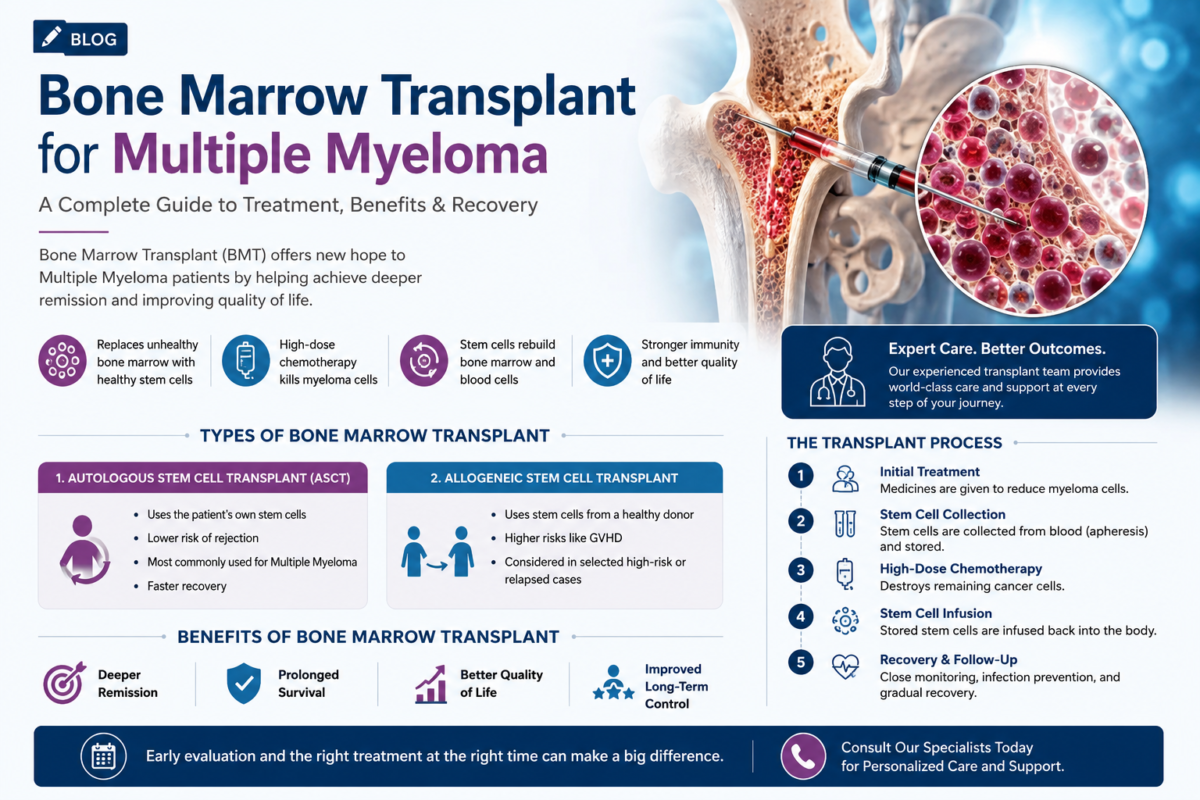
In Multiple Myeloma treatment, transplantation allows doctors to use high-dose chemotherapy to destroy cancer cells. After chemotherapy, healthy stem cells are given back to the patient to restore normal blood cell production.
Types of Bone Marrow Transplant for Multiple Myeloma
There are mainly two types of stem cell transplantation:
1. Autologous Stem Cell Transplant (ASCT)
Autologous transplant is the most commonly performed transplant for Multiple Myeloma.
In this procedure:
- The patient’s own stem cells are collected from the bloodstream.
- High-dose chemotherapy is given to destroy remaining myeloma cells.
- The collected stem cells are returned to the patient.
- These stem cells help rebuild healthy bone marrow.
Advantages of Autologous Stem Cell Transplant:
- Uses the patient’s own cells
- Lower risk of rejection
- Faster recovery compared to donor transplant
- Suitable for many eligible Multiple Myeloma patients
2. Allogeneic Stem Cell Transplant
In an allogeneic transplant, stem cells are collected from a healthy donor, usually a matched sibling or unrelated donor.
This approach is less common for Multiple Myeloma because of higher risks, including graft-versus-host disease (GVHD). However, it may be considered in selected cases, especially for patients with high-risk disease or relapse.
Who is Eligible for Bone Marrow Transplant?
Not every Multiple Myeloma patient requires a transplant. Doctors evaluate several factors before recommending BMT.
Eligibility depends on:
- Patient’s age and overall health
- Kidney, heart, and lung function
- Response to initial treatment
- Disease stage
- Fitness level
- Previous treatments received
Generally, patients who are physically fit and have controlled disease after initial therapy may benefit significantly from Autologous Stem Cell Transplant.
Steps Involved in Bone Marrow Transplant for Multiple Myeloma
Step 1: Initial Treatment and Disease Control
Before transplantation, patients usually receive medicines such as chemotherapy, targeted therapy, or immunotherapy to reduce the number of myeloma cells.
This phase is called induction therapy.
The goal is to achieve the best possible response before transplant.
Step 2: Stem Cell Collection
During stem cell collection, medicines are given to increase stem cells in the bloodstream.
A procedure called apheresis is used to collect stem cells from the blood.
The collected stem cells are stored safely until the transplant procedure.
Step 3: High-Dose Chemotherapy
The patient receives high-dose chemotherapy to eliminate remaining myeloma cells.
However, this treatment also affects normal bone marrow cells. Therefore, stem cell infusion is needed afterward to restore blood cell production.
Step 4: Stem Cell Infusion
The stored stem cells are infused through an intravenous line.
The procedure is similar to receiving a blood transfusion.
Over the next few weeks, these stem cells begin producing new healthy blood cells.
Step 5: Recovery Period
After transplantation, patients are closely monitored in the hospital or transplant unit.
During recovery:
- Blood counts are regularly checked
- Infection prevention measures are followed
- Supportive medications are provided
- Nutrition and hydration are maintained
The immune system gradually recovers over several months.
Benefits of Bone Marrow Transplant in Multiple Myeloma
Bone Marrow Transplant can provide several benefits, including:
Achieving Deeper Remission
Transplant helps eliminate a larger number of cancer cells, allowing many patients to achieve a deeper response.
Longer Disease Control
For eligible patients, transplant can delay disease progression and improve survival outcomes.
Improved Quality of Life
Better control of symptoms can help patients return to daily activities and improve overall well-being.
Treatment Option for Relapsed Disease
In some cases, transplantation may also be considered when Multiple Myeloma returns after previous treatment.
Possible Risks and Side Effects of Bone Marrow Transplant
Like any major medical procedure, Bone Marrow Transplant may have some risks.
Possible complications include:
- Infections due to low immunity
- Low blood cell counts
- Fever
- Mouth sores
- Fatigue
- Nausea and vomiting
- Bleeding problems
- Organ-related complications (rare)
A specialized transplant team carefully monitors patients to prevent and manage these complications.
Life After Bone Marrow Transplant
Recovery after transplant requires patience and proper medical care.
Patients should follow:
Regular Follow-Up Visits
Routine blood tests and imaging help monitor disease status.
Healthy Lifestyle
Maintaining a balanced diet, regular physical activity, and adequate rest supports recovery.
Infection Prevention
Patients should:
- Maintain good hygiene
- Avoid exposure to infections
- Follow vaccination recommendations
- Report fever or unusual symptoms immediately
Maintenance Therapy
Some patients may require maintenance medicines after transplant to reduce the risk of disease recurrence.
How Successful is Bone Marrow Transplant for Multiple Myeloma?
Bone Marrow Transplant does not completely cure Multiple Myeloma in most cases, but it can significantly control the disease and help patients achieve long-term remission.
The success of transplantation depends on:
- Patient’s age and health condition
- Disease risk category
- Response to previous treatments
- Quality of transplant care
- Post-transplant maintenance treatment
With modern therapies and advanced transplant techniques, many patients experience improved outcomes.
Why Choose an Experienced Bone Marrow Transplant Team?
Bone Marrow Transplant is a complex procedure that requires expertise, advanced infrastructure, infection control facilities, and continuous monitoring.
An experienced hematology and transplant team can provide:
- Accurate patient evaluation
- Personalized treatment planning
- Advanced transplant protocols
- Support throughout recovery
Choosing the right transplant center plays an important role in achieving better treatment outcomes.
Conclusion
Bone Marrow Transplant is a highly advanced treatment option for eligible patients with Multiple Myeloma. With improvements in stem cell transplantation techniques, targeted therapies, and supportive care, many patients can achieve better disease control and improved quality of life.
Choosing the right specialist is an important step in the treatment journey. Consulting the Best Hematologist in India can help patients receive accurate diagnosis, personalized treatment planning, and expert guidance throughout the Bone Marrow Transplant process.
If you or your loved one has been diagnosed with Multiple Myeloma, timely consultation with an experienced hematology specialist can make a significant difference in treatment outcomes.
Book Appointment with an expert hematologist today to understand the most suitable treatment options and get personalized care for Multiple Myeloma and Bone Marrow Transplant.
