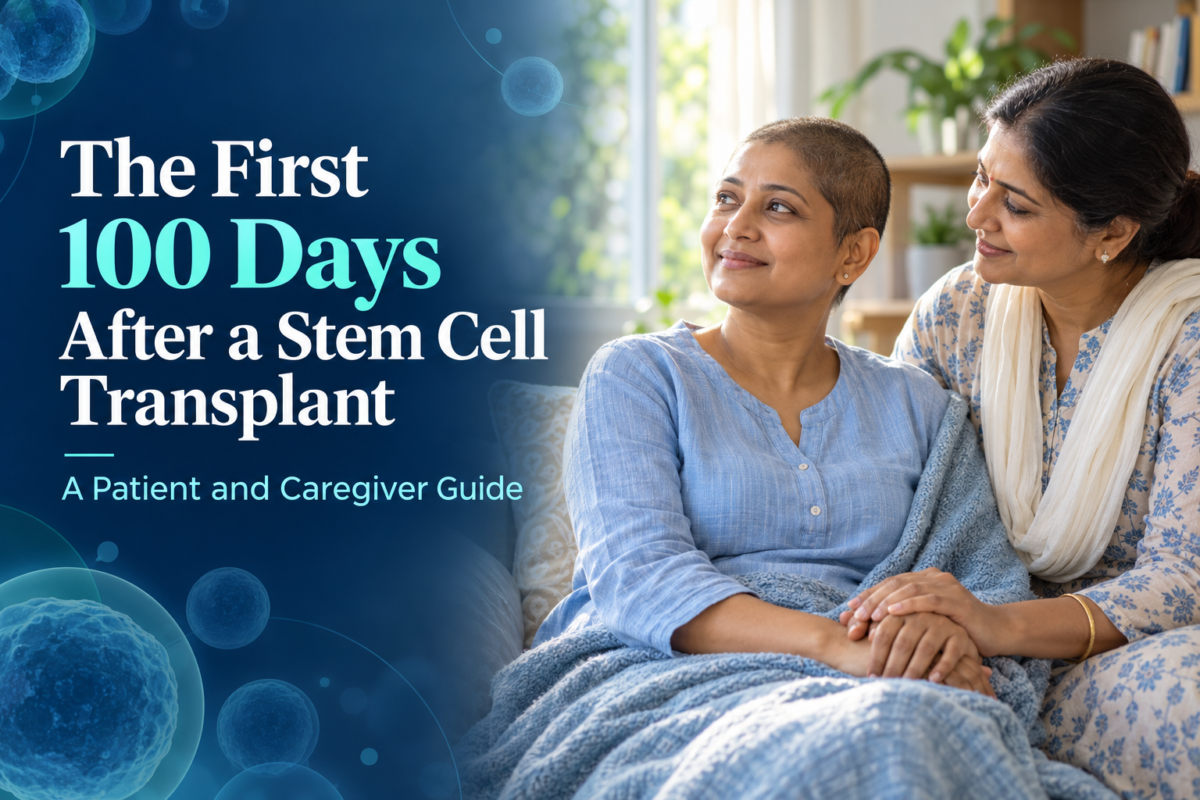
A stem cell transplant is an important treatment milestone, but recovery continues long after the stem cells are infused. The first 100 days involve close monitoring, infection precautions and practical support at home. Knowing what to expect helps patients and caregivers approach this period with greater confidence.
This guide covers general recovery principles. Your transplant team’s written instructions take priority because needs vary according to the transplant type, underlying disease, medicines and complications.

Why the First 100 Days Matter
After conditioning treatment, usually chemotherapy with or without radiation, the body needs time to restore blood cell production and rebuild immune function. Infection, bleeding and treatment side effects require careful attention.
An autologous transplant uses the patient’s own stem cells. An allogeneic transplant uses donor cells and also involves monitoring for graft-versus-host disease (GVHD). Recovery differs between these procedures.
Day 100 is a useful checkpoint, not a guarantee of complete recovery. Immune recovery and other aspects of healing can take much longer.
Days 0–30: Engraftment and Early Recovery
The day stem cells are infused is called Day 0. The cells travel to the bone marrow and begin producing new blood cells. This process is known as engraftment.
Engraftment often occurs during the first few weeks, although timing varies with the stem cell source and treatment. The team checks blood counts closely rather than relying on a fixed date.
During this phase, patients may experience fatigue, mouth sores, nausea, diarrhea and reduced appetite. Blood or platelet transfusions, intravenous fluids and medicines to prevent or treat infections may be needed.
Hospital discharge depends on clinical stability, symptom control and the ability to continue care safely outside hospital.
Days 31–60: Establishing a Home Routine
Returning home does not mean intensive follow-up has finished. Patients may need frequent appointments, blood tests and adjustments to their medicines.
Before discharge, confirm the medication schedule, emergency contact numbers, catheter care instructions and transport arrangements. Ask how close you must remain to the transplant centre.
Keep a simple record of symptoms, medicines and questions. Record temperature, weight or fluid intake if the team requests it. Bring this information to appointments.
Do not stop prescribed medicines because you feel better. Check before taking supplements, herbal products or over-the-counter medicines, since interactions can affect treatment.
Days 61–100: Reviewing Progress
Energy and appetite may gradually improve, but recovery rarely follows a perfectly steady pattern. Some days will feel easier than others.
The team continues checking blood counts, organ function, infection risk and treatment response. After a donor transplant, additional testing may assess how donor cells are establishing themselves.
Around Day 100, a review may include blood tests, bone marrow assessment or other disease-specific investigations. Not everyone needs the same tests.
Discuss work, travel, exercise and visitors individually. Do not remove precautions simply because you reach Day 100.
Reducing Infection Risk
Good hand hygiene is essential for patients, caregivers and visitors. Avoid contact with people who are unwell and follow the team’s advice about masks and crowded settings.
Keep living areas clean and avoid exposure to construction dust, mould and soil when advised. Someone else should handle activities that create significant dust or involve animal waste.
If a central line remains in place, follow the catheter care training carefully. Report redness, pain, swelling, drainage or damage promptly.
Attend every scheduled review, even when you feel well. Some problems are identified through examination or testing before obvious symptoms appear.
Food, Fluids and Nutrition
Healing requires adequate nutrition, but nausea, mouth discomfort and altered taste can make eating difficult. Small, frequent meals may be easier than large portions.
Ask a dietitian for practical ways to meet protein and calorie needs. Follow individual advice about fluids, especially if kidney or heart problems require restrictions.
Food safety matters: wash produce, cook meat and eggs thoroughly, choose pasteurised dairy products and refrigerate food promptly. Avoid raw or undercooked animal foods and unsafe drinking water.
Follow your centre’s specific dietary instructions rather than adopting unnecessary restrictions. Tell the team if vomiting, diarrhea or poor intake prevents you from eating or drinking adequately.
Recognising Graft-Versus-Host Disease
GVHD is mainly a concern after an allogeneic transplant. It happens when donor immune cells attack the patient’s tissues.
Possible symptoms include a new rash, persistent diarrhea, abdominal discomfort, nausea, reduced appetite or yellowing of the skin and eyes. These symptoms can have other causes, but need prompt assessment.
Acute GVHD often develops early, although it can occur after Day 100. Chronic GVHD may develop later and can affect several organs.
Take prescribed preventive medicines exactly as directed. Never change the dose or treat suspected GVHD yourself.
When to Seek Urgent Help
Contact the transplant team immediately for a temperature of 38°C (100.4°F) or higher, or the threshold specified in your discharge plan. Do not wait for the next appointment.
Also report shaking chills, new cough, persistent diarrhea, repeated vomiting, unusual bleeding or inability to take essential medicines.
Severe breathlessness, chest pain, confusion or uncontrolled bleeding requires emergency medical care. Tell emergency staff about the recent transplant and notify your transplant centre.
Keep emergency numbers accessible to everyone involved in care.
The Caregiver’s Role
Caregivers help organise medicines, appointments, transport and meals. They also notice changes the patient may overlook and help communicate concerns clearly.
Use a shared checklist and identify a backup caregiver before help becomes urgent. Ask the clinical team to demonstrate unfamiliar tasks.
Emotional support matters too. Listen without pressuring the patient to recover faster. Both patients and caregivers can benefit from counselling or support groups.
Caregivers also need sleep, regular meals and breaks. Sharing responsibilities makes ongoing support more sustainable.
Final Thoughts
The first 100 days after a stem cell transplant require patience, consistent follow-up and close teamwork. If you are searching for the best hematologist in India, consider transplant experience, clear communication and access to comprehensive follow-up care.
To discuss your treatment or recovery plan with a specialist, use the book appointment option on the website. Bring your discharge summary, medication list and recent reports to help the team assess your needs.
