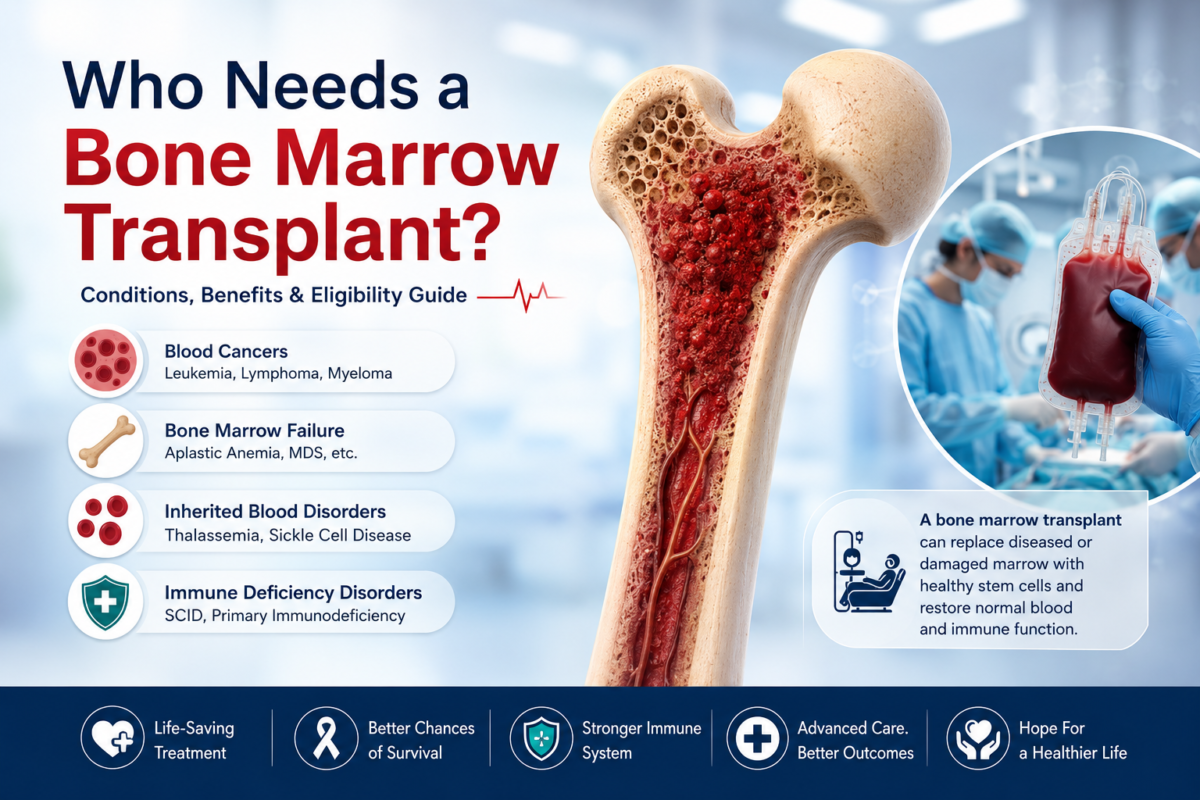
A bone marrow transplant (BMT), also known as a stem cell transplant, is a life-saving procedure used to treat various blood cancers, blood disorders, and immune system diseases. For many patients, a bone marrow transplant offers the best chance of recovery when conventional treatments such as medications, chemotherapy, or radiation therapy are no longer effective.
Despite its importance, many people are unsure about who actually needs a bone marrow transplant and under what circumstances doctors recommend this treatment. Understanding the conditions that require a transplant can help patients and families make informed healthcare decisions.
What Is a Bone Marrow Transplant?
Bone marrow is the soft, spongy tissue found inside bones where blood cells are produced. It contains stem cells that develop into red blood cells, white blood cells, and platelets.
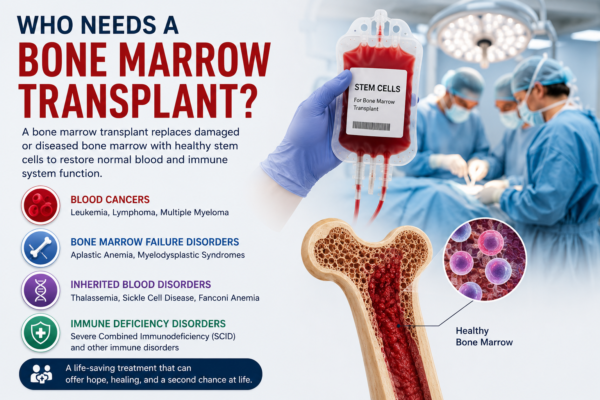
When the bone marrow becomes damaged due to disease, cancer, or certain treatments, it may no longer produce healthy blood cells. A bone marrow transplant replaces damaged or diseased marrow with healthy stem cells, allowing the body to rebuild a healthy blood and immune system.
Types of Bone Marrow Transplants
Autologous Bone Marrow Transplant
In an autologous transplant, a patient’s own healthy stem cells are collected and stored before high-dose chemotherapy. These stem cells are then returned to the body after treatment.
This approach is commonly used for:
- Multiple Myeloma
- Certain types of Lymphoma
Allogeneic Bone Marrow Transplant
In an allogeneic transplant, stem cells are obtained from a compatible donor. The donor may be a sibling, family member, or unrelated matched donor.
This type is commonly used for:
- Leukemia
- Bone Marrow Failure Syndromes
- Severe Blood Disorders
- Immune Deficiency Disorders
Who Needs a Bone Marrow Transplant?
A bone marrow transplant may be recommended when the bone marrow is unable to produce healthy blood cells or when a serious disease affects the blood and immune system.
1. Patients with Leukemia
Leukemia is a cancer of the blood-forming tissues, including the bone marrow. In some cases, chemotherapy alone may not completely eliminate the disease.
Doctors may recommend a bone marrow transplant for patients with:
- Acute Myeloid Leukemia (AML)
- Acute Lymphoblastic Leukemia (ALL)
- Chronic Myeloid Leukemia (CML)
- High-risk or recurrent leukemia
A transplant helps replace diseased marrow with healthy stem cells capable of producing normal blood cells.
2. Patients with Lymphoma
Lymphoma is a cancer affecting the lymphatic system. Some patients respond well to chemotherapy, while others experience relapse.
Bone marrow transplantation may be considered when:
- Lymphoma returns after treatment
- The disease does not respond adequately to therapy
- High-dose chemotherapy is required
Both autologous and allogeneic transplants may be used depending on the patient’s condition.
3. Patients with Multiple Myeloma
Multiple myeloma is a cancer of plasma cells found in bone marrow.
Although a transplant may not completely cure multiple myeloma, it can:
- Improve survival rates
- Reduce disease burden
- Extend remission periods
- Improve quality of life
Autologous stem cell transplantation is commonly used in eligible patients with multiple myeloma.
4. Patients with Aplastic Anemia
Aplastic anemia is a serious condition where the bone marrow fails to produce enough blood cells.
Symptoms may include:
- Severe fatigue
- Frequent infections
- Easy bruising
- Excessive bleeding
For younger patients with suitable donors, bone marrow transplantation is often considered the most effective treatment.
5. Patients with Bone Marrow Failure Syndromes
Certain disorders can cause the bone marrow to stop functioning properly.
Examples include:
- Myelodysplastic Syndromes (MDS)
- Fanconi Anemia
- Severe Aplastic Anemia
A transplant may restore normal blood cell production and significantly improve long-term outcomes.
6. Patients with Inherited Blood Disorders
Several genetic blood disorders can be treated or cured through bone marrow transplantation.
These include:
- Thalassemia
- Sickle Cell Disease
- Certain metabolic disorders
Early intervention often improves treatment success and reduces long-term complications.
7. Patients with Severe Immune Deficiency Disorders
Some inherited immune system disorders prevent the body from fighting infections effectively.
Conditions such as Severe Combined Immunodeficiency (SCID) may require a bone marrow transplant to rebuild a functioning immune system.
Who Is Eligible for a Bone Marrow Transplant?
Not every patient with a blood disorder requires a transplant. Doctors carefully evaluate several factors before recommending the procedure.
These factors include:
Age
Younger patients generally tolerate transplantation better, although many older adults may also be eligible depending on their overall health.
Overall Health
The heart, lungs, liver, and kidneys must be functioning adequately to withstand the transplant process.
Disease Stage
The type and stage of disease play a major role in determining transplant eligibility.
Donor Availability
For allogeneic transplants, a compatible donor must be identified through family members or donor registries.
Benefits of a Bone Marrow Transplant
A successful bone marrow transplant can provide numerous benefits:
- Potential cure for certain blood cancers
- Restoration of healthy blood cell production
- Improved immune system function
- Reduced risk of disease recurrence
- Better quality of life
For some patients, it may offer the best chance for long-term survival.
Risks Associated with Bone Marrow Transplantation
Like any major medical procedure, bone marrow transplantation carries potential risks.
These may include:
- Infections
- Bleeding complications
- Organ damage
- Graft-versus-host disease (GVHD)
- Delayed recovery
However, advances in transplant medicine have significantly improved safety and outcomes over the years.
What Is Recovery Like After a Bone Marrow Transplant?
Recovery varies from patient to patient.
Most individuals require:
- Several weeks of close monitoring
- Regular blood tests
- Medications to prevent infections
- Nutritional support
- Follow-up consultations
While initial recovery may take a few months, full immune system recovery can take up to a year or longer.
When Should You Consult a Hematologist?
Patients diagnosed with blood cancers, bone marrow disorders, or inherited blood diseases should consult a hematologist to determine whether a bone marrow transplant may be beneficial.
Early evaluation can improve treatment planning and increase the likelihood of successful outcomes.
Conclusion
A bone marrow transplant is a powerful treatment option for patients with leukemia, lymphoma, multiple myeloma, aplastic anemia, inherited blood disorders, and bone marrow failure syndromes. While not every patient requires transplantation, it can offer a potential cure or significantly improve long-term survival in eligible individuals.
If you or a loved one has been diagnosed with a blood disorder, consulting the best hematologist at the earliest stage can help determine whether a bone marrow transplant is the most appropriate treatment option. Early diagnosis, proper evaluation, and timely intervention play a crucial role in achieving the best possible outcomes.
To learn more about bone marrow transplantation or to schedule a consultation with an experienced hematology specialist, contact our team today. Expert guidance and personalized treatment planning can make a significant difference in your journey toward better health and recovery.
