Many people use the terms blood cancer and leukemia interchangeably. However, understanding the distinction between these conditions is important for patients, caregivers, and healthcare professionals. While leukemia is a type of blood cancer, not all blood cancers are leukemia. Blood cancers include a group of cancers that affect the blood, bone marrow, and lymphatic system, whereas leukemia specifically originates in the bone marrow and impacts the production of blood cells.
This article explains Blood Cancer vs Leukemia, including their definitions, types, symptoms, causes, diagnosis, and treatment options.
What Is Blood Cancer?
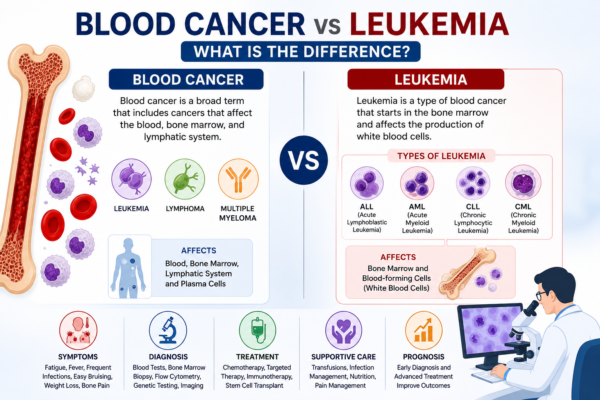
Blood cancer is a broad term used to describe cancers that affect the blood, bone marrow, or lymphatic system. These cancers interfere with the body’s ability to produce healthy blood cells and fight infections.
Blood cancer develops when abnormal blood cells grow uncontrollably and disrupt normal blood cell production. As a result, patients may experience symptoms related to low red blood cells, abnormal white blood cells, or reduced platelets.
The three major categories of blood cancer include:
Leukemia
Leukemia affects the blood and bone marrow and results in the excessive production of abnormal white blood cells.
Lymphoma
Lymphoma develops in the lymphatic system, which is part of the body’s immune system. It commonly affects lymph nodes and lymphatic tissues.
Multiple Myeloma
Multiple myeloma begins in plasma cells, a type of white blood cell responsible for producing antibodies.
Therefore, when discussing Blood Cancer vs Leukemia, it is important to remember that leukemia is one specific type of blood cancer.
What Is Leukemia?
Leukemia is a cancer that starts in the bone marrow, where blood cells are produced. It causes the bone marrow to produce large numbers of abnormal white blood cells that do not function properly.
These abnormal cells crowd out healthy blood cells, leading to problems such as anemia, infections, and bleeding disorders.
Leukemia can develop rapidly or slowly depending on the type.
Major Types of Leukemia
Acute Lymphoblastic Leukemia (ALL)
ALL progresses quickly and primarily affects lymphoid cells. It is more common in children but can also occur in adults.
Acute Myeloid Leukemia (AML)
AML develops rapidly and affects myeloid cells. It is one of the most common forms of acute leukemia in adults.
Chronic Lymphocytic Leukemia (CLL)
CLL progresses slowly and commonly affects older adults.
Chronic Myeloid Leukemia (CML)
CML develops gradually and is associated with specific genetic abnormalities such as the Philadelphia chromosome.
Understanding these leukemia subtypes is essential when comparing Blood Cancer vs Leukemia because leukemia represents only one category within the broader blood cancer classification.
Blood Cancer vs Leukemia: Key Differences
Scope of Disease
Blood cancer is a general term that includes leukemia, lymphoma, and multiple myeloma.
Leukemia is a specific blood cancer that primarily affects the bone marrow and blood-forming tissues.
Site of Origin
Blood cancers can originate in the bone marrow, lymph nodes, lymphatic system, or plasma cells.
Leukemia specifically begins in the bone marrow and affects white blood cell production.
Types
Blood cancer includes:
- Leukemia
- Lymphoma
- Multiple Myeloma
Leukemia includes:
- ALL
- AML
- CLL
- CML
Disease Behavior
Different blood cancers behave differently depending on their origin and cell type.
Leukemia generally involves abnormal white blood cell production and accumulation in the bloodstream and bone marrow.
Treatment Approaches
Treatment varies among different blood cancers.
Leukemia treatment often includes chemotherapy, targeted therapy, immunotherapy, and stem cell transplantation.
Symptoms of Blood Cancer
The symptoms of blood cancer vary depending on the specific type and stage of disease.
Common symptoms include:
- Persistent fatigue
- Unexplained weight loss
- Frequent infections
- Fever
- Night sweats
- Easy bruising
- Excessive bleeding
- Swollen lymph nodes
- Bone pain
- Shortness of breath
- Weakness
Since blood cancers affect blood cell production, many symptoms result from anemia, low platelet counts, or impaired immunity.
Symptoms of Leukemia
Many leukemia symptoms overlap with those seen in other blood cancers. However, leukemia often causes symptoms due to the accumulation of abnormal white blood cells.
Common leukemia symptoms include:
- Persistent fatigue
- Recurrent infections
- Frequent fever
- Easy bruising
- Bleeding gums
- Nosebleeds
- Bone and joint pain
- Swollen lymph nodes
- Enlarged spleen
- Pale skin
- Unexplained weight loss
Recognizing these symptoms early can improve treatment outcomes and overall prognosis.
Causes and Risk Factors
Blood Cancer Risk Factors
Several factors may increase the risk of developing blood cancer:
- Genetic abnormalities
- Family history of blood cancers
- Exposure to radiation
- Exposure to certain chemicals
- Immune system disorders
- Previous cancer treatments
- Increasing age
Leukemia Risk Factors
Risk factors specifically associated with leukemia include:
- Genetic syndromes
- Family history of leukemia
- Smoking
- Exposure to benzene
- Radiation exposure
- Previous chemotherapy
- Certain blood disorders
Although these risk factors may increase susceptibility, many patients develop leukemia without any identifiable cause.
Diagnosis of Blood Cancer and Leukemia
Accurate diagnosis is essential for determining the type of cancer and selecting the most effective treatment plan.
Blood Tests
Complete blood count (CBC) helps evaluate red blood cells, white blood cells, and platelet levels.
Bone Marrow Examination
Bone marrow aspiration and biopsy help identify abnormal cells and confirm diagnosis.
Flow Cytometry
This specialized test helps classify blood cancer and leukemia subtypes.
Genetic Testing
Molecular and chromosomal studies identify genetic mutations that influence treatment decisions.
Imaging Studies
CT scans, PET scans, and MRI scans may be used to evaluate disease spread and organ involvement.
Treatment Options
Treatment depends on the specific diagnosis, disease stage, age, and overall health of the patient.
Chemotherapy
Chemotherapy remains a cornerstone treatment for many blood cancers and leukemia types.
Targeted Therapy
Targeted drugs attack specific cancer-related proteins while minimizing damage to healthy cells.
Immunotherapy
Immunotherapy helps the immune system recognize and destroy cancer cells more effectively.
Stem Cell Transplantation
Stem cell transplantation may be recommended for high-risk or recurrent disease.
Radiation Therapy
Radiation may be used in selected cases to control localized disease or prepare for transplantation.
Supportive Care
Supportive treatments may include:
- Blood transfusions
- Platelet transfusions
- Infection management
- Nutritional support
- Pain management
Prognosis and Survival
Advances in medical science have significantly improved survival rates for both blood cancer and leukemia.
Several factors influence prognosis:
- Type of cancer
- Stage at diagnosis
- Age of the patient
- Genetic abnormalities
- Response to treatment
- Overall health condition
Many patients now achieve long-term remission and improved quality of life through modern therapies and personalized treatment approaches.
When to Consult a Hematologist?
Seek medical evaluation if you experience:
- Persistent fatigue
- Recurrent infections
- Unexplained bruising
- Continuous fever
- Enlarged lymph nodes
- Unexplained weight loss
- Prolonged bleeding
Early diagnosis allows timely treatment and may improve outcomes significantly.
Conclusion
Understanding Blood Cancer vs Leukemia is essential because these terms are not identical. Blood cancer is a broad category that includes leukemia, lymphoma, and multiple myeloma, while leukemia is a specific type of blood cancer that originates in the bone marrow and affects blood cell production.
Although both conditions share certain symptoms and diagnostic methods, they differ in their origin, classification, and treatment approaches. Early recognition of warning signs, timely diagnosis, and expert medical care can significantly improve treatment outcomes and quality of life. If you or a loved one is experiencing symptoms related to blood disorders, it is important to contact a best hematologist for a comprehensive evaluation and personalized treatment plan. Consulting a best hematologist at the earliest stage can help ensure accurate diagnosis, advanced treatment options, and better long-term health outcomes.
