The blood cancer is a grave illness that can affect the function and production of blood cells within the body. It is usually found in bone marrow, the lymphatic system, and blood-forming tissues. Most people do not notice the initial symptoms of cancerous blood because the symptoms are often similar to those of common ailments like the appearance of weakness and fever or infection. Be aware of early signs when they occur will help to speed up diagnosis and improved treatment outcomes.
The majority of blood cancers are three main types that include lymphoma, leukemia as well as multiple myeloma. Each one has a different effect on the body and has warning signs that are a common occurrence. Knowing these signs can help those suffering from the disease seek treatment prior to the disease gets worse.
What Is Blood Cancer?
A blood cancer is a condition that occurs in the event that abnormal blood cells multiply in uncontrolled ways and disrupt the normal production of blood cells. Blood cells that are healthy and well-functioning are essential to carry oxygen, fighting infections and stopping bleeding. When cancer damages these cells then the body becomes fragile and prone to infections as well as other complications.
The most frequent types of blood cancers are:
- Leukemia
- Lymphoma
- Multiple Myeloma
Cancers that affect the body can be affecting people of all ages however some types are more prevalent in older adults and those who are in their 40s.
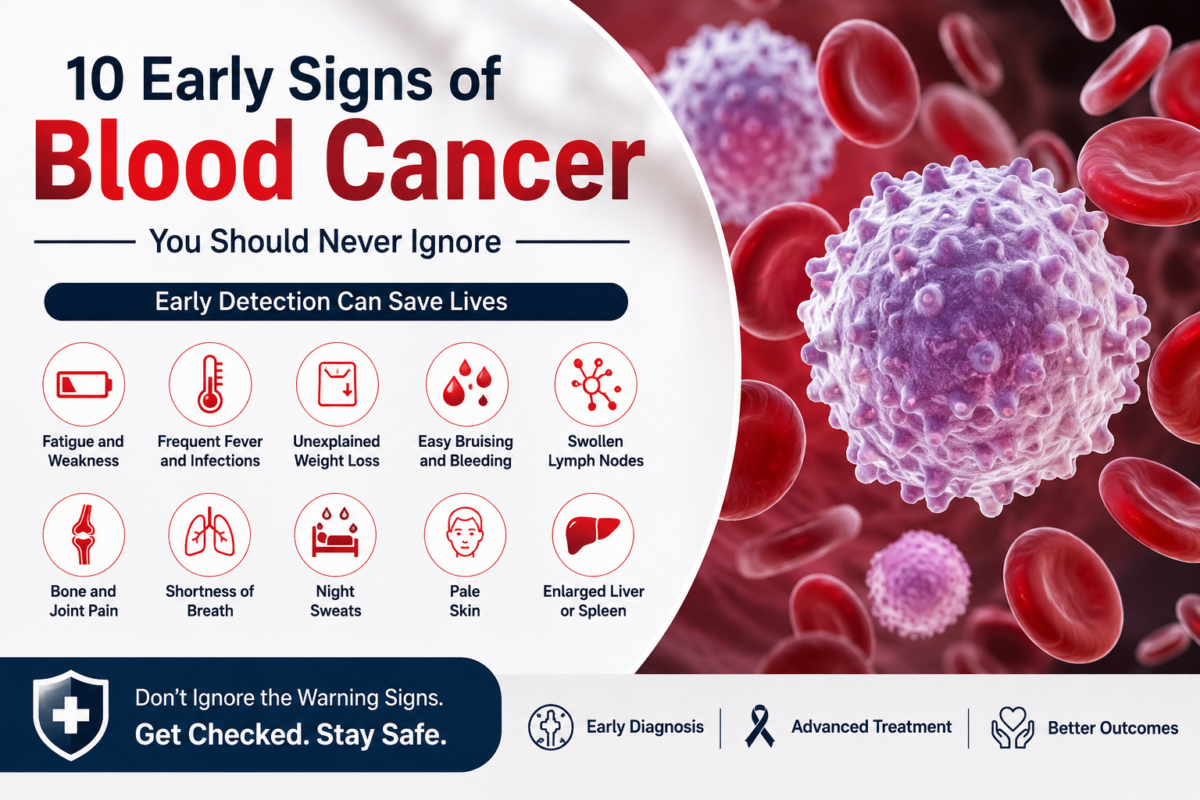
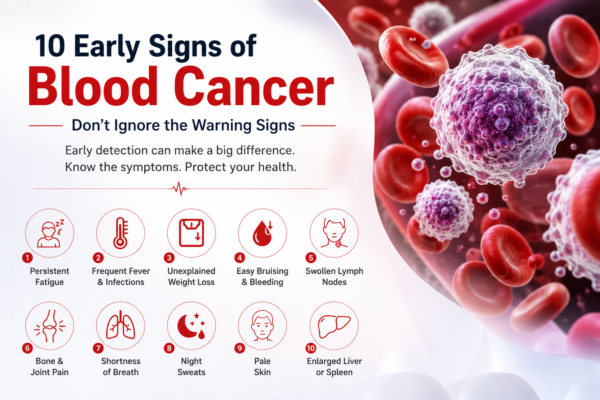
1. Persistent Fatigue and Weakness
One of the early indicators for blood cancers is a severe fatigue that doesn’t improve after a the time. Patients often feel weak, even when they sleep well. The reason for this is that abnormal blood cells decrease the healthy blood red cells, which leads to anemia.
The symptoms could include:
- Constant tiredness
- Energy levels are low.
- It is difficult to perform everyday activities
- Tired but not able to do much work
The fatigue caused by cancer of the blood tends to be persistent and slowly gets worse over time.
2. Frequent Fever and Infections
The body’s immune system. This makes it more difficult in the fight against off infections. Patients might experience repeated fevers and throat infections, viral infections, or chest infections.
Common signs are:
- Unfounded fever with no reason
- Recurrent infections
- Sweating and chills
- Slow recovery from the illness
Infections that are frequent should not be neglected, especially if they happen repeatedly in the same time frame.
3. Unexplained Weight Loss
A sudden weight loss, without dieting or exercise could be a indicator that blood cancer is developing. Cancer cells consume a significant amount of energy from the body which causes rapid weight loss.
Doctors generally consider an unproven weight loss to be serious if an individual loses a substantial amount of weight in just some months and without having tried.
4. Easy Bruising and Bleeding
Platelets are a way to control bleeding within the body. The presence of blood cancer may reduce the number of platelets, causing the possibility of bleeding that is not normal and easy to bruise.
It could be a sign of:
- Nosebleeds frequently frequent
- Bleeding gums
- No injuries or bruising
- Skin red patches that are tiny
- Large bleeding from cuts
Low platelet counts are often found in leukemia as well as other blood disorders.
5. Swollen Lymph Nodes
Lymph nodes that are swollen are prevalent in leukemias and lymphoma. Lymph nodes are tiny glands that are located within the armpits, neck the chest, and groin.
Signs are:
- The neck is swollen and painless
- Larger glands under the arms
- A swelling in the groin area
The swollen nodes could slowly expand over time.
6. Bone and Joint Pain
The blood cancer can be a threat to bone marrow and cause discomfort in joints and bones. Patients may experience discomfort in their back leg, hips or in the ribs.
Bone pain can be:
- The severity increases at night.
- The speed of movement increases during the exercise
- Keep going for a few weeks
Any persistent bone pain needs to be assessed by a physician in particular if it is accompanied by the symptoms of fever or fatigue.
7. Shortness of Breath
The low levels of red blood cells decrease the oxygen supply to the body, leading to breathing problems.
Some of the symptoms are:
- Breathlessness while walking
- It is difficult to climb stairs
- Chest discomfort
- Rapid heartbeat
Many people mistake this symptom as a general weakness or signs of age-related.
8. Night Sweats
The excessive sweating that occurs during sleep is a different symptom that can be a sign from blood cancer. Patients might be woken up by sweaty bedding or clothing, even in cooler temperatures.
Night sweats are typically caused by lymphoma, but can be seen in other blood cancers.
9. Pale Skin
Anemia due to blood cancer can cause skin to appear dull or pale. The loss of oxygen in the blood can affect the color of the skin as well as its overall appearance.
Other symptoms could be similar to:
- Dizziness
- Headaches
- Cold feet and hands
- Weakness
10. Enlarged Liver or Spleen
Certain blood cancers may cause an enlargement of the liver and spleen that can cause abdominal discomfort.
It could be a sign of:
- The stomach is full
- Aches and pains beneath the ribs
- Appetite loss
- Feeling full after eating a small amount of food
This condition is often seen in patients with leukemia.
Causes of Blood Cancer
The precise causes of blood cancer are not known for certain, however certain factors can make it more likely.
Risk factors include:
- Cancer in the family history
- Radiation exposure
- Smoking
- Chemical exposure
- Weak immune system
- Certain genetic disorders
There isn’t a guarantee that everyone who has these risk factors is destined to develop blood cancer, however awareness is crucial.
Diagnosis of Blood Cancer
Doctors may suggest a series of tests to detect blood cancer.
Common diagnostic tests are:
- Complete Blood Count (CBC)
- Peripheral Smear test
- Bone Marrow biopsy
- PET scan or CT scan
- Immunophenotyping
Early diagnosis plays an important part in the effective treatment.
Treatment Options for Blood Cancer
Treatment for blood cancer depends on the stage and type of the cancer.
Common treatment techniques are:
- Chemotherapy
- Therapy with radiation
- Immunotherapy
- Therapy with targeted focus
- Stem cells transplant
- Bone Marrow Transplant
Modern advances in treatment have drastically increased survival rates and improved the quality of life for a lot of patients.
When to See a Doctor
The early signs of blood cancer are often ignored because they may appear similar to common health problems. However, persistent fatigue, unexplained fever, frequent infections, unusual bleeding, or swollen lymph nodes should never be neglected.
Consulting the best hematologist for blood cancer treatment at the right time can help with early diagnosis and better recovery outcomes.
If you are searching for the best blood cancer doctor in India, advanced leukemia treatment, lymphoma treatment, multiple myeloma treatment, or expert hematology care, early medical consultation is very important.
Conclusion
Blood cancer can affect anyone at any age. However, recognizing the early warning signs can make a major difference in treatment success. Persistent fatigue, unexplained fever, sudden weight loss, easy bruising, and swollen lymph nodes should never be ignored. Early medical attention, accurate diagnosis, and advanced treatment options can improve outcomes and help patients lead healthier lives.
Awareness about the early signs of blood cancer is essential because timely treatment can save lives. If you are looking for expert blood cancer treatment, leukemia treatment, lymphoma treatment, or advanced hematology care, it is important to contact the best hematologist at the right time for proper guidance and care.
