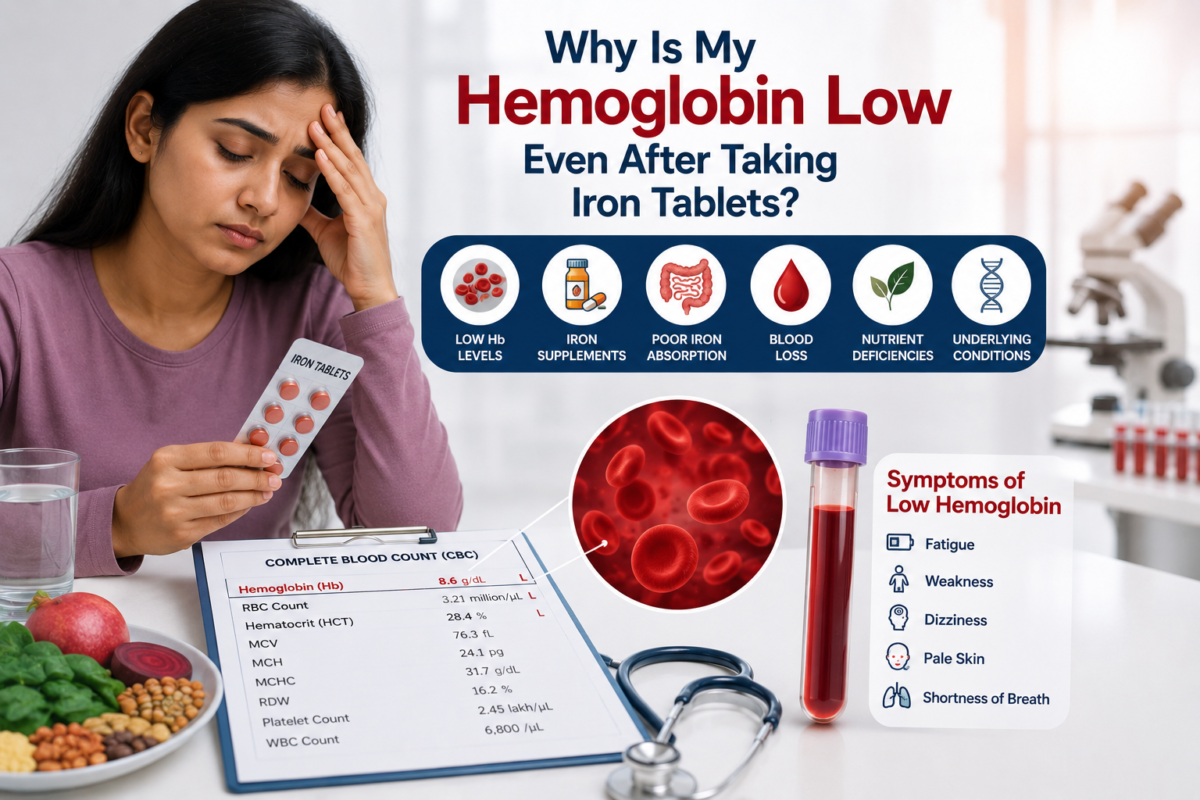
If you’ve been taking iron tablets for weeks or even months but your hemoglobin (Hb) levels remain low, it can be frustrating and confusing. Many people assume that iron deficiency is the only reason for anemia, but that’s not always the case. While iron supplements help many patients, low hemoglobin can persist due to several underlying medical conditions that require proper diagnosis and treatment.
In this article, we’ll explain why your hemoglobin may stay low despite taking iron tablets, the possible causes, and when you should consult a hematologist.
What Is Hemoglobin?
Hemoglobin is an iron-rich protein found inside red blood cells (RBCs). Its primary role is to carry oxygen from your lungs to the rest of your body. When hemoglobin levels fall below normal, your body’s organs receive less oxygen, leading to symptoms such as:
- Persistent fatigue
- Weakness
- Shortness of breath
- Dizziness
- Pale skin
- Headaches
- Reduced concentration
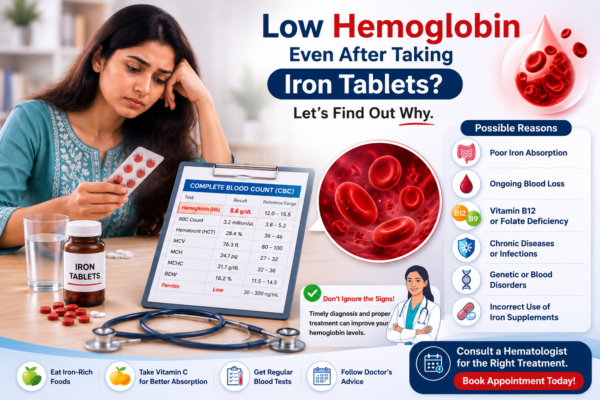
Although iron deficiency is a common cause of low hemoglobin, it’s only one of many possible reasons.
Why Iron Tablets May Not Increase Hemoglobin
1. Your Body Isn’t Absorbing Iron Properly
Sometimes the problem isn’t the iron tablets—it’s your body’s ability to absorb them.
Poor iron absorption may occur due to:
- Celiac disease
- Inflammatory bowel disease (Crohn’s disease or Ulcerative colitis)
- Chronic gastritis
- Previous stomach surgery
- Long-term use of acid-reducing medications
Even if you’re taking the correct dosage, your body may not absorb enough iron to produce healthy red blood cells.
2. You’re Taking Iron Incorrectly
Iron supplements work best when taken correctly.
Common mistakes include:
- Taking iron with milk or dairy products
- Drinking tea or coffee immediately after taking tablets
- Taking iron with calcium supplements
- Skipping doses frequently
Vitamin C improves iron absorption, so taking iron with orange juice or vitamin C tablets may increase effectiveness.
3. Ongoing Blood Loss
If your body continues losing blood, iron tablets alone may not restore hemoglobin.
Common causes include:
- Heavy menstrual bleeding
- Bleeding stomach ulcers
- Colon polyps
- Hemorrhoids
- Gastrointestinal bleeding
- Frequent blood donation
Doctors often investigate hidden blood loss when hemoglobin remains low.
4. Vitamin B12 or Folate Deficiency
Healthy red blood cells require more than iron.
Deficiency of:
- Vitamin B12
- Folate (Vitamin B9)
can also cause anemia and low hemoglobin.
These deficiencies require different treatment and won’t improve with iron tablets alone.
5. Anemia of Chronic Disease
Long-term medical conditions can reduce hemoglobin even when iron stores are normal.
Examples include:
- Chronic kidney disease
- Rheumatoid arthritis
- Autoimmune disorders
- Tuberculosis
- Chronic infections
- Certain cancers
Treating the underlying condition is often more important than increasing iron intake.
6. Bone Marrow Disorders
The bone marrow is responsible for producing blood cells.
Diseases affecting bone marrow include:
- Aplastic anemia
- Myelodysplastic syndrome (MDS)
- Leukemia
- Bone marrow failure syndromes
These conditions require specialized evaluation by a hematologist.
7. Thalassemia or Other Genetic Blood Disorders
Some inherited blood disorders cause lifelong anemia that doesn’t improve with iron supplements.
Examples include:
- Thalassemia trait
- Thalassemia major
- Sickle cell disease
Taking unnecessary iron supplements may even become harmful in some patients.
8. Iron Deficiency Isn’t the Real Diagnosis
Not every low hemoglobin result is caused by iron deficiency.
Doctors usually confirm iron deficiency using:
- Serum Ferritin
- Serum Iron
- Total Iron Binding Capacity (TIBC)
- Transferrin Saturation
Without these tests, iron tablets may not be the appropriate treatment.
Tests Your Doctor May Recommend
If hemoglobin doesn’t improve, your doctor may order:
- Complete Blood Count (CBC)
- Peripheral Blood Smear
- Serum Ferritin
- Iron Studies
- Vitamin B12 Level
- Folate Level
- Reticulocyte Count
- Kidney Function Tests
- Liver Function Tests
- Stool Occult Blood Test
- Bone Marrow Examination (if necessary)
These tests help identify the actual cause of persistent anemia.
When Should You See a Hematologist?
Consult a hematologist if:
- Hemoglobin remains low despite 6–8 weeks of iron therapy
- You experience severe fatigue or weakness
- You have repeated episodes of anemia
- You notice unexplained weight loss
- You have frequent infections
- You experience easy bruising or unusual bleeding
- Your CBC report shows multiple abnormal blood counts
Early evaluation can help diagnose serious blood disorders before complications develop.
Tips to Improve Hemoglobin Naturally
Along with medical treatment:
- Eat iron-rich foods like spinach, lentils, beans, and lean meat.
- Include vitamin C-rich fruits to improve iron absorption.
- Avoid tea or coffee immediately after meals.
- Follow your prescribed treatment without skipping doses.
- Get regular blood tests to monitor your progress.
Conclusion
If your hemoglobin remains low even after taking iron tablets, it’s important not to ignore the underlying cause. Persistent anemia may be linked to poor iron absorption, vitamin deficiencies, chronic illnesses, ongoing blood loss, or other blood disorders that require specialized evaluation. Rather than increasing iron supplements on your own, consult a hematologist for an accurate diagnosis and personalized treatment plan.
If you’re looking for the best hematologist in Hyderabad, don’t delay seeking expert medical advice. Early diagnosis and the right treatment can significantly improve your health and prevent complications. Book an appointment with an experienced hematologist today for a comprehensive evaluation and expert care tailored to your condition.
