For patients with certain blood cancers and blood disorders, a bone marrow or blood stem cell transplant can be an important part of treatment. Diseases such as leukemia, lymphoma, multiple myeloma, and some inherited blood disorders may require a stem cell transplant when other treatments are not enough.
One of the biggest challenges is finding a suitable donor. While family members may sometimes be a match, many patients need to search donor registries for an unrelated donor. This is why registering as a potential bone marrow donor can be an important way to help someone who may be waiting for a life-saving transplant.
But who can become a donor? What is HLA matching? And what happens after you register?
What Is a Bone Marrow Donor?
A bone marrow donor is a person who agrees to donate blood-forming stem cells to a patient who needs a transplant.
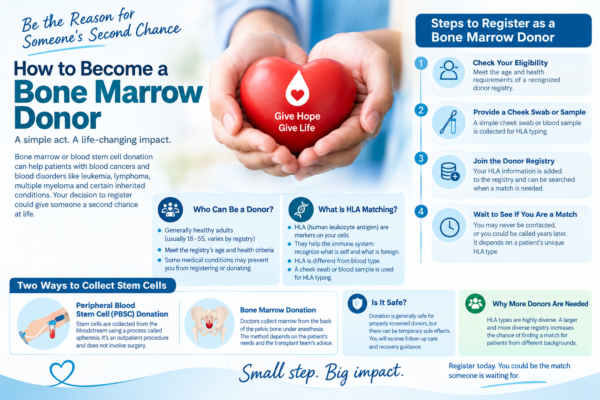
These stem cells can be collected in two main ways. In many cases, stem cells are collected from the bloodstream through a procedure called peripheral blood stem cell (PBSC) donation. In other cases, bone marrow is collected from the pelvic bones under anesthesia. The patient’s medical team decides which method is most appropriate.
The donated stem cells are then given to the patient, where they can help restore healthy blood-forming cells.
Who Can Become a Bone Marrow Donor?
Donor eligibility depends on the registry or donor organization, as well as the donor’s age and medical history. In general, potential donors need to be within the registry’s accepted age range and in suitable overall health.
For example, some registries allow healthy adults from 18 to 55 to register, while other programs have different age limits. Certain medical conditions may prevent someone from registering or donating.
Potential donors are generally assessed for conditions that could make donation unsafe for them or affect the safety of the patient. If someone is identified as a potential match, they undergo additional health-history review, blood testing and a physical examination before donation.
Being registered does not automatically mean that you will be asked to donate. Most registered donors will never be called because finding a suitable match depends on a patient’s specific genetic characteristics.
What Is HLA Matching?
One of the most important factors in finding a stem cell donor is HLA matching.
HLA stands for human leukocyte antigen. These are markers found on most cells in the body and help the immune system distinguish the body’s own cells from foreign cells.
HLA characteristics are inherited from your biological parents. Because there are many possible combinations, finding a closely matched unrelated donor can be difficult.
Importantly, HLA matching is different from blood-group matching. A patient’s blood group does not determine whether someone is an appropriate stem cell donor. Doctors primarily examine HLA characteristics when searching for a suitable donor.
A cheek swab or blood sample can be used for HLA typing. The information is then used by donor registries to identify potential matches.
How to Register as a Bone Marrow Donor
The registration process is generally straightforward.
1. Check your eligibility
Start by checking the age and health requirements of a recognized donor registry. Requirements vary between organizations, so it is important to follow the specific guidelines of the registry you choose.
2. Provide a cheek swab or sample
Many donor registries use a simple cheek swab to collect cells for HLA typing. The sample is analyzed in a laboratory to determine your HLA characteristics.
3. Join the donor registry
Once your sample has been processed and you meet the requirements, your HLA information can be added to the donor registry. Your information may then be searched when doctors are looking for a suitable donor.
4. Wait to see if you are a match
You may never be contacted, or you could be identified as a potential match years after registering. If you are identified as a potential donor, the donor organization will contact you and explain the next steps.
What Happens If You Are a Match?
Being identified as a potential match does not immediately mean you will donate.
First, the donor organization usually confirms that you are still willing to donate. You may need additional blood tests, health-history assessments and a medical examination to confirm that donation is safe for you and appropriate for the patient.
You will also receive information about the donation procedure, possible side effects and what to expect before, during and after donation.
The patient’s medical team ultimately determines the most appropriate donor and collection method based on the patient’s needs and other clinical factors.
How Is Bone Marrow Collected?
There are two main methods of collecting blood-forming stem cells.
Peripheral Blood Stem Cell Donation
PBSC donation collects stem cells from the bloodstream using a process called apheresis. The donor’s blood passes through a machine that separates the required stem cells, while the remaining blood components are returned to the donor.
This is generally an outpatient procedure and does not involve surgery.
Bone Marrow Donation
For a bone marrow donation, doctors collect marrow containing blood-forming stem cells from the back of the pelvic bone. This procedure is performed in a hospital under anesthesia.
The method used depends on the patient’s medical needs and the recommendation of the transplant team.
Is Bone Marrow Donation Safe?
Donation is generally considered safe for appropriately screened donors, but every medical procedure can have risks and temporary side effects.
That is why potential donors undergo medical evaluation before donation. The purpose is to protect both the donor and the patient.
After donation, the donor receives follow-up care and guidance about recovery. The exact recovery experience depends on the type of donation and the individual donor.
Why More Bone Marrow Donors Are Needed
Finding a suitable donor can be difficult because HLA types are highly diverse. Some patients may find a close match within their family, while others need to search national or international donor registries.
A larger and more diverse donor registry increases the possibility of finding a suitable match for patients from different genetic backgrounds.
Registering as a potential donor does not guarantee that you will be selected. However, if you are one day identified as a suitable match and medically cleared to donate, your decision could give a patient an opportunity to receive a potentially life-saving transplant.
Final Takeaway
Becoming a bone marrow donor is a meaningful way to potentially help someone living with a serious blood cancer or blood disorder. The journey usually begins with checking eligibility, registering with a donor organization, and undergoing HLA typing to determine whether you could be a suitable match.
If you are identified as a potential match, additional medical tests and health assessments are performed before donation. Stem cells may then be collected either from the bloodstream or directly from the bone marrow, depending on the patient’s treatment plan.
For patients considering bone marrow transplantation or seeking expert guidance for blood disorders, consulting an experienced specialist can help in understanding the available treatment options. Choosing the best hematologist in India can help patients receive appropriate evaluation, personalized treatment, and expert guidance throughout their care.
If you or your loved one needs guidance regarding bone marrow transplantation, blood cancers, or other blood disorders, book an appointment with an experienced hematologist to discuss your condition and the most suitable treatment options
