

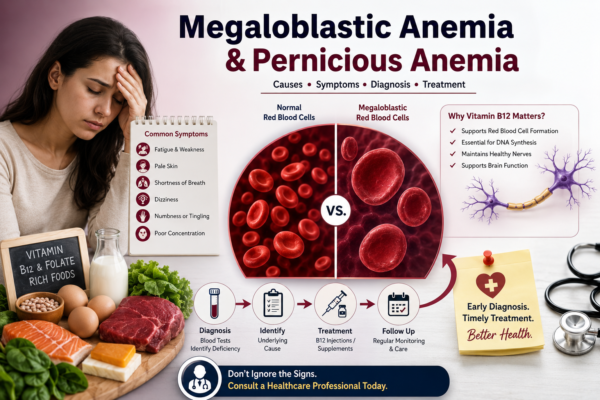
Megaloblastic anemia is a type of anemia in which the bone marrow produces unusually large and abnormal red blood cells. These cells do not develop normally and may not function efficiently, resulting in reduced oxygen delivery to the body’s tissues. One of the most common causes of megaloblastic anemia is a deficiency of vitamin B12 or folate (vitamin B9).
Pernicious anemia is a specific type of vitamin B12 deficiency anemia. It occurs when the body cannot absorb enough vitamin B12 because of a lack of intrinsic factor, a protein produced by specialized cells in the stomach that is essential for vitamin B12 absorption. Understanding the difference between megaloblastic anemia and pernicious anemia is important because early diagnosis and appropriate treatment can prevent complications.
What Is Megaloblastic Anemia?
Megaloblastic anemia develops when DNA synthesis in red blood cell-producing cells is impaired. As a result, the cells grow larger than normal but do not mature properly. The bone marrow may contain large, immature red blood cell precursors called megaloblasts.
The most common nutritional causes are:
- Vitamin B12 deficiency
- Folate deficiency
Other factors, including certain medications and medical conditions that interfere with DNA synthesis, can also cause megaloblastic changes.
Although the red blood cells are larger than normal, their oxygen-carrying ability and lifespan may be affected. This can lead to symptoms associated with anemia.
What Is Pernicious Anemia?
Pernicious anemia is an autoimmune condition that causes vitamin B12 deficiency. In this condition, the immune system attacks the stomach cells responsible for producing intrinsic factor. Without enough intrinsic factor, vitamin B12 cannot be properly absorbed in the small intestine.
Vitamin B12 is essential for:
- Red blood cell formation
- DNA synthesis
- Healthy nerve function
- Normal functioning of the brain and nervous system
Because pernicious anemia can cause both blood-related and neurological problems, identifying it early is particularly important.
What Causes Megaloblastic Anemia?
Vitamin B12 deficiency can occur for several reasons. A person may not consume enough vitamin B12, particularly when the diet contains very little or no animal-derived food. However, dietary deficiency is not the only cause.
Other causes include problems with absorption, certain stomach or intestinal disorders, previous gastrointestinal surgery, and conditions that interfere with vitamin B12 absorption.
Folate deficiency may occur because of inadequate dietary intake, increased nutritional requirements, malabsorption, or certain medications.
Some medicines can also interfere with folate metabolism or DNA synthesis and contribute to megaloblastic changes.
Risk Factors for Pernicious Anemia
Certain factors may increase the likelihood of developing pernicious anemia. These include:
- Autoimmune disorders
- A family history of pernicious anemia
- Conditions affecting the stomach
- Previous stomach surgery
- Older age
- Other disorders associated with vitamin B12 absorption problems
Pernicious anemia is different from simple dietary vitamin B12 deficiency because the underlying problem is impaired absorption related to intrinsic factor.
Symptoms of Megaloblastic Anemia
Symptoms can develop gradually, particularly when anemia becomes worse over time. Common symptoms include:
- Persistent tiredness
- Weakness
- Pale skin
- Shortness of breath, especially during activity
- Dizziness or light-headedness
- Headaches
- Rapid heartbeat or palpitations
- Reduced ability to concentrate
Vitamin B12 deficiency may also cause neurological symptoms. These can include numbness or tingling in the hands and feet, balance problems, muscle weakness, and changes in memory or concentration.
Some people may experience a sore or smooth tongue, loss of appetite, or unexplained weight loss.
Why Vitamin B12 Deficiency Needs Attention
Vitamin B12 deficiency is important to identify because it can affect the nervous system in addition to causing anemia. Neurological symptoms may sometimes occur even when anemia is not severe.
If vitamin B12 deficiency remains untreated for a long period, neurological damage can potentially become permanent. Therefore, unexplained anemia accompanied by numbness, tingling, balance difficulties, or cognitive changes should be medically evaluated.
How Is Megaloblastic Anemia Diagnosed?
Diagnosis usually begins with a medical history and physical examination, followed by blood tests.
A complete blood count (CBC) can show a low hemoglobin level and an increased mean corpuscular volume (MCV), indicating larger-than-normal red blood cells.
Additional tests may include:
- Serum vitamin B12
- Folate levels
- Peripheral blood smear
- Reticulocyte count
- Iron studies when appropriate
- Methylmalonic acid and homocysteine levels in selected cases
- Tests for antibodies associated with pernicious anemia
If pernicious anemia is suspected, doctors may recommend tests for intrinsic factor antibodies and parietal cell antibodies.
The exact combination of tests depends on the patient’s symptoms, medical history, examination findings, and initial blood results.
Megaloblastic Anemia vs. Pernicious Anemia
Megaloblastic anemia is a broader condition characterized by abnormal red blood cell development, commonly due to vitamin B12 or folate deficiency. Pernicious anemia is one specific cause of vitamin B12 deficiency caused by impaired absorption due to intrinsic factor deficiency.
In simple terms, pernicious anemia can cause megaloblastic anemia, but not every case of megaloblastic anemia is pernicious anemia.
This distinction matters because treatment should address the underlying cause rather than simply correcting the anemia.
Treatment of Megaloblastic Anemia
Treatment depends on the cause.
If vitamin B12 deficiency is responsible, vitamin B12 replacement is required. Depending on the underlying cause and severity, treatment may involve oral vitamin B12 or injections.
If folate deficiency is responsible, folic acid supplementation may be recommended along with correction of the underlying cause.
When medications, digestive disorders, dietary deficiencies, or other medical conditions are contributing to the problem, these factors also need to be addressed.
Importantly, folic acid should not be used as a substitute for vitamin B12 treatment when vitamin B12 deficiency has not been ruled out. Folic acid can improve the anemia while allowing neurological complications from untreated vitamin B12 deficiency to progress.
Treatment of Pernicious Anemia
Because pernicious anemia results from impaired vitamin B12 absorption, treatment generally requires long-term vitamin B12 replacement. Depending on the individual situation, doctors may recommend vitamin B12 injections or high-dose oral replacement.
The treatment plan depends on factors such as the severity of deficiency, presence of neurological symptoms, ability to absorb oral vitamin B12, and the underlying cause.
Regular follow-up blood tests may be recommended to assess the response to treatment and ensure vitamin B12 levels and blood counts are improving.
Can Megaloblastic Anemia Be Prevented?
Some causes of megaloblastic anemia can be prevented through a balanced diet and appropriate medical care. Foods containing vitamin B12 include eggs, dairy products, fish, meat, poultry, and fortified foods. Folate is found in leafy green vegetables, legumes, citrus fruits, and fortified grains.
However, dietary changes alone may not prevent pernicious anemia because the primary problem is impaired vitamin B12 absorption.
People following restrictive diets, those with digestive disorders, and individuals taking certain medications may need periodic nutritional assessment based on medical advice.
When Should You See a Doctor?
Persistent fatigue, weakness, pale skin, breathlessness, unexplained numbness, tingling, balance problems, or changes in concentration should not be ignored.
Anemia has many possible causes, so self-treatment with iron, folic acid, or vitamin supplements without identifying the cause may delay appropriate diagnosis.
A healthcare professional can determine whether the symptoms are related to vitamin B12 deficiency, folate deficiency, iron deficiency, another type of anemia, or an underlying medical condition.
Conclusion
Megaloblastic anemia and pernicious anemia require proper diagnosis and timely treatment, especially when vitamin B12 deficiency is involved. Early medical evaluation can help identify the underlying cause and prevent complications, including neurological problems associated with prolonged vitamin B12 deficiency.
If you are experiencing persistent fatigue, weakness, pale skin, dizziness, numbness, or tingling, it is important to consult an experienced specialist for proper evaluation and treatment. Consulting a Top Hematologist in India can help you receive expert guidance for anemia, vitamin B12 deficiency, pernicious anemia, and other blood-related disorders.
For expert evaluation and personalized treatment, Book an Appointment with a qualified hematologist and take the right step toward better health.
