
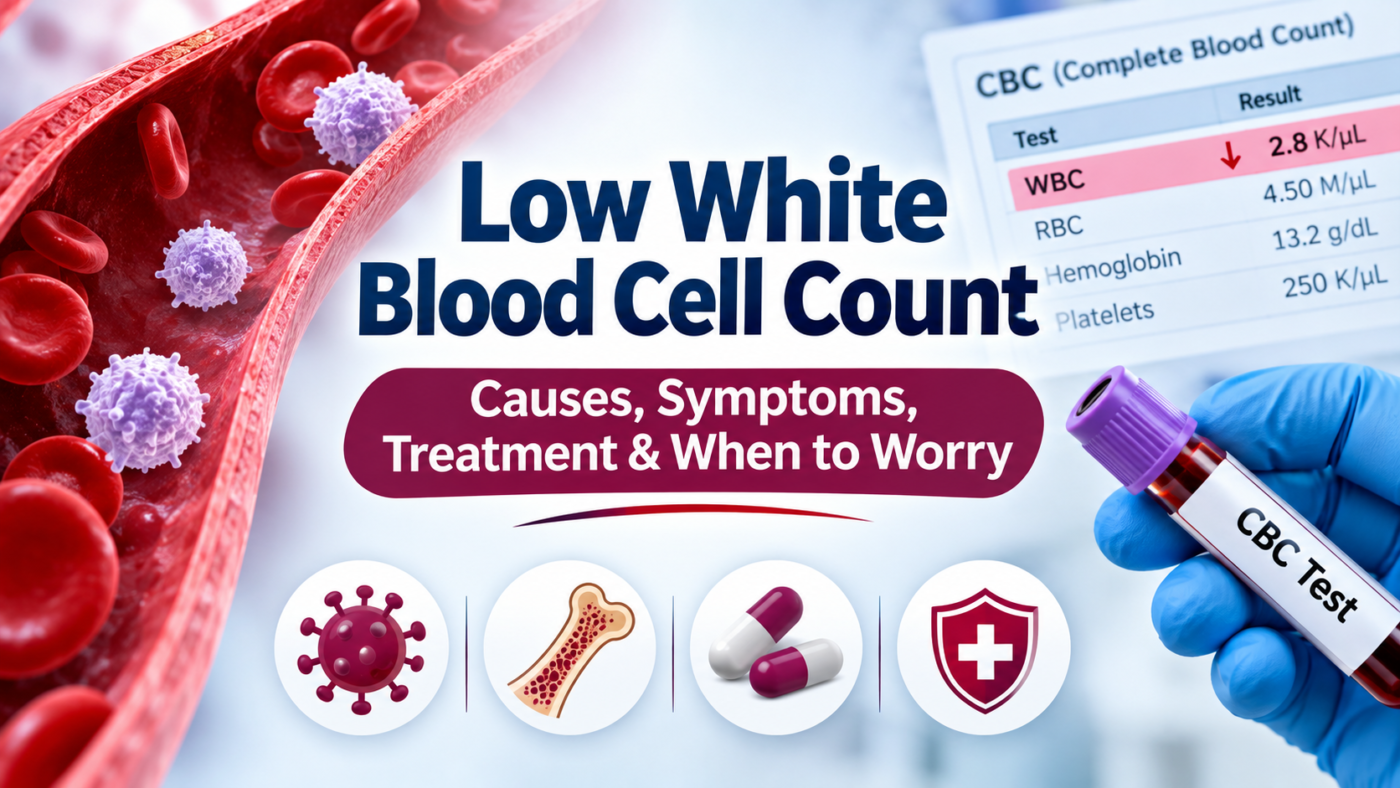
White blood cells are an essential part of the immune system, helping the body fight infections and protect against harmful microorganisms. When a routine blood test shows a low white blood cell count, many patients become concerned about their health.
A low white blood cell count, medically known as leukopenia, can develop for several reasons, including viral infections, nutritional deficiencies, medications, autoimmune conditions, and certain bone marrow disorders.
Although a low WBC count does not always indicate a serious illness, understanding the underlying cause is important for appropriate treatment and long-term health.

What Is a Low White Blood Cell Count?
White blood cells, also called leukocytes, are produced mainly in the bone marrow. They play an important role in identifying and fighting infections.
A complete blood count (CBC) test measures the number of white blood cells circulating in the bloodstream.
In many laboratories, the normal adult white blood cell count is approximately 4,000 to 11,000 cells per microlitre of blood. However, reference ranges can vary between laboratories and individuals.
A count below the laboratory’s reference range may indicate leukopenia.
There are different types of white blood cells, including neutrophils, lymphocytes, monocytes, eosinophils, and basophils. Each has a specific function in immune protection.
A particularly important condition is neutropenia, in which the number of neutrophils becomes abnormally low. Neutrophils are essential for fighting many bacterial and fungal infections.
The risk of infection depends on the severity of neutropenia, how long it lasts, and the patient’s overall health.
Common Causes of Low White Blood Cell Count
Several medical conditions can affect white blood cell production, survival, or distribution.
1. Viral Infections
Viral infections are a common cause of temporarily reduced white blood cell counts.
Infections such as influenza, dengue, hepatitis, and certain other viral illnesses may affect white blood cell levels.
In many cases, blood counts improve after the infection resolves. However, persistent abnormalities require further evaluation.
2. Vitamin and Nutritional Deficiencies
Adequate nutrition is essential for healthy blood cell production.
Deficiencies of vitamin B12, folate, and copper can interfere with bone marrow function and contribute to reduced white blood cell counts.
Patients experiencing persistent fatigue, weakness, or other nutritional deficiency symptoms may require additional blood investigations.
Treatment depends on identifying and correcting the specific deficiency.
3. Medication-Related Causes
Certain medicines can suppress white blood cell production or trigger immune-related destruction of these cells.
Potential causes include some antibiotics, antithyroid medications, immunosuppressive medicines, and chemotherapy drugs.
Patients undergoing cancer treatment may develop neutropenia because chemotherapy can affect rapidly dividing cells in the bone marrow.
Never discontinue prescribed medication without medical advice. A doctor should assess whether a medicine is contributing to the abnormal count.
4. Autoimmune Disorders
Autoimmune diseases occur when the immune system mistakenly attacks healthy tissues.
Conditions such as systemic lupus erythematosus and rheumatoid arthritis may sometimes be associated with low white blood cell counts.
In certain patients, immune mechanisms can directly affect neutrophils.
Proper diagnosis and management of the underlying autoimmune condition are essential.
5. Bone Marrow Disorders
The bone marrow produces red blood cells, white blood cells, and platelets.
Conditions affecting bone marrow function may reduce the production of healthy blood cells.
Examples include aplastic anemia, myelodysplastic syndromes, leukemia, and some other blood disorders.
Importantly, a low white blood cell count alone does not confirm blood cancer. Additional clinical assessment and laboratory investigations are required.
Symptoms of Low White Blood Cell Count
Many patients with mild leukopenia do not experience noticeable symptoms.
The low count itself may cause no symptoms, but patients can develop signs of infection when immune protection is reduced.
Possible warning signs include:
- Recurrent infections
- Fever or chills
- Persistent sore throat
- Mouth ulcers
- Unusual tiredness associated with illness
- Painful urination
- Skin infections or slow-healing infected wounds
- Persistent cough or breathing symptoms
These symptoms are not specific to leukopenia and may occur with many other medical conditions.
Patients receiving chemotherapy or those diagnosed with significant neutropenia should seek urgent medical attention for a temperature of 38°C (100.4°F) or higher, or according to the emergency instructions provided by their treatment team.
When Is a Low WBC Count Dangerous?
The seriousness of leukopenia depends on more than the total white blood cell count.
Doctors often assess the absolute neutrophil count (ANC) to understand infection risk more accurately.
Neutropenia is commonly classified as:
| Severity | Absolute Neutrophil Count |
|---|---|
| Mild | 1,000–1,500 cells/µL |
| Moderate | 500–999 cells/µL |
| Severe | Below 500 cells/µL |
These classifications are general clinical guides. Individual risk varies with the cause, duration, immune function, and other medical conditions.
Severe neutropenia can significantly increase the risk of serious infections.
Patients experiencing fever, breathing difficulty, confusion, or severe weakness alongside suspected neutropenia require immediate medical evaluation.
How Is Low White Blood Cell Count Diagnosed?
A complete evaluation begins with understanding the patient’s medical history, symptoms, medications, and previous blood test results.
A hematologist may recommend several investigations depending on the clinical findings.
Complete Blood Count With Differential
A CBC with differential measures different types of blood cells and helps identify which white blood cell population is reduced.
Peripheral Blood Smear
A peripheral smear allows specialists to examine blood cells under a microscope and identify abnormalities in their appearance.
Nutritional Assessment
Vitamin B12, folate, and sometimes copper tests may help identify nutritional causes.
Infection and Autoimmune Investigations
Additional tests may be recommended when infections or autoimmune disorders are suspected.
Bone Marrow Examination
A bone marrow aspiration or biopsy may be necessary in selected patients with persistent, unexplained, or significantly abnormal blood counts.
Not every patient with leukopenia requires a bone marrow biopsy. The decision depends on the overall clinical picture.
Treatment Options for Low White Blood Cell Count
Treatment focuses on the underlying cause rather than simply increasing the white blood cell count.
Treating infections: When an infection is responsible, appropriate treatment and follow-up may help blood counts recover.
Correcting deficiencies: Patients with confirmed nutritional deficiencies may benefit from medically supervised supplementation.
Reviewing medications: If a prescribed medicine is contributing to leukopenia, the treating physician may consider adjustments or alternatives.
Growth factor treatment: Selected patients, particularly those with certain chemotherapy-related or severe neutropenia conditions, may receive granulocyte colony-stimulating factor (G-CSF) to stimulate neutrophil production.
Managing bone marrow disorders: Patients with underlying hematological diseases may require specialized treatment based on their diagnosis.
There is no single treatment suitable for every patient with a low WBC count.
How to Reduce Infection Risk
Patients with significant neutropenia may need additional precautions to reduce their risk of infections.
Good hand hygiene, proper food handling, recommended vaccinations, and avoiding close contact with people who are unwell can be helpful.
Maintaining a balanced diet and following prescribed treatment plans also supports overall health.
Patients should avoid taking unnecessary antibiotics, supplements, or medicines marketed as immunity boosters without medical guidance.
Lifestyle measures are valuable, but they cannot replace treatment for serious underlying blood disorders.
When Should You Consult a Hematologist?
A hematologist specializes in diagnosing and managing disorders affecting blood cells and the bone marrow.
A specialist consultation may be appropriate when white blood cell counts remain low on repeat testing, neutrophil levels are significantly reduced, or patients experience repeated unexplained infections.
Further evaluation may also be necessary when leukopenia occurs alongside anemia, low platelets, enlarged lymph nodes, unexplained weight loss, or persistent fever.
Early evaluation helps identify treatable conditions and determine whether specialized hematological care is required.
Final Thoughts
A low white blood cell count should never be ignored, especially when it persists or is accompanied by frequent infections, fever, or unexplained weakness. Early diagnosis, appropriate treatment, and regular monitoring are essential for maintaining healthy blood cell levels and preventing complications.
If you are experiencing abnormal WBC levels or other blood-related disorders, consulting a top hematologist in India can help you receive an accurate diagnosis, personalized treatment, and expert medical guidance.
Book an Appointment Today to receive specialized hematology care and take a proactive step toward better blood health.
