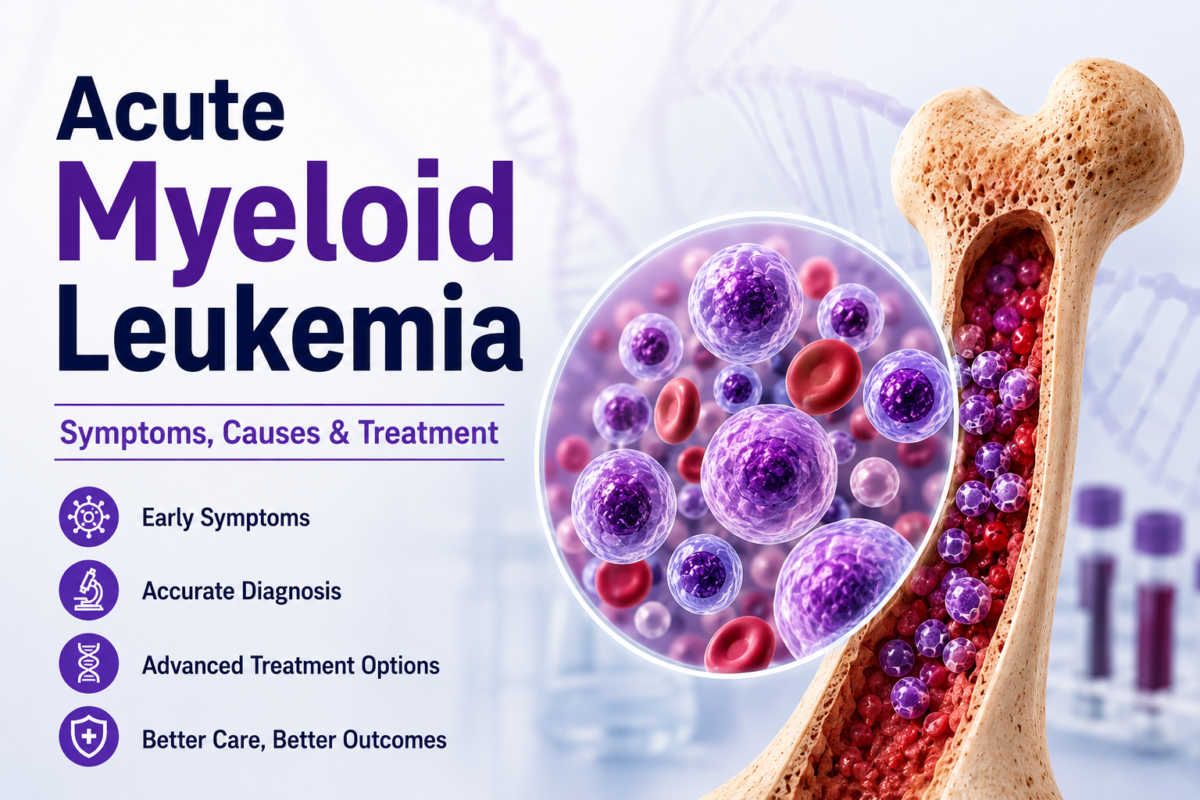
Acute Myeloid Leukemia (AML) is a serious type of blood cancer that affects the bone marrow and blood cells. It develops rapidly and requires immediate medical attention. In Acute Myeloid Leukemia, the bone marrow produces abnormal white blood cells that do not function properly. These unhealthy cells grow quickly and interfere with the production of normal blood cells.
Acute Myeloid Leukemia can affect both adults and children, but it is more commonly seen in older adults. Early diagnosis and proper Acute Myeloid Leukemia treatment can improve survival rates and help patients manage the disease effectively.
What is Acute Myeloid Leukemia?
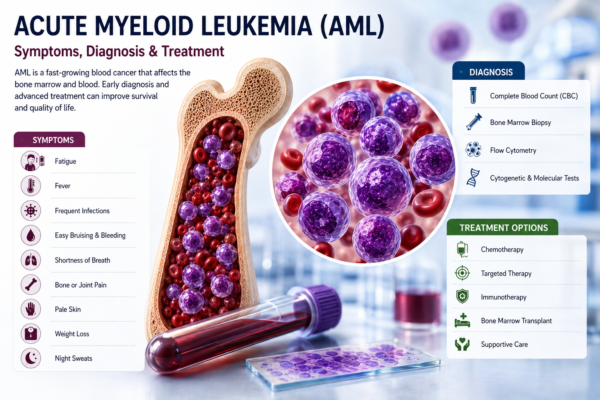
Acute Myeloid Leukemia is a cancer of the myeloid blood cells. The word “acute” means the disease progresses quickly if not treated. The abnormal leukemia cells accumulate in the bone marrow and bloodstream, preventing healthy blood cells from functioning normally.
Normally, bone marrow produces:
- Red blood cells
- White blood cells
- Platelets
In Acute Myeloid Leukemia, immature white blood cells called myeloblasts grow uncontrollably. This affects immunity, oxygen supply, and blood clotting.
Causes of Acute Myeloid Leukemia
The exact cause of Acute Myeloid Leukemia is not always known. However, several factors may increase the risk of developing AML.
Genetic Changes
Mutations in bone marrow cells can lead to uncontrolled growth of abnormal blood cells.
Radiation Exposure
High exposure to radiation may increase the risk of Acute Myeloid Leukemia.
Previous Cancer Treatment
Certain chemotherapy drugs and radiation therapy used for other cancers may increase the risk of AML later in life.
Smoking
Smoking exposes the body to harmful chemicals that may contribute to blood cancers.
Chemical Exposure
Long-term exposure to chemicals such as benzene can increase the risk of Acute Myeloid Leukemia.
Blood Disorders
People with certain blood disorders like Myelodysplastic Syndrome (MDS) may develop AML.
Symptoms of Acute Myeloid Leukemia
Acute Myeloid Leukemia symptoms may appear suddenly and worsen quickly. Many symptoms occur because the body cannot produce enough healthy blood cells.
Common Symptoms of AML
- Frequent fever
- Fatigue and weakness
- Shortness of breath
- Pale skin
- Easy bruising
- Bleeding gums
- Frequent infections
- Bone pain
- Weight loss
- Night sweats
- Tiny red spots on the skin
- Swollen lymph nodes
Some patients may also experience headaches, dizziness, or chest discomfort.
Early recognition of Acute Myeloid Leukemia symptoms is important for timely treatment.
How Acute Myeloid Leukemia is Diagnosed
Doctors use several tests to confirm Acute Myeloid Leukemia.
Blood Tests
A Complete Blood Count (CBC) helps detect abnormal blood cell levels.
Bone Marrow Biopsy
A sample of bone marrow is examined to identify leukemia cells.
Genetic Testing
Doctors analyze genetic mutations to determine the best Acute Myeloid Leukemia treatment plan.
Imaging Tests
CT scans or X-rays may be used to evaluate complications or infections.
Proper diagnosis helps doctors identify the subtype of AML and choose suitable treatment options.
Types of Acute Myeloid Leukemia
There are different subtypes of Acute Myeloid Leukemia based on genetic and molecular changes.
Acute Promyelocytic Leukemia (APL)
A special subtype of AML that often responds well to targeted therapy.
AML with Genetic Mutations
Some AML cases involve mutations such as FLT3 or NPM1.
Secondary AML
AML that develops after previous cancer treatment or blood disorders.
Identifying the subtype is important for planning Acute Myeloid Leukemia treatment.
Acute Myeloid Leukemia Treatment Options
Acute Myeloid Leukemia treatment depends on:
- Patient age
- AML subtype
- Genetic mutations
- Overall health condition
Treatment usually begins immediately after diagnosis.
Chemotherapy for Acute Myeloid Leukemia
Chemotherapy is the primary treatment for AML. Powerful drugs destroy leukemia cells in the blood and bone marrow.
Induction Therapy
The first phase aims to destroy as many leukemia cells as possible and achieve remission.
Consolidation Therapy
Additional chemotherapy is given to prevent recurrence.
Chemotherapy remains one of the most effective Acute Myeloid Leukemia treatment methods.
Targeted Therapy for AML
Targeted therapy attacks specific genetic mutations in leukemia cells.
FLT3 Inhibitors
Used for AML patients with FLT3 gene mutations.
IDH Inhibitors
These drugs target abnormal IDH genes in leukemia cells.
Targeted therapy can improve treatment outcomes and reduce damage to healthy cells.
Bone Marrow Transplant for Acute Myeloid Leukemia
Bone marrow transplant, also called stem cell transplant, may be recommended for high-risk AML patients.
Healthy stem cells replace damaged bone marrow after intensive chemotherapy.
Benefits of Bone Marrow Transplant
- Reduces relapse risk
- Improves long-term survival
- Helps restore healthy blood cell production
Bone marrow transplant is considered an advanced Acute Myeloid Leukemia treatment option.
Immunotherapy for AML
Immunotherapy helps the immune system recognize and destroy leukemia cells.
This treatment may be used in:
- Relapsed AML
- Resistant AML
- Clinical trials
Researchers continue to develop newer immunotherapy treatments for Acute Myeloid Leukemia.
Side Effects of AML Treatment
Acute Myeloid Leukemia treatment may cause temporary side effects.
Common Side Effects
- Hair loss
- Nausea
- Fatigue
- Low immunity
- Mouth sores
- Loss of appetite
Doctors provide supportive care and medications to manage side effects effectively.
Acute Myeloid Leukemia Survival Rate
The survival rate for Acute Myeloid Leukemia varies depending on:
- Age
- AML subtype
- Early diagnosis
- Response to treatment
Younger patients generally respond better to treatment. Advances in targeted therapy and bone marrow transplantation have improved survival rates significantly.
Early Acute Myeloid Leukemia treatment increases the chances of remission and long-term recovery.
Latest Advances in Acute Myeloid Leukemia Treatment
Medical research has introduced several new treatment options for AML.
Precision Medicine
Doctors now use genetic profiling to personalize treatment plans.
Advanced Targeted Drugs
New medications specifically attack leukemia mutations.
CAR T-Cell Therapy
Researchers are studying CAR T-cell therapy for difficult AML cases.
Minimal Residual Disease Monitoring
Advanced tests help detect tiny remaining leukemia cells after treatment.
These innovations are improving the effectiveness of Acute Myeloid Leukemia treatment worldwide.
Lifestyle and Support During AML Treatment
Patients undergoing Acute Myeloid Leukemia treatment should maintain a healthy lifestyle.
Healthy Diet
Nutritious foods support recovery and immunity.
Infection Prevention
Avoid crowded places and maintain hygiene.
Emotional Support
Counseling and family support can help patients manage stress and anxiety.
Regular Follow-Up
Routine monitoring helps detect recurrence early.
When to Consult a Hematologist
Consult a hematologist immediately if symptoms such as frequent infections, unusual bleeding, persistent fatigue, or unexplained fever occur.
Early diagnosis and proper Acute Myeloid Leukemia treatment can improve outcomes and quality of life.
Conclusion
Acute Myeloid Leukemia is a fast-growing blood cancer that requires immediate medical attention. Understanding Acute Myeloid Leukemia symptoms and treatment options helps patients seek timely care and improve survival chances. Modern treatment methods such as chemotherapy, targeted therapy, immunotherapy, and bone marrow transplant have significantly improved AML management.
Regular monitoring, early diagnosis, and treatment from the best hematologist in India can play an important role in successful Acute Myeloid Leukemia treatment. With continuous advancements in medical research, many patients are achieving better recovery and long-term remission. If you notice any symptoms related to AML, consult a specialist and book an appointment for proper diagnosis and advanced leukemia care.
