The treatment for cancer has improved dramatically in the past few years. One of the most promising developments are CAR-T Cell Therapy. This innovative immunotherapy procedure is changing the way that blood tumors can be treated specifically for patients who don’t respond well to traditional treatments like chemotherapy or radiation treatment.
In India there is a growing awareness about CAR T Cell Therapy is growing rapidly due to its impressive results and the capability to target cancerous cells with greater precision. A lot of patients and their families are currently exploring this therapy as a possible solution to fighting blood cancers that are complex.
What is CAR-T Cell Therapy?
CAR-T Cell Therapy is a term used to describe Chimeric Antigen Receptor Therapy. It is a form of immunotherapy that makes use of the patient’s immunity cells in order to battle against cancer.
In this procedure the T-cells are gathered from the blood of patients and genetically altered in a lab so that they can identify and fight cancer cells. After the modification, these CAR-T cells multiply and are instilled back into the body of the patient.
When they enter the body the engineered cells detect cancerous cells and eliminate them more efficiently than normal immune cells.
CAR-T cell therapy is typically utilized to treat blood cancers, for example:
- Leukemia
- Lymphoma
- Multiple Myeloma
The research is ongoing to determine its effectiveness in the treatment of solid tumors.
How CAR T Cell Therapy Works
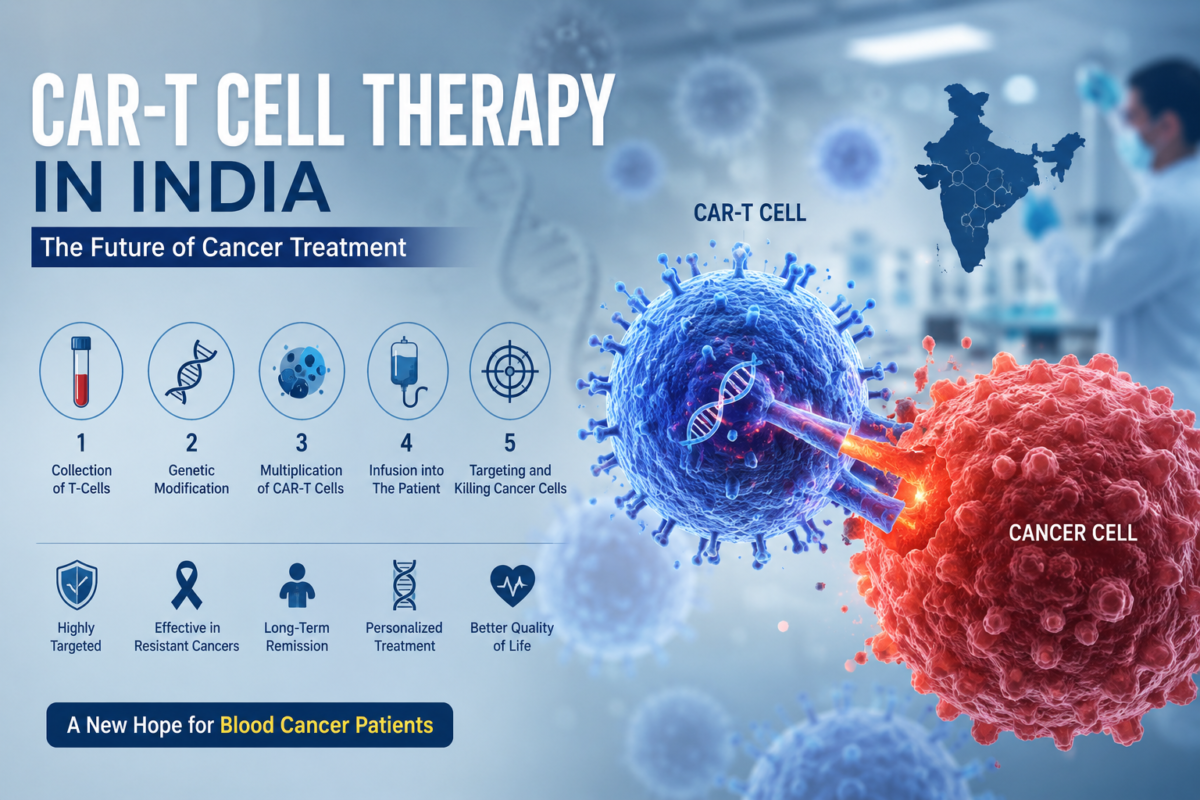
The CAR-T Cell Therapy process involves several crucial stages:
1. Collection of T-Cells
Doctors take T-cells from the patient via a process called leukapheresis. The blood is taken from the patient the immune cells then are isolated.
2. Genetic Modification
In the lab, T-cells can be genetically engineered to create specific receptors known as CARs (Chimeric Antigen Receptors).
3. Multiplication of CAR-T cells
The altered cells multiply into millions of copies to enhance their ability to fight cancer.
4. Infusion into the Patient
The engineered CAR T cells are then infused into the bloodstream of the patient.
5. Destroying Cancer Cells
The CAR-T cells detect cancerous cells and attack them directly.
This targeted approach makes CAR T Cell Therapy distinct from other cancer treatments.
The advantages of CAR T Cell Therapy
CAR-T Cell Therapy provides many benefits for patients suffering from cancer.
Highly Specific Treatment
In contrast to chemotherapy, CAR T therapy targets specific cancer cells, while decreasing damage to healthy tissues.
Effective in preventing cancer
Patients who aren’t responding to conventional treatments might be able to benefit from CAR-T therapy.
Long-Term Remission
Some patients see an extended period of remission following treatment.
Individualized Treatment
Since the treatment is based on the patient’s own immune cells it’s considered a personal treatment strategy.
Reduction of dependence on repeated Chemotherapy
In certain instances successful CAR-T treatment can decrease the need for several cycles of chemotherapy.
Conditions treated with CAR-T Cell Therapy
CAR-T Cell Therapy is currently approved for certain blood cancers for example:
Acute Lymphoblastic Leukemia (ALL)
CAR-T therapy has demonstrated remarkable results in relapsed or resistant ALL patients.
Non-Hodgkin Lymphoma
Many patients with lymphoma who had did not respond to previous treatments have shown positively to CAR T therapy.
Multiple Myeloma
The latest CAR-T therapies are improving the outcome of myeloma patients.
Chronic Lymphocytic leukemia (CLL)
The research is ongoing and a number of studies have shown promising results.
CAR-T Cell Therapy Ratio of Success
The rate of success for CAR-T Cell Therapy depends on a number of aspects, including the kind of cancer, the stage disease, and the patient’s medical condition.
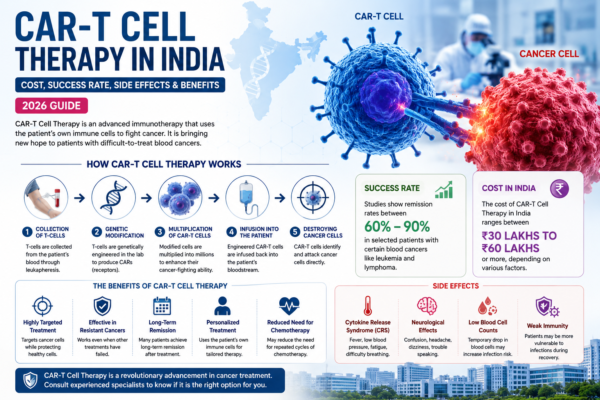
In the case of many blood cancers CAR-T therapy has demonstrated remarkable rate of response. Certain studies have reported remission rates of between 60% to 90% in certain patients.
Patients suffering from relapsed leukemia as well as lymphoma sufferers have benefited the most of this therapy. However, the results can vary between individuals.
The effectiveness of CAR-T therapy has been recognized as one of the most innovative treatments for cancer in the modern age.
The adverse effects of CAR-T cell Therapy
While CAR-T Cell Therapy offers major benefits however, it also can cause negative side negative effects. A careful monitoring by experts is crucial.
Cytokine Release Syndrome (CRS)
CRS is among the most frequent adverse symptoms. The symptoms could include:
- Fever
- Low blood pressure
- Trouble breathing
- Fatigue
Medical professionals closely watch patients in order to treat this condition efficiently.
Neurological side effects
Patients may have:
- Confusion
- Headache
- Trouble speaking
- Dizziness
These symptoms are typically short-lived but they do require immediate medical attention.
A low Blood Cell Counts
CAR-T therapy is a temporary treatment that can reduce blood cell counts, thereby increasing the risk of infection.
Insufficiency
Patients could be more prone to infections as they recover.
The majority of side effects can be controlled successfully through proper medical attention and surveillance.
CAR-T Cell Therapy Costs in India
The cost of CAR T Cell Therapy in India is dependent on a variety of variables, such as:
- Hospital infrastructure
- The CAR-T type of product employed
- Patient condition
- ICU and support health requirements for care
On average, the CAR T Cost of Cell Therapy in India could range from about the amount of Rs30 lakhs up to Rs60 lakhs or more.
Although treatment costs are high, India is gradually becoming the preferred destination for treatment because costs are less expensive than the majority of Western countries.
As manufacturing and research improves CAR-T cell therapy in India will likely to be lower in the near future.
Who Can Benefit from CAR-T cell Therapy?
Not all patients are suitable for CAR T therapy. Doctors consider a variety of factors prior to suggesting the treatment.
Patients who could benefit from:
- Patients with relapsed blood cancers
- Patients who have failed chemotherapy or stem cell transplants
- Certain patients with lymphoma and leukemia
- Patients with enough fitness to tolerate the intensity of treatment
A thorough medical examination is required prior to starting therapy.
Recovery Following CAR-T Cell Therapy
The time to recover varies for every patient. Most patients require close monitoring for several weeks after infusion.
Doctors supervise:
- Immune response
- Side effects
- Infection risk
- Blood counts
Patients are generally urged to:
- Beware of places that are crowded.
- Take care to follow the infection prevention guidelines
- Make sure you attend regular follow-up visits
- Make sure you are getting enough nutrition and hydration
Recovery can be a matter of weeks or months, depending on the condition of the patient.
The future of CAR-T cell therapy
It is expected that the future for CAR T Cell Therapy looks highly promising. Researchers are working on next-generation CAR-T treatments that improve efficiency and safety.
The current research focus is on:
- CAR-T treatment for solid tumors
- Minimized adverse effects
- Faster manufacturing
- Treatment options that are more affordable
- Combination immunotherapies
India continues to make strides in the development of CAR-T treatments for indigenous patients which could improve access to patients in the coming years.
Conclusion
CAR-T cell therapy is revolutionizing the face of cancer treatment by providing a new perspective for those suffering from difficult-to-treat blood cancers. The capability of the immune system of the body to combat cancer makes it among the most effective treatment options currently available.
While CAR-T Cell Therapy in India is expensive at present Its increasing availability and high success rate have helped more patients gain access to this innovative treatment. With the advancement of medical technology and research CAR-T therapy is likely to become more affordable and more effective in the coming years.
Patients who are considering CAR-T cell therapy should consult with best hematologists and oncology specialists for a thorough understanding of the benefits, eligibility as well as the risks and outcomes prior to beginning treatment.
